Mark Dominus (陶敏修)
mjd@pobox.com

Archive:
| 2026: | JFM |
| 2025: | JFMAMJ |
| JASOND | |
| 2024: | JFMAMJ |
| JASOND | |
| 2023: | JFMAMJ |
| JASOND | |
| 2022: | JFMAMJ |
| JASOND | |
| 2021: | JFMAMJ |
| JASOND | |
| 2020: | JFMAMJ |
| JASOND | |
| 2019: | JFMAMJ |
| JASOND | |
| 2018: | JFMAMJ |
| JASOND | |
| 2017: | JFMAMJ |
| JASOND | |
| 2016: | JFMAMJ |
| JASOND | |
| 2015: | JFMAMJ |
| JASOND | |
| 2014: | JFMAMJ |
| JASOND | |
| 2013: | JFMAMJ |
| JASOND | |
| 2012: | JFMAMJ |
| JASOND | |
| 2011: | JFMAMJ |
| JASOND | |
| 2010: | JFMAMJ |
| JASOND | |
| 2009: | JFMAMJ |
| JASOND | |
| 2008: | JFMAMJ |
| JASOND | |
| 2007: | JFMAMJ |
| JASOND | |
| 2006: | JFMAMJ |
| JASOND | |
| 2005: | OND |
In this section:
Subtopics:
| Mathematics | 246 |
| Programming | 100 |
| Language | 95 |
| Miscellaneous | 75 |
| Book | 50 |
| Tech | 49 |
| Etymology | 36 |
| Haskell | 33 |
| Oops | 30 |
| Unix | 27 |
| Cosmic Call | 25 |
| Math SE | 25 |
| Law | 23 |
| Physics | 21 |
| Perl | 17 |
| Biology | 16 |
| Brain | 15 |
| Calendar | 15 |
| Food | 15 |


Comments disabled
Mon, 29 Apr 2024
Hawat! Hawat! Hawat! A million deaths are not enough for Hawat!
[ Content warning: Spoilers for Frank Herbert's novel Dune. Conversely none of this will make sense if you haven't read it. ]
Summary: Thufir Hawat is the real traitor. He set up Yueh to take the fall.
This blog post began when I wondered:
Hawat knows that Wellington Yueh has, or had a wife, Wanna. She isn't around. Hasn't he asked where she is?
In fact she is (or was) a prisoner of the Harkonnens and the key to Yueh's betrayal. If Hawat had asked the obvious question, he might have unraveled the whole plot.
But Hawat is a Mentat, and the Master of Assassins for a Great House. He doesn't make dumbass mistakes like forgetting to ask “what are the whereabouts of the long-absent wife of my boss's personal physician?”
The Harkonnens nearly succeed in killing Paul, by immuring an agent in the Atreides residence six weeks before Paul even moves in. Hawat is so humiliated by his failure to detect the agent hidden in the wall that he offers the Duke his resignation on the spot. This is not a guy who would have forgotten to investigate Yueh's family connections.
And that wall murder thing wasn't even the Harkonnens' real plan! It was just a distraction:
"We've arranged diversions at the Residency," Piter said. "There'll be an attempt on the life of the Atreides heir — an attempt which could succeed."
"Piter," the Baron rumbled, "you indicated —"
"I indicated accidents can happen," Piter said. "And the attempt must appear valid."
Piter de Vries was so sure that Hawat would find the agent in the wall, he was willing to risk spoiling everything just to try to distract Hawat from the real plan!
If Hawat was what he appeared to be, he would never have left open the question of Wanna's whereabouts. Where is she? Yueh claimed that she had been killed by the Harkonnens, and Jessica offers that as a reason that Yueh can be trusted.
But the Bene Gesserit have a saying: “Do not count a human dead until you've seen his body. And even then you can make a mistake.” The Mentats must have a similar saying. Wanna herself was Bene Gesserit, who are certainly human and notoriously difficult to kill. She was last known to be in the custody of the Harkonnens. Why didn't Hawat consider the possibility that Wanna might not be dead, but held hostage, perhaps to manipulate Duke Leto's physician and his heir's tutor — as in fact she was? Of course he did.
"Not to mention that his wife was a Bene Gesserit slain by the Harkonnens," Jessica said.
"So that’s what happened to her," Hawat said.
There's Hawat, pretending to be dumb.
Supposedly Hawat also trusted Yueh because he had received Imperial Conditioning, and as Piter says, “it's assumed that ultimate conditioning cannot be removed without killing the subject”. Hawat even says to Jessica: “He's conditioned by the High College. That I know for certain.”
Okay, and? Could it be that Thufir Hawat, Master of Assassins, didn't consider the possibility that the Imperial Conditioning could be broken or bent? Because Piter de Vries certainly did consider it, and he was correct. If Piter had plotted to subvert Imperial Conditioning to gain an advantage for his employer, surely Hawat would have considered the same.
Notice, also, what Hawat doesn't say to Jessica. He doesn't say that Yueh's Imperial Conditioning can be depended on, or that Yueh is trustworthy. Jessica does not have the gift of the full Truthsay, but it is safest to use the truth with her whenever possible. So Hawat misdirects Jessica by saying merely that he knows that Yueh has the Conditioning.
Yueh gave away many indications of his impending betrayal, which would have been apparent to Hawat. For example:
Paul read: […]
"Stop it!" Yueh barked.
Paul broke off, stared at him.
Yueh closed his eyes, fought to regain composure. […]
"Is something wrong?" Paul asked.
"I'm sorry," Yueh said. "That was … my … dead wife's favorite passage."
This is not subtle. Even Paul, partly trained, might well have detected Yueh's momentary hesitation before his lie about Wanna's death. Paul detects many more subtle signs in Yueh as well as in others:
"Will there be something on the Fremen?" Paul asked.
"The Fremen?" Yueh drummed his fingers on the table, caught Paul staring at the nervous motion, withdrew his hand.
Hawat the Mentat, trained for a lifetime in observing the minutiae of other people's behavior, and who saw Yueh daily, would surely have suspected something.
So, Hawat knew the Harkonnens’ plot: Wanna was their hostage, and they were hoping to subvert Yueh and turn him to treason. Hawat might already have known that the Imperial Conditioning was not a certain guarantee, but at the very least he could certainly see that the Harkonnens’ plan depended on subverting it. But he lets the betrayal go ahead. Why? What is Hawat's plan?
Look what he does after the attack on the Atreides. Is he killed in the attack, as so many others are? No, he survives and immediately runs off to work for House Harkonnen.
Hawat might have had difficulty finding a new job — “Say aren't you the Master of Assassins whose whole house was destroyed by their ancient enemies? Great, we'll be in touch if we need anyone fitting that description.” But Vladimir Harkonnen will be glad to have him, because he was planning to get rid of Piter and would soon need a new Mentat, as Hawat presumably knew or guessed. And also, the Baron would enjoy having someone around to remind him of his victory over the Atreides. The Baron loves gloating, as Hawat certainly knows.
Here's another question: Where did Yueh get the tooth with the poison gas? The one that somehow wasn't detected by the Baron's poison snooper? The one that conveniently took Piter out of the picture? We aren't told. But surely this wasn't the sort of thing was left lying around the Ducal Residence for anyone to find. It is, however, just the sort of thing that the Master of Assassins of a Great House might be able to procure.
However he thought he came by the poison in the tooth, Yueh probably never guessed that its ultimate source was Hawat, who could have arranged that it was available at the right time.
This is how I think it went down:
The Emperor announces that House Atreides will be taking over the Arrakis fief from House Harkonnen. Everyone, including Hawat, sees that this is a trap. Hawat also foresees that the trap is likely to work: the Duke is too weak and Paul too young to escape it. Hawat must choose a side. He picks the side he thinks will win: the Harkonnens. With his assistance, their victory will be all but assured. He just has to arrange to be in the right place when the dust settles.
Piter wants Hawat to think that Jessica will betray the Duke. Very well, Hawat will pretend to be fooled. He tells the Atreides nothing, and does his best to turn the suspicions of Halleck and the others toward Jessica.
At the same time he turns the Harkonnens' plot to his advantage. Seeing it coming, he can avoid dying in the massacre. He provides Yueh with the chance to strike at the Baron and his close advisors. If Piter dies in the poison gas attack, as he does, his position will be ready for Hawat to fill; if not the position was going to be open soon anyway. Either way the Baron or his successor would be only too happy to have a replacement at hand.
(Hawat would probably have preferred that the Baron also be killed by the tooth, so that he could go to work for the impatient and naïve Feyd-Rautha instead of the devious old Baron. But it doesn't quite go his way.)
Having successfully made Yueh his patsy and set himself up to join the employ of the new masters of Arrakis and the spice, Hawat has some loose ends to tie up. Gurney Halleck has survived, and Jessica may also have survived. (“Do not count a human dead until you've seen his body.”) But Hawat is ready for this. Right from the beginning he has been assisting Piter in throwing suspicion on Jessica, with the idea that it will tend to prevent survivors of the massacre from reuniting under her leadership or Paul's. If Hawat is fortunate Gurney will kill Jessica, or vice versa, wrapping up another loose end.
Where Thufir Hawat goes, death and deceit follow.
Addendum
Maybe I should have mentioned that I have not read any of the sequels to Dune, so perhaps this is authoritatively contradicted — or confirmed in detail — in one of the many following books. I wouldn't know.
Addendum 20240512
Elliot Evans points out that my theory really doesn't hold up. Hawat survives the assault because he is out of town when it happens (“Aha!” I said, “how convenient for him!”) but his thoughts about it, as reported by Herbert, seem to demolish my theory:
I underestimated what the Baron was willing to spend in attacking us, Hawat thought. I failed my Duke.
Then there was the matter of the traitor.
I will live long enough to see her strangled! he thought. I should’ve killed that Bene Gesserit witch when I had the chance. There was no doubt in his mind who had betrayed them — the Lady Jessica. She fitted all the facts available.
Mr. Herbert, I tried hard to give you a way out of this:
"So that’s what happened to her," Hawat said.
but you cut off your own avenue of escape.
[Other articles in category /book] permanent link
Tue, 03 May 2022The Wonderful Wizard of Oz
Certainly the best-known and most memorable of the disembodied heads of Oz is the one that the Wizard himself uses when he first appears to Dorothy:
In the center of the chair was an enormous Head, without a body to support it or any arms or legs whatever. There was no hair upon this head, but it had eyes and a nose and mouth, and was much bigger than the head of the biggest giant.
As Dorothy gazed upon this in wonder and fear, the eyes turned slowly and looked at her sharply and steadily. Then the mouth moved, and Dorothy heard a voice say:
“I am Oz, the Great and Terrible. Who are you, and why do you seek me?”
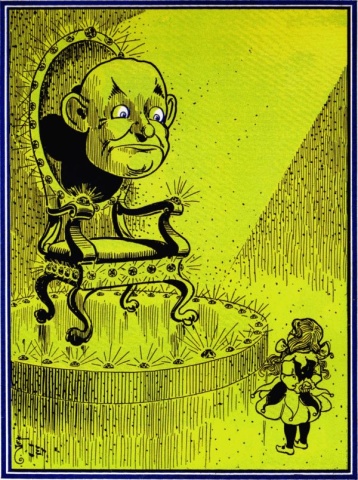
Those Denslow illustrations are weird. I wonder if the series would have lasted as long as it did, if Denslow hadn't been replaced by John R. Neill in the sequel.
This head, we learn later, is only a trick:
He pointed to one corner, in which lay the Great Head, made out of many thicknesses of paper, and with a carefully painted face.
"This I hung from the ceiling by a wire," said Oz; "I stood behind the screen and pulled a thread, to make the eyes move and the mouth open."
The Wonderful Wizard of Oz has not one but two earlier disembodied heads, not fakes but violent decaptitations. The first occurs offscreen, in the Tin Woodman's telling of how he came to be made of tin; I will discuss this later. The next to die is an unnamed wildcat that was chasing the queen of the field mice:
So the Woodman raised his axe, and as the Wildcat ran by he gave it a quick blow that cut the beast’s head clean off from its body, and it rolled over at his feet in two pieces.
Later, the Wicked Witch of the West sends a pack of forty wolves to kill the four travelers, but the Woodman kills them all, decapitating at least one:
As the leader of the wolves came on the Tin Woodman swung his arm and chopped the wolf's head from its body, so that it immediately died. As soon as he could raise his axe another wolf came up, and he also fell under the sharp edge of the Tin Woodman's weapon.
After the Witch is defeated, the travelers return to Oz, to demand their payment. The Scarecrow wants brains:
“Oh, yes; sit down in that chair, please,” replied Oz. “You must excuse me for taking your head off, but I shall have to do it in order to put your brains in their proper place.” … So the Wizard unfastened his head and emptied out the straw.
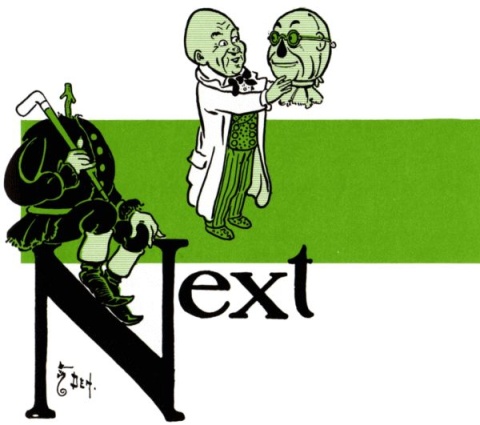
On the way to the palace of Glinda, the travelers pass through a forest whose inhabitants have been terrorized by a giant spider monster:
Its legs were quite as long as the tiger had said, and its body covered with coarse black hair. It had a great mouth, with a row of sharp teeth a foot long; but its head was joined to the pudgy body by a neck as slender as a wasp's waist. This gave the Lion a hint of the best way to attack the creature… with one blow of his heavy paw, all armed with sharp claws, he knocked the spider's head from its body.
That's the last decapitation in that book. Oh wait, not quite. They must first pass over the hill of the Hammer-Heads:
He was quite short and stout and had a big head, which was flat at the top and supported by a thick neck full of wrinkles. But he had no arms at all, and, seeing this, the Scarecrow did not fear that so helpless a creature could prevent them from climbing the hill.
It's not as easy as it looks:
As quick as lightning the man's head shot forward and his neck stretched out until the top of the head, where it was flat, struck the Scarecrow in the middle and sent him tumbling, over and over, down the hill. Almost as quickly as it came the head went back to the body, …
So not actually a disembodied head. The Hammer-Heads get only a Participation trophy.
Well! That gets us to the end of the first book. There are 13 more.
The Marvelous Land of Oz
One of the principal characters in this book is Jack Pumpkinhead, who is a magically animated wooden golem, with a carved pumpkin for a head.
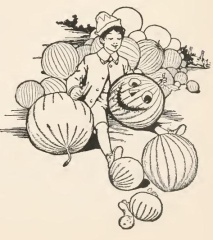
The head is not attached too well. Even before Jack is brought to life, his maker observes that the head is not firmly attached:
Tip also noticed that Jack's pumpkin head had twisted around until it faced his back; but this was easily remedied.
This is a recurring problem. Later on, the Sawhorse complains:
"Even your head won't stay straight, and you never can tell whether you are looking backwards or forwards!"
The imperfect attachement is inconvenient when Jack needs to flee:
Jack had ridden at this mad rate once before, so he devoted every effort to holding, with both hands, his pumpkin head upon its stick…
Unfortunately, he is not successful. The Sawhorse charges into a river:
The wooden body, with its gorgeous clothing, still sat upright upon the horse's back; but the pumpkin head was gone, and only the sharpened stick that served for a neck was visible.… Far out upon the waters [Tip] sighted the golden hue of the pumpkin, which gently bobbed up and down with the motion of the waves. At that moment it was quite out of Tip's reach, but after a time it floated nearer and still nearer until the boy was able to reach it with his pole and draw it to the shore. Then he brought it to the top of the bank, carefully wiped the water from its pumpkin face with his handkerchief, and ran with it to Jack and replaced the head upon the man's neck.
There are four illustrations of Jack with his head detached.
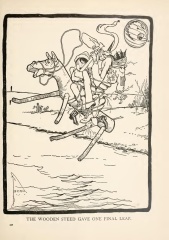
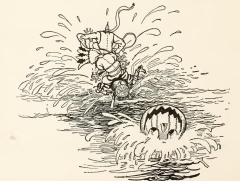
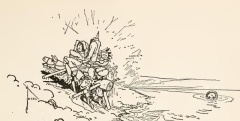
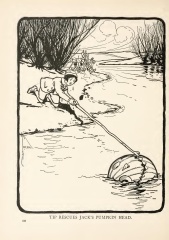
The Sawhorse (who really is very disagreeable) has more complaints:
"I'll have nothing more to do with that Pumpkinhead," declared the Saw-Horse, viciously. "he loses his head too easily to suit me."
Jack is constantly worried about the perishability of his head:
“I am in constant terror of the day when I shall spoil."
"Nonsense!" said the Emperor — but in a kindly, sympathetic tone. "Do not, I beg of you, dampen today's sun with the showers of tomorrow. For before your head has time to spoil you can have it canned, and in that way it may be preserved indefinitely."
At one point he suggests using up a magical wish to prevent his head from spoiling.
The Woggle-Bug rather heartlessly observes that Jack's head is edible:
“I think that I could live for some time on Jack Pumpkinhead. Not that I prefer pumpkins for food; but I believe they are somewhat nutritious, and Jack's head is large and plump."
At one point, the Scarecrow is again disassembled:
Meanwhile the Scarecrow was taken apart and the painted sack that served him for a head was carefully laundered and restuffed with the brains originally given him by the great Wizard.
There is an illustration of this process, with the Scarecrow's trousers going through a large laundry-wringer; perhaps they sent his head through later.
The protagonists need to escape house arrest in a palace, and they assemble a flying creature, which they bring to life with the same magical charm that animated Jack and the Sawhorse. For the creature's head:
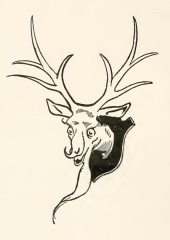
The Woggle-Bug had taken from its position over the mantle-piece in the great hallway the head of a Gump. … The two sofas were now bound firmly together with ropes and clothes-lines, and then Nick Chopper fastened the Gump's head to one end.
Once brought to life, the Gump is extremely puzzled:
“The last thing I remember distinctly is walking through the forest and hearing a loud noise. Something probably killed me then, and it certainly ought to have been the end of me. Yet here I am, alive again, with four monstrous wings and a body which I venture to say would make any respectable animal or fowl weep with shame to own.”
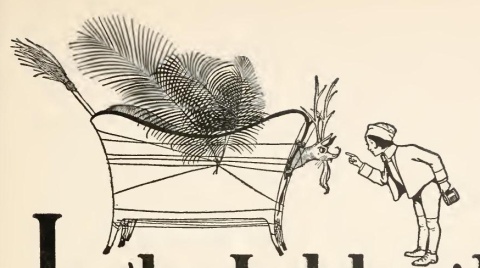
Flying in the Gump thing, the Woggle-Bug he cautions Jack:
"Not unless you carelessly drop your head over the side," answered the Woggle-Bug. "In that event your head would no longer be a pumpkin, for it would become a squash."
and indeed, when the Gump crash-lands, Jack's head is again in peril:
Jack found his precious head resting on the soft breast of the Scarecrow, which made an excellent cushion…
Whew. But the peril isn't over; it must be protected from a flock of jackdaws, in an unusual double-decaptitation:
[The Scarecrow] commanded Tip to take off Jack's head and lie down with it in the bottom of the nest… Nick Chopper then took the Scarecrow to pieces (all except his head) and scattered the straw… completely covering their bodies.
Shortly after, Jack's head must be extricated from underneath the Gump's body, where it has rolled. And the jackdaws have angrily scattered all the Scarecrow's straw, leaving him nothing but his head:
"I really think we have escaped very nicely," remarked the Tin Woodman, in a tone of pride.
"Not so!" exclaimed a hollow voice.
At this they all turned in surprise to look at the Scarecrow's head, which lay at the back of the nest.
"I am completely ruined!" declared the Scarecrow…
They re-stuff the Scarecrow with banknotes.
At the end of the book, the Gump is again disassembled:
“Once I was a monarch of the forest, as my antlers fully prove; but now, in my present upholstered condition of servitude, I am compelled to fly through the air—my legs being of no use to me whatever. Therefore I beg to be dispersed."
So Ozma ordered the Gump taken apart. The antlered head was again hung over the mantle-piece in the hall…
It reminds me a bit of Dixie Flatline. I wonder if Baum was famillar with that episode? But unlike Dixie, the head lives on, as heads in Oz are wont to do:
You might think that was the end of the Gump; and so it was, as a flying-machine. But the head over the mantle-piece continued to talk whenever it took a notion to do so, and it frequently startled, with its abrupt questions, the people who waited in the hall for an audience with the Queen.
The Gump's head makes a brief reappearance in the fourth book, startling Dorothy with an abrupt question.
Ozma of Oz
Oz fans will have been anticipating this section, which is a highlight on any tour of the Disembodied Heads of Oz. For it features the Princess Langwidere:
Now I must explain to you that the Princess Langwidere had thirty heads—as many as there are days in the month.
I hope you're buckled up.
But of course she could only wear one of them at a time, because she had but one neck. These heads were kept in what she called her "cabinet," which was a beautiful dressing-room that lay just between Langwidere's sleeping-chamber and the mirrored sitting-room. Each head was in a separate cupboard lined with velvet. The cupboards ran all around the sides of the dressing-room, and had elaborately carved doors with gold numbers on the outside and jewelled-framed mirrors on the inside of them.
When the Princess got out of her crystal bed in the morning she went to her cabinet, opened one of the velvet-lined cupboards, and took the head it contained from its golden shelf. Then, by the aid of the mirror inside the open door, she put on the head—as neat and straight as could be—and afterward called her maids to robe her for the day. She always wore a simple white costume, that suited all the heads. For, being able to change her face whenever she liked, the Princess had no interest in wearing a variety of gowns, as have other ladies who are compelled to wear the same face constantly.
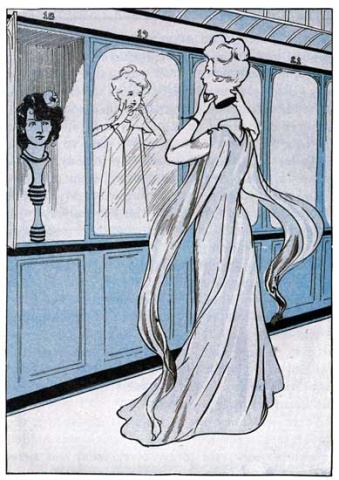
Oh, but it gets worse. Foreshadowing:
After handing head No. 9, which she had been wearing, to the maid, she took No. 17 from its shelf and fitted it to her neck. It had black hair and dark eyes and a lovely pearl-and-white complexion, and when Langwidere wore it she knew she was remarkably beautiful in appearance.
There was only one trouble with No. 17; the temper that went with it (and which was hidden somewhere under the glossy black hair) was fiery, harsh and haughty in the extreme, and it often led the Princess to do unpleasant things which she regretted when she came to wear her other heads.
Langwidere and Dorothy do not immediately hit it off. And then the meeting goes completely off the rails:
"You are rather attractive," said the lady, presently. "Not at all beautiful, you understand, but you have a certain style of prettiness that is different from that of any of my thirty heads. So I believe I'll take your head and give you No. 26 for it."
Dorothy refuses, and after a quarrel, the Princess imprisons her in a tower.
Ozma of Oz contains only this one head-related episode, but I think it surpasses the other books in the quality of the writing and the interest of the situation.
Dorothy and the Wizard in Oz
This loser of a book has no disembodied heads, only barely a threat of one. Eureka the Pink Kitten has been accused of eating one of the Wizard's tiny trained piglets.
[Ozma] was just about to order Eureka's head chopped off with the Tin Woodman's axe…
The Wizard does shoot a Gargoyle in the eye with his revolver, though.
The Road to Oz
In this volume the protagonists fall into the hands of the Scoodlers:
It had the form of a man, middle-sized and rather slender and graceful; but as it sat silent and motionless upon the peak they could see that its face was black as ink, and it wore a black cloth costume made like a union suit and fitting tight to its skin. …
The thing gave a jump and turned half around, sitting in the same place but with the other side of its body facing them. Instead of being black, it was now pure white, with a face like that of a clown in a circus and hair of a brilliant purple. The creature could bend either way, and its white toes now curled the same way the black ones on the other side had done.
"It has a face both front and back," whispered Dorothy, wonderingly; "only there's no back at all, but two fronts."
Okay, but I promised disembodied heads. The Scoodlers want to make the protagonists into soup. When Dorothy and the others try to leave, the Scoodlers drive them back:
Two of them picked their heads from their shoulders and hurled them at the shaggy man with such force that he fell over in a heap, greatly astonished. The two now ran forward with swift leaps, caught up their heads, and put them on again, after which they sprang back to their positions on the rocks.
The problem with this should be apparent.
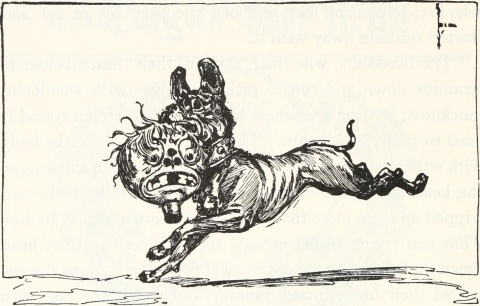
The characters escape from their prison and, now on guard for flying heads, they deal with them more effectively than before:
The shaggy man turned around and faced his enemies, standing just outside the opening, and as fast as they threw their heads at him he caught them and tossed them into the black gulf below. …
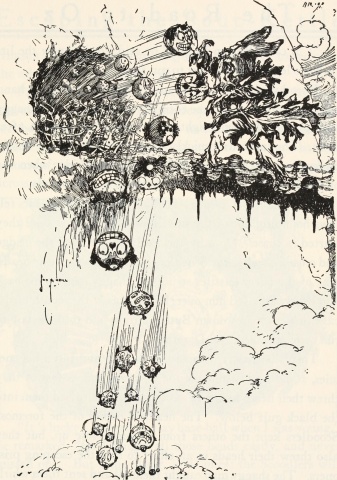
They should have taken a hint from the Hammer-Heads, who clearly have the better strategy. If you're going to fling your head at trespassers, you should try to keep it attached somehow.
Presently every Scoodler of the lot had thrown its head, and every head was down in the deep gulf, and now the helpless bodies of the creatures were mixed together in the cave and wriggling around in a vain attempt to discover what had become of their heads. The shaggy man laughed and walked across the bridge to rejoin his companions.
Brutal.
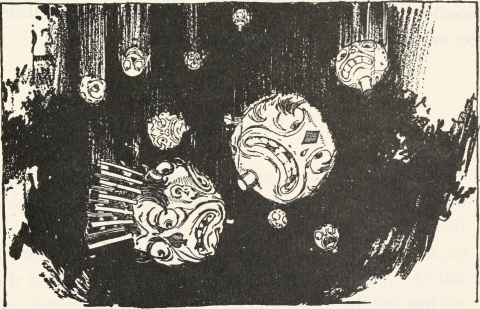
That is the only episode of head-detachment that we actually see. The shaggy man and Button Bright have their heads changed into a donkey's head and a fox's head, respectively, but manage to keep them attached. Jack Pumpkinhead makes a return, to explain that he need not have worried about his head spoiling:
I've a new head, and this is the fourth one I've owned since Ozma first made me and brought me to life by sprinkling me with the Magic Powder."
"What became of the other heads, Jack?"
"They spoiled and I buried them, for they were not even fit for pies. Each time Ozma has carved me a new head just like the old one, and as my body is by far the largest part of me I am still Jack Pumpkinhead, no matter how often I change my upper end.
He now lives in a pumpkin field, so as to be assured of a ready supply of new heads.
The Emerald City of Oz
By this time Baum was getting tired of Oz, and it shows in the lack of decapitations in this tired book.
In one of the two parallel plots, the ambitious General Guph promises the Nome King that he will conquer Oz. Realizing that the Nome armies will be insufficient, he hires three groups of mercenaries. The first of these aren't quite headless, but:
These Whimsies were curious people who lived in a retired country of their own. They had large, strong bodies, but heads so small that they were no bigger than door-knobs. Of course, such tiny heads could not contain any great amount of brains, and the Whimsies were so ashamed of their personal appearance and lack of commonsense that they wore big heads, made of pasteboard, which they fastened over their own little heads.
Don't we all know someone like that?
To induce the Whimsies to fight for him, Guph promises:
"When we get our Magic Belt," he made reply, "our King, Roquat the Red, will use its power to give every Whimsie a natural head as big and fine as the false head he now wears. Then you will no longer be ashamed because your big strong bodies have such teenty-weenty heads."
The Whimsies hold a meeting and agree to help, except for one doubter:
But they threw him into the river for asking foolish questions, and laughed when the water ruined his pasteboard head before he could swim out again.
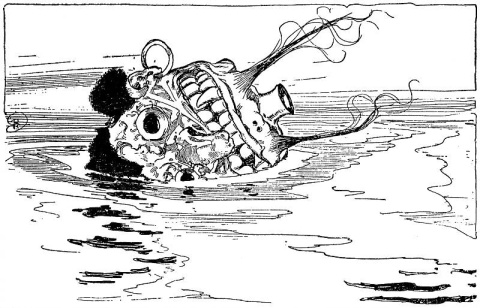
While Guph is thus engaged, Dorothy and her aunt and uncle are back in Oz sightseeing. One place they visit is the town of Fuddlecumjig. They startle the inhabitants, who are “made in a good many small pieces… they have a habit of falling apart and scattering themselves around…”
The travelers try to avoid startling the Fuddles, but they are unsuccessful, and enter a house whose floor is covered with little pieces of the Fuddles who live there.
On one [piece] which Dorothy held was an eye, which looked at her pleasantly but with an interested expression, as if it wondered what she was going to do with it. Quite near by she discovered and picked up a nose, and by matching the two pieces together found that they were part of a face.
"If I could find the mouth," she said, "this Fuddle might be able to talk, and tell us what to do next."
They do succeed in assembling the rest of the head, which has red hair:
"Look for a white shirt and a white apron," said the head which had been put together, speaking in a rather faint voice. "I'm the cook."
This is fortunate, since it is time for lunch.
Jack Pumpkinhead makes an appearance later, but his head stays on his body.
The Patchwork Girl of Oz
As far as I can tell, there are no decapitations in this book. The closest we come is an explanation of Jack Pumpkinhead's head-replacement process:
“Just now, I regret to say, my seeds are rattling a bit, so I must soon get another head."
"Oh; do you change your head?" asked Ojo.
"To be sure. Pumpkins are not permanent, more's the pity, and in time they spoil. That is why I grow such a great field of pumpkins — that I may select a new head whenever necessary."
"Who carves the faces on them?" inquired the boy.
"I do that myself. I lift off my old head, place it on a table before me, and use the face for a pattern to go by. Sometimes the faces I carve are better than others--more expressive and cheerful, you know--but I think they average very well."
Some people the protagonists meet in their travels use the Scarecrow as sports equipment, but his head remains attached to the rest of him.
Tik-tok of Oz
This is a pretty good book, but there are no disembodied heads that I could find.
The Scarecrow of Oz
As you might guess from the title, the Scarecrow loses his head again. Twice.
Only a short time elapsed before a gray grasshopper with a wooden leg came hopping along and lit directly on the upturned face of the Scarecrow’s head.
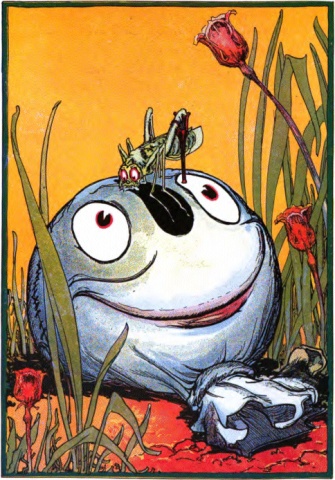
The Scarecrow and the grasshopper (who is Cap'n Bill, under an enchantment) have a philosophical conversation about whether the Scarecrow can be said to be alive, and a little later Trot comes by and reassembles the Scarecrow. Later he nearly loses it again:
… the people thought they would like him for their King. But the Scarecrow shook his head so vigorously that it became loose, and Trot had to pin it firmly to his body again.
The Scarecrow is not yet out of danger. In chapter 22 he falls into a waterfall and his straw is ruined. Cap'n Bill says:
“… the best thing for us to do is to empty out all his body an’ carry his head an’ clothes along the road till we come to a field or a house where we can get some fresh straw.”
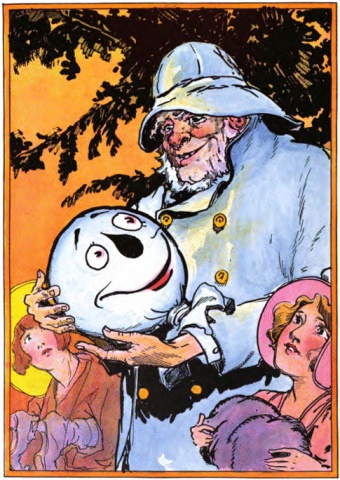
This they do, with the disembodied head of the Scarecrow telling stories and giving walking directions.
Rinkitink in Oz
No actual heads are lost in the telling of this story. Prince Inga kills a giant monster by bashing it with an iron post, but its head (if it even has one; it's not clear) remains attached. Rinkitink sings a comic song about a man named Ned:
A red-headed man named Ned was dead;
Sing fiddle-cum-faddle-cum-fi-do!
In battle he had lost his head;
Sing fiddle-cum-faddle-cum-fi-do!
'Alas, poor Ned,' to him I said,
'How did you lose your head so red?'
Sing fiddle-cum-faddle-cum-fi-do!
But Ned does not actually appear in the story, and we only get to hear the first two verses of the song because Bilbil the goat interrupts and begs Rinkitink to stop.
Elsewhere, Nikobob the woodcutter faces a monster named Choggenmugger, hacks off its tongue with his axe, splits its jaw in two, and then chops it into small segments, “a task that proved not only easy but very agreeable”. But there is no explicit removal of its head and indeed, the text and the pictures imply that Choggenmugger is some sort of giant sausage and has no head to speak of.
The Lost Princess of Oz
No disembodied heads either. The nearest we come is:
At once there rose above the great wall a row of immense heads, all of which looked down at them as if to see who was intruding.
These heads, however, are merely the heads of giants peering over the wall.
Two books in a row with no disembodied heads. I am becoming discouraged. Perhaps this project is not worth finishing. Let's see, what is coming next?
Oh.
Right then…
The Tin Woodman of Oz
This is the mother lode of decapitations in Oz. As you may recall, in The Wonderful Wizard of Oz the Tin Woodman relates how he came to be made of tin. He dismembered himself with a cursed axe, and after amputating all four of his limbs, he had them replaced with tin prostheses:
The Wicked Witch then made the axe slip and cut off my head, and at first I thought that was the end of me. But the tinsmith happened to come along, and he made me a new head out of tin.
One would expect that they threw the old head into a dumpster. But no! In The Tin Woodman of Oz we learn that it is still hanging around:
The Tin Woodman had just noticed the cupboards and was curious to know what they contained, so he went to one of them and opened the door. There were shelves inside, and upon one of the shelves which was about on a level with his tin chin the Emperor discovered a Head—it looked like a doll's head, only it was larger, and he soon saw it was the Head of some person. It was facing the Tin Woodman and as the cupboard door swung back, the eyes of the Head slowly opened and looked at him. The Tin Woodman was not at all surprised, for in the Land of Oz one runs into magic at every turn.
"Dear me!" said the Tin Woodman, staring hard. "It seems as if I had met you, somewhere, before. Good morning, sir!"
"You have the advantage of me," replied the Head. "I never saw you before in my life."
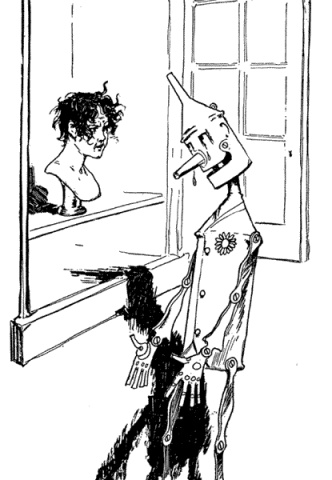
This creepy scene is more amusing than I remembered:
"Haven't you a name?"
"Oh, yes," said the Head; "I used to be called Nick Chopper, when I was a woodman and cut down trees for a living."
"Good gracious!" cried the Tin Woodman in astonishment. "If you are Nick Chopper's Head, then you are Me—or I'm You—or—or— What relation are we, anyhow?"
"Don't ask me," replied the Head. "For my part, I'm not anxious to claim relationship with any common, manufactured article, like you. You may be all right in your class, but your class isn't my class. You're tin."
Apparently Neill enjoyed this so much that he illustrated it twice, once as a full-page illustration and once as a spot illustration on the first page of the chapter:
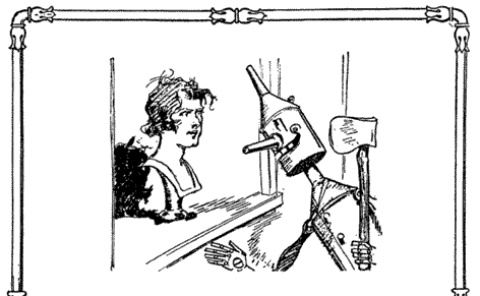
The chapter, by the way, is titled “The Tin Woodman Talks to Himself”.
Later, we get the whole story from Ku-Klip, the tinsmith who originally assisted the amputated Tin Woodman. Ku-Klip explains how he used leftover pieces from the original bodies of both the Tin Woodman and the Tin Soldier (a completely superfluous character whose backstory is identical to the Woodman's) to make a single man, called Chopfyt:
"First, I pieced together a body, gluing it with the Witch's Magic Glue, which worked perfectly. That was the hardest part of my job, however, because the bodies didn't match up well and some parts were missing. But by using a piece of Captain Fyter here and a piece of Nick Chopper there, I finally got together a very decent body, with heart and all the trimmings complete."
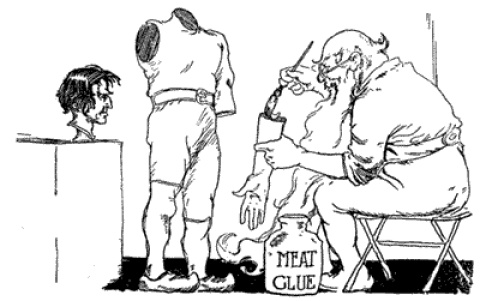
The Tin Soldier is spared the shock of finding his own head in a closet, since Ku-Klip had used it in Chopfyt.
I'm sure you can guess where this is going.
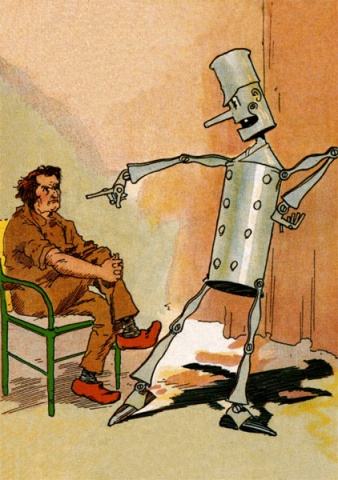
Whew, that was quite a ride. Fortunately we are near the end and it is all downhill from here.
The Magic of Oz
This book centers around Kiki Aru, a grouchy Munchkin boy who discovers an extremely potent magical charm for transforming creatures. There are a great many transformations in the book, some quite peculiar and humiliating. The Wizard is turned into a fox and Dorothy into a lamb. Six monkeys are changed into giant soldiers. There is a long episode in which Trot and Cap'n Bill are trapped on an enchanted island, with roots growing out of their feets and into the ground. A giraffe has its tail bitten off, and there is the usual explanation about Jack Pumpkinhead's short shelf life. But I think everyone keeps their heads.
Glinda of Oz
There are no decapitations in this book, so we will have to settle for a consolation prize. The book's plot concerns the political economy of the Flatheads.
Dorothy knew at once why these mountain people were called Flatheads. Their heads were really flat on top, as if they had been cut off just above the eyes and ears.
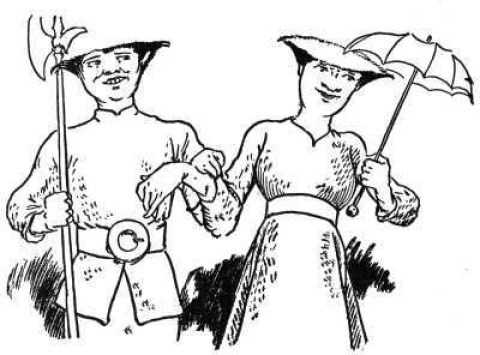
The Flatheads carry their brains in cans. This is problematic: an ambitious flathead has made himself Supreme Dictator, and appropriated his enemies’ cans for himself.
The protagonists depose the Supreme Dictator, and Glinda arranges for each Flathead to keep their own brains in their own head where they can't be stolen, in a scene reminiscent of when the Scarecrow got his own brains, way back when.
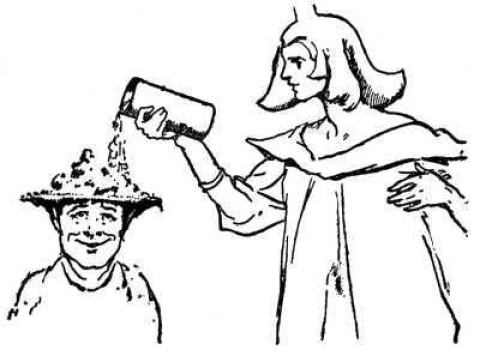
That concludes our tour of the Disembodied Heads of Oz. Thanks for going on this journey with me.
[ Previously, Frank Baum's uncomfortable relationship with Oz. Coming up eventually, an article on domestic violence in Oz. Yes, really ]
[Other articles in category /book] permanent link
Fri, 04 Feb 2022
An unexpected turn of phrase from Robertson Davies
Dave Turner has been tinkering with a game he calls Semantle and this reminded me of Robertson Davies' novel What's Bred in the Bone, which includes a minor character named Charlie Fremantle. This is how my brain works.
While I was looking up Charlie Fremantle I got sucked back into What's Bred in the Bone which is one of my favorite Davies novels. There is a long passage about Charlie and what he was like around 1933:
Charlie found Oxford painfully confining; he wanted to get out into the world and change it for the better, whether the world wanted it or not. He had advanced political ideas. He had read Marx — though not a great deal of him, for Charlie found thick, dense books a clog upon his soaring spirit. He had made a few Marxist speeches at the Union, and was admired by other untrammelled spirits like himself. His Marxism could be summed up as a conviction that whatever was, was wrong, and that the destruction of the existing order was the inevitable preamble to any beginning of the just society; the hope of the future lay with the workers, and all the workers needed was sympathetic leadership by people like himself, who had seen through the hypocrisy, stupidity, and bloody-mindedness of the upper class into which they themselves had been born.… Charlie was the upper class flinging itself into the struggle for justice on behalf of the oppressed; Charlie was Byron, determined to free the Greeks without having any clear notion of what or who the Greeks were; Charlie was a Grail knight of social justice.
A Grail knight of social justice! A social justice warrior! And one of a subtype we easily recognize among us even today. Davies wrote that sentence in 1985.
(But now that I look into it, I wonder what he meant to communicate by that phrase? In 1933, when that part of the book takes place, the phrase “social justice” was associated most closely with Father Charles Coughlin, founder of a political movement called the National Union for Social Justice, and publisher of the Social Justice periodical. Unlike Charlie, though, Coughlin was strongly anti-communist, which makes me wonder why Davies attached the phrase to him. Coincidence? I doubt that Davies was unaware of Coughlin in 1933, or had forgotten about him by 1985.)
[ A reader asks if Davies, as a Canadian, would have been aware of Father Coughlin. I think probably. Wikipedia says Coughlin's radio show reached millions of people, perhaps as many as 30 million a week. The show was based in Detroit, so many of these listeners must have been Canadian. At that time Davies was a university student in Kingston, Ontario. Coughlin, incidentally, was also Canadian. ]
[Other articles in category /book] permanent link
Tue, 09 Nov 2021
Not the expected examples of nonbinary characters in fiction
A member of the Recurse Center community recently asked for recommendations of fiction that set in a place where gender is not generally undersood as binary. It's easy to come up with recent examples, especially in SF, but a surprising older example occurred to me. Isaac Asimov, not usually remembered for his nuanced treatment of gender, wrote a novel whose three-sexed alien society is not merely set dressing, but a major plot and character point.
The Gods Themselves is closely concerned with the three-sexed aliens in a parallel universe. Each of three sexes has a very strictly prescribed gender role. It's important to the outcome of the story that the three main characters each have difficulty conforming to their prescribed role, precisely because they're exceptionally gifted individuals. Their difficulty in performing the roles is presented as growing out of their extraordinary personalities and also as a source of those exceptional abilities.
I think there are parts of the book the deal with humans also, perhaps exclusively male humans. (I read it only once, decades ago.) I don't remember those parts as clearly.
Anyway, three-sexed gender-nonconformant aliens. By Isaac Asimov, of all people. 1972.
It won the Hugo, Locus, and Nebula awards. Check it out.
[ Addendum 20211110: A reader informs me that there is a significant female human character that I had forgotten. Sorry, Ike! ]
[Other articles in category /book] permanent link
Sat, 28 Aug 2021In a transparent attempt to capitalize on the runaway success of The Wonderful Wizard of Oz, the publishers of L. Frank Baum's earlier book A New Wonderland re-released it under the title The Magical Monarch of Mo. What if this ploy had actually worked? Would the book have inspired a movie?
We're off to see the Monarch,
The Marvelous Monarch of Mo…
Naah, it kinda falls apart after that.
[Other articles in category /book] permanent link
Mon, 12 Apr 2021A few months ago I was pondering what it might be like to be Donald Trump. Pretty fucking terrible, I imagine. What's it like, I wondered, to wake up every morning and know that every person in your life is only interested in what they can get from you, that your kids are eagerly waiting for you to die and get out of their way, and that there is nobody in the world who loves you? How do you get out of bed and face that bitter world? I don't know if I could do it. It doesn't get him off the hook for his terrible behavior, of course, but I do feel real pity for the man.
It got me to thinking about another pitiable rich guy, Ebeneezer Scrooge. Scrooge in the end is redeemed when he is brought face to face with the fact that his situation is similar to Trump's. Who cares that Scrooge has died? Certainly not his former business associates, who discuss whether they will attend his funeral:
“It's likely to be a very cheap funeral,” said the same speaker; “for, upon my life, I don't know of anybody to go to it. Suppose we make up a party, and volunteer.”
“I don't mind going if a lunch is provided," observed the gentleman with the excresence on his nose.
Later, the Spirit shows Scrooge the people who are selling the curtains stolen from his bed and the shirt stolen from his corpse, and Scrooge begs:
“If there is any person in the town who feels emotion caused by this man's death," said Scrooge, quite agonized, “show that person to me, Spirit, I beseech you!”
The Spirit complies, by finding a couple who had owed Scrooge money, and who will now, because he has died, have time to pay.
I can easily replace Scrooge with Trump in any of these scenes, right up to the end of chapter 4. But Scrooge in the end is redeemed. He did once love a woman, although she left him. Scrooge did have friends, long ago. He did have a sister who loved him, and though she is gone her son Fred still wants to welcome him back into the family. Did Donald Trump ever have any of those things?
[Other articles in category /book] permanent link
The ten storytellers in The Decameron aren't all well-drawn or easy to tell apart. In the introduction of my favorite edition, the editor, Cormac Ó Cuilleanáin, says:
Early in the book we are given hints that we are going to get to know these ten frame characters…. Among the Decameron storytellers, for instance, Pampinea emerges as being bossy, while Dioneo has a filthy mind. But little further character development takes place.
I agree, mostly. I can see Dioneo more clearly than Ó Cuilleanáin suggests. Dioneo reminds me of Roberto Benigni's filthy-minded Roman taxi driver in Night on Earth. I also get a picture of Bocaccio's character Filostrato, who is a whiny emo poet boy who complains that he woman he was simping for got tired of him and dumped him for someone else:
To be humble and obedient to her and to follow all her whims as closely as I could, was all of no avail to me, and I was soon abandoned for another. Thus I go from bad to worse, and believe I shall until I die.… The person who gave me the nickname of Filostrato [ “victim of love” ] knew what she was doing.
When it's Filostrato's turn to choose the theme for the day's stories, he makes the others tell stories of ill-starred love with unhappy endings. They comply, but are relieved when it is over. (Dioneo, who is excused from the required themes, tells instead a farcical story of a woman who hides her secret lover in a chest after he unwittingly drinks a powerful sedative.)
Ah, but Emilia. None of the characters in the Decameron is impressed with the manners or morals of priests. But Emilia positively despises them. Her story on the third day is a good example. The protagonist, Tedaldo, is meeting his long-lost mistress Ermellina; she broke off the affair with him seven years ago on the advice of a friar who advised that she ought to remain faithful to her husband. Tedaldo is disguised as a friar himself, and argues that she should resume the affair. He begins by observing that modern friars can not always be trusted:
Time was when the friars were most holy and worthy men, but those who today take the name and claim the reputation of friars have nothing of the friar but the costume. No, not even that,…
Modern friars, narrates Emilia, "strut about like peacocks" showing off their fine clothes. She goes on from there, complaining about friars' vanity, and greed, and lust, and hypocrisy, getting more and more worked up until you can imagine her frothing at the mouth. This goes on for about fifteen hundred words before she gets back to Tedaldo and Ermellina, just at the same time that I get around to what I actually meant to write about in this article: Emilia has Tedaldo belittle the specific friar who was the original cause of his troubles,
who must without a doubt have been some soup-guzzling pie-muncher…
This was so delightful that I had to write a whole blog post just to show it to you. I look forward to calling other people soup-guzzling pie-munchers in the coming months.
But, as with the earlier article about the two-bit huckster I had to look up the original Italian to see what it really said. And, as with the huckster, the answer was, this was pretty much what Bocaccio had originally written, which was:
il qual per certo doveva esser alcun brodaiuolo manicator di torte…
Brodaiuolo is akin to “broth”, and it has that disparaging diminutive “-uolo” suffix that we saw before in mercantuolo.
A manicator is a gobbler; it's akin to “munch”, “manger”, and “mandible”, to modern Italian mangia and related French manger. A manicator di torte is literally a gobbler of pies.
Delightful! I love Bocaccio.
While I was researching this article I ran into some other English translations of the phrase. The translation at Brown University's Decameron Web is by J.M. Rigg:
some broth-guzzling, pastry-gorging knave without a doubt
which I award full marks. The translation of John Payne has
must for certain have been some broth-swilling, pastry-gorger
and two revised versions of Payne, by Singleton and Ó Cuilleanáin, translate it similarly.
But the translation of Richard Aldington only says:
who must certainly have been some fat-witted glutton.
which I find disappointing.
I often wonder why translators opt to water down their translations like this. Why discard the vivid and specific soup and pie in favor of the abstract "fat-witted glutton"? What could possibly be the justification?
Translators have a tough job. A mediocre translator will capture only the surface meaning and miss the subtle allusions, the wordplay, the connotations. But here, Aldington hasn't even captured the surface meaning! How hard is it to see torte and include pie in your translation somewhere? I can't believe that his omitting it was pure carelessness, only that Aldington thought that he was somehow improving on the original. But how, I can't imagine.
Well, I can imagine a little. Translations can also be too literal. Let's consider the offensive Spanish epithet pendejo. Literally, this is a pubic hair. But to translate it in English as "pubic hair" would be a mistake, since English doesn't use that term in the same way. A better English translation is "asshole". This is anatomically illogical, but linguistically correct, because the metaphor in both languages has worn thin. When an anglophone hears someone called an “asshole” they don't normally imagine a literal anus, and I think similarly Spanish-speakers don't picture a literal pubic hair for pendejo. Brodaiuolo could be similar. Would a 14th-century Florentine, hearing brodaiuolo, picture a generic glutton, or would they imagine someone literally holding a soup bowl up to their face? We probably don't know. But I'm inclined to think that “soup-guzzler” is not too rich, because by this point in Emilia's rant we can almost see the little flecks of spittle flying out of here mouth.
I'm offended by Aldington's omission of pie-munching.
[ Addendum 20210414: More translations of brodaiuolo. ]
[Other articles in category /book] permanent link
Mon, 29 Mar 2021The King James Version of Job 19:26 says:
And though after my skin worms destroy this body, yet in my flesh shall I see God:
I find this mysterious for two reasons. First, I cannot understand the grammar. How is this supposed to be parsed? I can't come up with any plausible way to parse this so that it is grammatically correct.
Second, how did the worms get in there? No other English translation mentions worms and they appear to be absent from the original Hebrew. Did the KJV writers mistranslate something? (Probably not, there is nothing in the original to mistranslate.) Or is it just an interpolation?
Pretty ballsy, to decide that God left something out the first time around, but that you can correct His omission.
[Other articles in category /book] permanent link
Sun, 07 Feb 2021
More things that changed in later editions of Snow White
As you know, I've recently been looking into the original version of Snow White from 1812. ([1] [2]) I knew that the 1812 version of the Grimm stories was a lot rougher and more gruesome than the later editions, but I missed many of the details. For example, in the later versions, the evil queen orders her hunter to bring back Snow White's liver and lungs as proof that he has murdered her. In the first edition, she wants the liver and lungs so that she can eat them.
After Snow White is poisoned with the apple, the dwarfs put her in a glass coffin. A prince happens by and begs them to give it to him, which they do. In the later versions, the servants carrying away the coffin stumble, the apple is dislodged from Snow White's throat, and she returns to life.
In the original version, they get the coffin back to the prince's palace without mishap. There the prince has the servants carry it from room to room so that he can gaze at it always. (Ugh.)
Finally, the servants are so fed up with this that one of them takes Snow White out of the coffin, stands her up, and, saying
We are plagued the whole day long, just because of such a dead girl
he clouts her in the back from pure spite.
The apple is dislodged, and Snow White marries the prince.
[Other articles in category /book] permanent link
Mon, 01 Feb 2021
The magic mirror in Snow White
A few weeks ago I was thinking about Snow White and in the course of doing that I looked up the original German version of 1812. (Snow White herself is story #53, on page 238.)
The magic mirror is introduced this way:
Die Königin … hatte auch einen Spiegel, vor trat sie alle Morgen und fragte: …
(“The queen… also had a mirror, before which she stood every morning and asked…”)
The mirror is simply einen Spiegel, a mirror, not a specifically magic mirror. That seems to have been a later interpolation. In the 1857 edition, it says Sie hatte einen wunderbaren Spiegel…. There is no wunderbaren in the original.
I prefer the original. The mirror recites poetry; to say it is a magic mirror is superfluous.
But on second thought, is it? There is another explanation: in the original version, perhaps the mirror is an ordinary one, and the queen is psychotic.
Certainly nobody else hears the mirror speaking. And the queen tells the hunter not only to kill Snow White in the forest, but to bring back Snow White's lungs and liver, so that the she may eat them. With salt! (die will ich mit Salz kochen und essen.) Now I prefer the original even more. The later version, which unequivocally states that the mirror is magic, is much less terrifying.
I suppose the argument against this reading is that the mirror also provides the queen with real information: Snow White is still alive, and living with the seven dwarfs. I think the original text does imply that the queen was aware of the seven dwarfs, but how might she have known that Snow White was still alive? Well, she did eat the lungs and liver, which had actually come from a young wild boar (junger Frischling). Perhaps she was satisfied at first, but then there was something about the taste, or the texture, not quite what she expected… it gnawed at her for hours, and then in a flash of rage she realized what she had actually eaten…
[ Addendum 20210202: In case you wanted to see it,
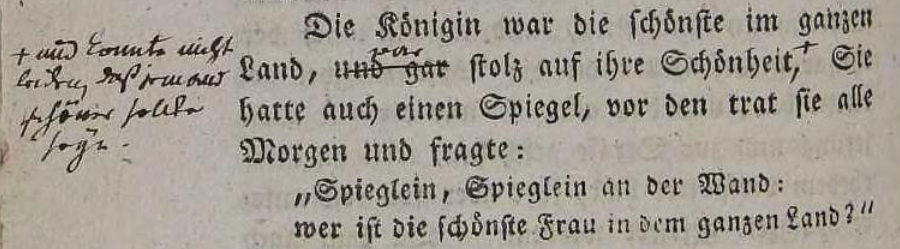
Note, by the way, that in 1812 the umlaut marks in Königin etc. still looked like small letter ‘e’; they had not yet been reduced to diareses. ]
[ Addendum 20210207: another startling detail that was revised in the later editions. ]
[ Addendum 20210321: The more I think about the queen's psychosis, the more obvious it seems that this is the correct explanation. ]
[Other articles in category /book] permanent link
Wed, 30 Dec 2020
Benjamin Franklin and the Exercises of Ignatius
Recently I learned of the Spiritual Exercises of St. Ignatius. Wikipedia says (or quotes, it's not clear):
Morning, afternoon, and evening will be times of the examinations. The morning is to guard against a particular sin or fault, the afternoon is a fuller examination of the same sin or defect. There will be a visual record with a tally of the frequency of sins or defects during each day. In it, the letter 'g' will indicate days, with 'G' for Sunday. Three kinds of thoughts: "my own" and two from outside, one from the "good spirit" and the other from the "bad spirit".
This reminded me very strongly of Chapter 9 of Benjamin Franklin's Autobiography, in which he presents “A Plan for Attaining Moral Perfection”:
My intention being to acquire the habitude of all these virtues, I judg'd it would be well not to distract my attention by attempting the whole at once, but to fix it on one of them at a time… Conceiving then, that, agreeably to the advice of Pythagoras in his Golden Verses, daily examination would be necessary, I contrived the following method for conducting that examination.
I made a little book, in which I allotted a page for each of the virtues. I rul'd each page with red ink, so as to have seven columns, one for each day of the week, marking each column with a letter for the day. I cross'd these columns with thirteen red lines, marking the beginning of each line with the first letter of one of the virtues, on which line, and in its proper column, I might mark, by a little black spot, every fault I found upon examination to have been committed respecting that virtue upon that day.
I determined to give a week's strict attention to each of the virtues successively. Thus, in the first week, my great guard was to avoid every the least offense against Temperance, leaving the other virtues to their ordinary chance, only marking every evening the faults of the day.
So I wondered: was Franklin influenced by the Exercises? I don't know, but it's possible. Wondering about this I consulted the Mighty Internet, and found two items in the Woodstock Letters, a 19th-century Jesuit periodical, wondering the same thing:
The following extract from Franklin’s Autobiography will prove of interest to students of the Exercises: … Did Franklin learn of our method of Particular Examen from some of the old members of the Suppressed Society?
(“Woodstock Letters” Volume XXXIV #2 (Sep 1905) p.311–313)
I can't guess at the main question, but I can correct one small detail: although this part of the Autobiography was written around 1784, the time of which Franklin was writing, when he actually made his little book, was around 1730, well before the suppression of the Society.
The following issue takes up the matter again:
Another proof that Franklin was acquainted with the Exercises is shown from a letter he wrote to Joseph Priestley from London in 1772, where he gives the method of election of the Exercises. …
(“Woodstock Letters” Volume XXXIV #3 (Dec 1905) p.459–461)
Franklin describes making a decision by listing, on a divided sheet of paper, the reasons for and against the proposed action. And then a variation I hadn't seen: balance arguments for and arguments against, and cross out equally-balanced sets of arguments. Franklin even suggests evaluations as fine as matching two arguments for with three slightly weaker arguments against and crossing out all five together.
I don't know what this resembles in the Exercises but it certainly was striking.
[Other articles in category /book] permanent link
Sun, 02 Aug 2020Gulliver's Travels (1726), Part III, chapter 2:
I observed, here and there, many in the habit of servants, with a blown bladder, fastened like a flail to the end of a stick, which they carried in their hands. In each bladder was a small quantity of dried peas, or little pebbles, as I was afterwards informed. With these bladders, they now and then flapped the mouths and ears of those who stood near them, of which practice I could not then conceive the meaning. It seems the minds of these people are so taken up with intense speculations, that they neither can speak, nor attend to the discourses of others, without being roused by some external action upon the organs of speech and hearing… . This flapper is likewise employed diligently to attend his master in his walks, and upon occasion to give him a soft flap on his eyes; because he is always so wrapped up in cogitation, that he is in manifest danger of falling down every precipice, and bouncing his head against every post; and in the streets, of justling others, or being justled himself into the kennel.
When I first told Katara about this, several years ago, instead of “the minds of these people are so taken up with intense speculations” I said they were obsessed with their phones.
Now the phones themselves have become the flappers:
Y. Tung and K. G. Shin, "Use of Phone Sensors to Enhance Distracted Pedestrians’ Safety," in IEEE Transactions on Mobile Computing, vol. 17, no. 6, pp. 1469–1482, 1 June 2018, doi: 10.1109/TMC.2017.2764909.
Our minds are not even taken up with intense speculations, but with Instagram. Dean Swift would no doubt be disgusted.
[Other articles in category /book] permanent link
Wed, 03 Jun 2020
Lately I've been rereading To Kill a Mockingbird. There's an episode in which the kids meet Mr. Dolphus Raymond, who is drunk all the time, and who lives with his black spouse and their mixed-race kids. The ⸢respectable⸣ white folks won't associate with him. Scout and Jem see him ride into town so drunk he can barely sit on his horse. He is noted for always carrying around a paper bag with a coke bottle filled with moonshine.
At one point Mr. Dolphus Raymond offers Dill a drink out of his coke bottle, and Dill is surprised to discover that it actually contains Coke.
Mr. Raymond explains he is not actually a drunk, he only pretends to be one so that the ⸢respectable⸣ people will write him off, stay off his back about his black spouse and kids, and leave him alone. If they think it's because he's an alcoholic they can fit it into their worldview and let it go, which they wouldn't do if they suspected the truth, which is that it's his choice.

There's a whole chapter in Cannery Row on the same theme! Doc has a beard, and people are always asking him why he has a beard. Doc learned a long time ago that it makes people angry and suspicious if he tells the truth, which is he has a beard because he likes having a beard. So he's in the habit of explaining that the beard covers up an ugly scar. Then people are okay with it and even sympathetic. (There is no scar.)
Doc has a whim to try drinking a beer milkshake, and when he orders one the waitress is suspicious and wary until he explains to her that he has a stomach ulcer, and his doctor has ordered him to drink beer milkshakes daily. Then she is sympathetic. She says it's a shame about the ulcer, and gets him the milkshake, instead of kicking him out for being a weirdo.
Both books are set at the same time. Cannery Row was published in 1945 but is set during the Depression; To Kill a Mockingbird was published in 1960, and its main events take place in 1935.
I think it must be a lot easier to be a weird misfit now than it was in 1935.
[ Sort of related. ]
[ 20200708: Addendum ]
[Other articles in category /book] permanent link
Fri, 01 May 2020
More about Sir Thomas Urquhart
I don't have much to add at this point, but when I looked into Sir Thomas Urquhart a bit more, I found this amazing article by Denton Fox in London Review of Books. It's a review of a new edition of Urquhart's 1652 book The Jewel (Ekskybalauron), published in 1984. The whole article is worth reading. It begins:
Sir Thomas Urquhart … must have been a most peculiar man.
and then oh boy, does it deliver. So much of this article is quotable that I'm not sure what to quote. But let's start with:
The little we know about Urquhart’s early life comes mostly from his own pen, and is therefore not likely to be true.
Some excerpts will follow. You may enjoy reading the whole thing.
Trissotetras
I spent much way more time on this than I expected. Fox says:
In 1645 he brought out the Trissotetras … . Urquhart’s biographer, Willcock, says that ‘no one is known to have read it or to have been able to read it,’ …
Thanks to the Wonders of the Internet, a copy is available, and I have been able to glance at it. Urquhart has invented a microlanguage along the lines of Wilkins’ philosophical language, in which the words are constructed systematically. But the language of Trissotetras has a very limited focus: it is intended only for expressing statements of trigonometry. Urquhart says:
The novelty of these words I know will seeme strange to some, and to the eares of illiterate hearers sound like termes of Conjuration: yet seeing that since the very infancie of learning, such inventions have beene made use of, and new words coyned, …
The sentence continues for another 118 words but I think the point is made: the idea is not obviously terrible.
Here is an example of Urquhart's trigonometric language in action:
The second axiom is Eproso, that is, the sides are proportionall to one another as the sines of their opposite angles…
A person skilled in the art might be able to infer the meaning of this axiom from its name:
- E — a side
- Pro – proportional
- S – the sine
- O – the opposite angle
That is, a side (of a triangle) is proportional to the sine of the opposite angle. This principle is currently known as the law of sines.
Urquhart's idea of constructing mnemonic nonsense words for basic laws was not a new one. There was a long-established tradition of referring to forms of syllogistic reasoning with constructed mnemonics. For example a syllogism in “Darii” is a deduction of this form:
- All mammals have hair
- Some animals are mammals
- Therefore some animals have hair.
The ‘A’ in “Darii” is a mnemonic for the “all” clause and the ‘I’s for the “some” clauses. By memorizing a list of 24 names, one could remember which of the 256 possible deductions were valid.
Urquhart is following this well-trodden path and borrows some of its terminology. But the way he develops it is rather daunting:
The Directory of this second Axiome is Pubkegdaxesh, which declareth that there are seven Enodandas grounded on it, to wit, foure Rectangular, Upalem, Ubeman, Ekarul, Egalem, and three Obliquangular, Danarele, Xemenoro, and Shenerolem.
I think that ‘Pubkegdaxesh’ is compounded from the initial syllables of the seven enodandas, with p from upalem, ub from ubamen, k from ekarul, eg from egalem, and so on. I haven't been able to decipher any of these, although I didn't try very hard. There are many difficulties. Sometimes the language is obscure because it's obsolete and sometimes because Urquhart makes up his own words. (What does “enodandas” mean?)
Let's just take “Upalem”. Here are Urquhart's glosses:
- U – the Subtendent side
- P – Opposite, whether Angle or side
- A — an angle
- L — the secant
- E — a side
- M — A tangent complement
I believe “a tangent complement” is exactly what we would now call a cotangent; that is, the tangent of the complementary angle. But how these six items relate to one another, I do not know.
Here's another difficulty: I'm not sure that ‘al’ is one component or two. It might be one:
- U – the Subtendent side
- P – Opposite, whether Angle or side
- Al — half
- E — a side
- M — A tangent complement
Either way I'm not sure what is meant. Wait, there is a helpful diagram, and an explanation of it:
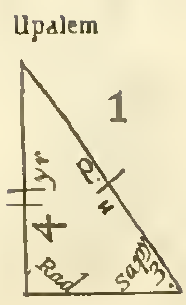
The first figure, Vale, hath but one mood, and therefore of as great extent as it selfe, which is Upalem; whose nature is to let us know, when a plane right angled triangle is given us to resolve, who subtendent and one of the obliques is proposed, and one of the ambients required, that we must have recourse unto its resolver, which being Rad—U—Sapy ☞ Yr sheweth, that if we joyne the artificiall sine of the angle opposite to the side demanded with the Logarithm of the subtendent, the summe searched in the canon of absolute numbers will afford us the Logarithm of the side required.
This is unclear but tantalizing. Urquhart is solving a problem of elementary plane trigonometry. Some of the sides and angles are known, and we are to find one of the unknown ones. I think if if I read the book from the beginning I think I might be able to make out better what Urquhart was getting at. Tempting as it is I am going to abandon it here.
Trissotetras is dedicated to Urquhart's mother. In the introduction, he laments that
Trigonometry … hath beene hitherto exposed to the world in a method whose intricacy deterreth many from adventuring on it…
He must have been an admirer of Alexander Rosse, because the front matter ends with a little poem attributed to Rosse.
Pantochronachanon
Fox again:
Urquhart, with many others, was taken to London as a prisoner, where, apparently, he determined to recover his freedom and his estates by using his pen. His first effort was a genealogy in which he names and describes his ancestors, going back to Adam. … A modern reader might think this Urquhart’s clever trick to prove that he was not guilty by reason of insanity …
This is Pantochronachanon, which Wikipedia says “has been the subject of ridicule since the time of its first publication, though it was likely an elaborate joke”, with no citation given.
Fox mentions that Urquhart claims Alcibiades as one of his ancestors. He also claims the Queen of Sheba.
According to Pantochronachanon the world was created in 3948 BC (Ussher puts it in 4004), and Sir Thomas belonged to the 153rd generation of mankind.
The Jewel
Denton Fox:
Urquhart found it necessary to try again with the Jewel, or, to to give it its full title, which in some sense describes it accurately…
EKSKUBALAURON [Εκσκυβαλαυρον]: OR, The Discovery of A most exquisite Jewel, more precious then Diamonds inchased in Gold, the like whereof was never seen in any age; found in the kennel [gutter] of Worcester-streets, the day after the Fight, and six before the Autumnal Aequinox, anno 1651. Serving in this place, To frontal a Vindication of the honour of SCOTLAND, from that Infamy, whereinto the Rigid Presbyterian party of that Nation, out of their Covetousness and ambition, most dissembledly hath involved it.
Wowzers.
Fox claims that the title Εκσκυβαλαυρον means “from dung, gold” but I do not understand why he says this. λαύρα might be a sewer or privy, and I think the word σκυβα means garden herbs. (Addendum: the explanation.)
[The book] relates how… Urquhart’s lodgings were plundered, and over 3200 sheets of his writings, in three portmanteaux, were taken.… One should remember that there is not likely to be the slightest bit of truth in this story: it speaks well for the morality of modern scholars that so many of them should have speculated why Urquhart took all his manuscripts to war with him.
Fox says that in spite of the general interest in universal languages, “parts of his prospectus must have seemed absurd even then”, quoting this item:
Three and twentiethly, every word in this language signifieth as well backward as forward; and how ever you invert the letters, still shall you fall upon significant words, whereby a wonderful facility is obtained in making of anagrams.
Urquhart boasts that where other, presumably inferior languages have only five or six cases, his language has ten “besides the nominative”. I think Finnish has fourteen but I am not sure even the Finns would be so sure that more was better. Verbs in Urquhart's language have one of ten tenses, seven moods, and four voices. In addition to singular and plural, his language has dual (like Ancient Greek) and also ‘redual’ numbers. Nouns may have one of eleven genders. It's like a language designed by the Oglaf Dwarves.
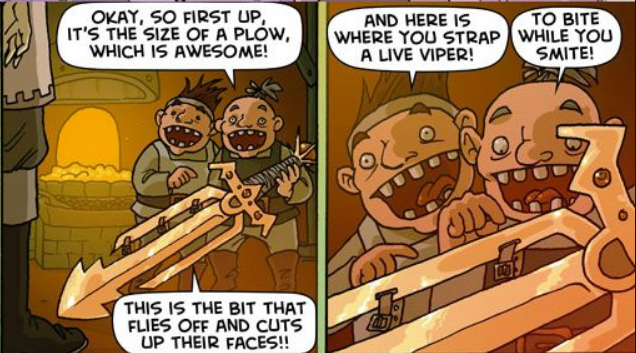
A later item states:
This language affordeth so concise words for numbering, that the number for setting down, whereof would require in vulgar arithmetick more figures in a row then there might be grains of sand containable from the center of the earth to the highest heavens, is in it expressed by two letters.
and another item claims that a word of one syllable is capable of expressing an exact date and time down to the “half quarter of the hour”. Sir Thomas, I believe that Entropia, the goddess of Information Theory, would like a word with you about that.
Wrapping up
One final quote from Fox:
In 1658, when he must have been in his late forties, he sent a long and ornately abusive letter to his cousin, challenging him to a duel at a place Urquhart would later name,
quhich shall not be aboue ane hunderethe – fourtie leagues distant from Scotland.
If the cousin would neither make amends or accept the challenge, Urquhart proposed to disperse copies of his letter
over all whole the kingdome off Scotland with ane incitment to Scullions, hogge rubbers [sheep-stealers], kenell rakers [gutter-scavengers] – all others off the meanist sorte of rascallitie, to spit in yor face, kicke yow in the breach to tred on yor mushtashes ...
Fox says “Nothing much came of this, either.”.
I really wish I had made a note of what I had planned to say about Urquhart in 2008.
[ Addendum 20200502: Brent Yorgey has explained Εκσκυβαλαυρον for me. Σκύβαλα (‘skubala’) is dung, garbage, or refuse; it appears in the original Greek text of Philippians 3:8:
What is more, I consider everything a loss because of the surpassing worth of knowing Christ Jesus my Lord, for whose sake I have lost all things. I consider them garbage, that I may gain Christ…

And while the usual Greek word for gold is χρῡσός (‘chrysos’), the word αύρον (‘auron’, probably akin to Latin aurum) is also gold. The screenshot at right is from the 8th edition of Liddell and Scott. Thank you, M. Yorgey! ]
[Other articles in category /book] permanent link
Tue, 28 Apr 2020
Urquhart, Rosse, and Browne
[ Warning: I abandoned this article in 2008 and forgot that it
existed. I ran across it today and decided that what I did write was
worth publishing, although it breaks off suddenly. ]
A couple of years ago, not long before I started this blog, I read some of the works of Sir Thomas Browne. I forget exactly why: there was some footnote I read somewhere that said that something in one of Jorge Luis Borges' stories had been inspired by something he read in Browne's book The Urn Burial, which was a favorite of Borges'. I wish I could remember the details! I don't think I even remembered them at the time. But Thomas Browne turned out to be wonderful. He is witty, and learned, and wise, and humane, and to read his books is to feel that you are in the company of this witty, learned, wise, humane man, one of the best men that the English Renaissance has to offer, and that you are profiting thereby.
The book of Browne's that made the biggest impression on me was Pseudodoxia Epidemica (1646), which is a compendium of erroneous beliefs that people held at the time, with discussion. For example, is it true that chameleons eat nothing but air? ("Thus much is in plain terms affirmed by Solinus, Pliny, and others...") Browne thinks not. He cites various evidence against this hypothesis: contemporary reports of the consumption of various insects by chameleons; the presence of teeth, tongues, stomachs and guts in dissected chameleons; the presence of semi-digested insects in the stomachs of dissected chameleons. There's more; he attacks the whole idea that an animal could be nourished by air. Maybe all this seems obvious, but in 1672 it was still a matter for discussion. And Browne's discussion is so insightful, so pithy, so clear, that it is a delight to read.
Browne's list of topics is fascinating in itself. Some of the many issues he deals with are:
- That Crystall is nothing else but Ice strongly congealed;
- That a Diamond is made soft, or broke by the blood of a Goate;
- That Misseltoe is bred upon trees, from seeds which birds let fall thereon;
- That an Elephant hath no joints;
- That Snayles have two eyes, and at the end of their hornes;
- That men weigh heavier dead then alive;
- Of the pictures of Adam and Eve With Navels [a classic question, that; Saint Augustine took it up in City of God];
- Of the pictures of our Saviour with long haire;
- Of the falling of salt;
- That Children would naturally speak Hebrew [another question of perennial interest. I have heard that Frederick the Great actually made the experiment and raised children in isolation to see if they would learn Hebrew];
- Of the blacknesse of Negroes;
- That a man hath one Rib lesse then a woman;
- Of Crassus that never laughed but once;
- Of the wandring Jew;
- Of Milo, who by daylie lifting a Calfe, attained an ability to carry it being a Bull.
Well, I digress. To return to that list of topics I quoted, you might see "of the blacknesse of Negroes", and feel your heart sink a little. What racist jackass thing is the 1646 Englishman going to say about the blackness of negroes?
Actually, though, Browne comes out of it extremely well, not only much better than one would fear, but quite well even by modern standards. It is one of the more extensive discourses in Pseudodoxia Epidemica, occupying several chapters. He starts by rebutting two popular explanations: that they are burnt black by the heat of the sun, and that they are marked black because of the curse of Ham as described in Genesis 9:20–26.
Regarding the latter, Browne begins by addressing the Biblical issue directly, and on its own terms, and finds against it. But then he takes up the larger question of whether black skin can be considered to be a curse at all. Browne thinks not. He spends some time rejecting this notion: "to inferr this as a curse, or to reason it as a deformity, is no way reasonable". He points out that the people who have it don't seem to mind, and that "Beauty is determined by opinion, and seems to have no essence that holds one notion with all; that seeming beauteous unto one, which hath no favour with another; and that unto every one, according as custome hath made it natural, or sympathy and conformity of minds shall make it seem agreeable."
Finally, he ends by complaining that "It is a very injurious method unto Philosophy, and a perpetual promotion of Ignorance, in points of obscurity, ... to fall upon a present refuge unto Miracles; or recurr unto immediate contrivance, from the insearchable hands of God." I wish more of my contemporaries agreed.
Another reason I love this book is that Browne is nearly always right. If you were having doubts that one could arrive at correct notions by thoughtful examination of theory and evidence, Pseudodoxia Epidemica might help dispel them, because Browne's record of coming to the correct conclusions is marvelous.
Some time afterward, I learned that there was a rebuttal to Pseudodoxia Epidemica, written by a Dr. Alexander Rosse. (Arcana Microcosmi, ... with A Refutation of Doctor Brown's VULGAR ERRORS... (1652).) And holy cow, Rosse is an incredible knucklehead. Watching him try to argue with Browne reminded me of watching an argument on Usenet (a sort of pre-Internet distributed BBS) where one person is right about everything, and is being flamed point by point by some jackass who is wrong about everything, and everyone but the jackass knows it. I have seen this many, many times on Usenet, but never as far back as 1652.
This is the point at which I stopped writing the article in 2008. I had mentioned the blockheaded Mr. Rosse in an earlier article. But I have no idea what else I had planned to say about him here.
Additional notes (April 2020)
- I mentioned “the table of contents from Richard Waller's
Posthumous Works of Robert Hooke”. I had mentioned Waller
previously, in connection with Hooke's measurement of the rate at
which a fly beats its wings. The Waller book is
available on the Internet Archive, but
it does not have a table of contents! I realize I had actually been
thinking of Hooke’s Philosophical Experiments and
Observations, edited by William Derham, which in some editions, does have a table
of contents. The Derham book made a couple of other appearances
in this blog in the early days.
- I no longer have any idea who Urquhart was, or what I had planned to
say about him. Searching for him in conjunction with Browne I find he was Sir Thomas Urquhart, a contemporary of
Browne's. There is a Wikipedia
article about Urquhart. Like his better-known contemporary John
Wilkins, he tried to design a universal language in which the meaning
of a word could be inferred from its spelling.
- I learned that Rosse was
the target of sarcastic mockery in Samuel Butler's Hudibras:
There was an ancient sage philosopher
It seems that Rosse was a noted dumbass even in his own lifetime.
Who had read Alexander Ross over. - John Willcock's biography of Urquhart says “Ross himself is now only
known to most of us from the mention made of him in
Hudibras”, and that was in 1899.
- Thomas Browne is the source of the often-quoted suggestion that:
What song the Sirens sang, or what name Achilles assumed when he hid himself among women, though puzzling questions, are not beyond all conjecture.
(It appears in his book Hydrotaphia, or Urn Buriall.) This hopeful talisman has inspired many people over the centuries to continue their pursuit of such puzzling questions, sometimes when faced with what seems like a featureless wall of lost history. - A few years later I revisited Milo, who by daylie lifting a Calfe, attained an ability to carry it being a Bull.
[Other articles in category /book] permanent link
Fri, 17 Jan 2020As Middle English goes, Pylgremage of the Sowle (unknown author, 1413) is much easier to read than Chaucer:
He hath iourneyed by the perylous pas of Pryde, by the malycious montayne of Wrethe and Enuye, he hath waltred hym self and wesshen in the lothely lake of cursyd Lechery, he hath ben encombred in the golf of Glotony. Also he hath mysgouerned hym in the contre of Couetyse, and often tyme taken his rest whan tyme was best to trauayle, slepyng and slomeryng in the bed of Slouthe.
I initially misread “Enuye” as “ennui”, understanding it as sloth. But when sloth showed up at the end, I realized that it was simpler than I thought, it's just “envy”.
[Other articles in category /book] permanent link
Mon, 16 Dec 2019In 2006 I wrote an essay about Neal Stephenson's not-really-a-trilogy “Baroque Cycle” and then in 2017 another about his novel Seveneves. I was telling some folks about this, and regretting that I had never written about Anathem, which is my favorite of his books, when I remembered that long ago I wrote about his first novel The Big U.
I have mentioned The Big U before, in connection with Julian Jaynes’ bicameral mind theory, saying
I wondered when reading [The Big U] how anyone could understand it without having read Jaynes first
I still wonder this. I should write up a summary of the Jaynes someday.
I liked The Big U better than Stephenson did. Wikipedia says:
Stephenson has said he is not proud of this book. When Stephenson's Snow Crash was published in 1992 … The Big U was out of print and Stephenson was content to leave it that way. When original editions began selling on eBay for hundreds of dollars, he relented and allowed The Big U to be republished, saying that the only thing worse than people reading the book was paying that much to read it.
Here's my discussion of it, originally posted to
rec.arts.sf.written in early
2002.
It's a reply to a somewhat earlier post that reviewed all of
Stephenson's
novels.
Quotations are from the post to which I was replying.
The Big U (1984, reprinted in 2001)
This was Stephenson's first published novel. It is a satirical look at life at a huge university. It is absolutely dreadful,
It was the only one of Stephenson's books that I liked. (I have not yet read Cryptonomicon or Zodiac.)
In Snow Crash and The Diamond Age, I felt that Stephenson let the plot run away from him. He introduced characters and macguffins that were cool, but ultimately irrelevant. About halfway through Snow Crash, I said "Geez, if he doesn't stop bringing in new stuff, he's never going to finish dealing with the stuff he has." Three quarters of the way through, I said "Geez, he's never going to be able to tie up all these loose ends." And by the end of the book, that's what had happened. There's a famous saying about how you mustn't roll a cannon onto the stage in Act I unless you're planning to fire it in Act III. Snow Crash left more unfired cannons lying around the stage than any book I can remember reading. There was a lot to like in both books, but at the end I was left scratching my head, wondering what story had been told.
The Big U, in contrast, is a lot tighter. It is the story of one year at the U, from September to May, at the end of which SPOILER. Stephenson brought a whole bunch of stuff on stage and used every bit of it. The railgun was foreshadowed for the entire novel, and I said to myself "If he doesn't use the damn railgun, I'm never reading another one of his books." But he did get satisfactory use out of the railgun. There were no extraneous characters who were abandoned in the middle of the book with no explanation. The book had a beginning, a middle and an end. If Snow Crash had an end, I couldn't find it.
made worse by the fact almost everyone reading it will be familiar with his great later works and be expecting something that isn't painfully bad like this book is.
Well, if someone didn't find the book painfully bad, then they might not feel that it suffered by comparison with his 'great' later works. (Which in my opinion are overrated; that's another post for another day.) So this is a non sequitur.
I know there's no accounting for taste, but this is something I thought everyone could agree on.
There was no reason to have thought that, because almost all the criticisms you have of The Big U are quite personal.
Let's look at them:
Why is it bad? A story that is not funny
Just because you didn't think it was funny doesn't mean that other people will agree. Sometimes you can conclude that almost nobody could possibly find it funny (for example, because it was derivative or offensive) but I don't think any of those reasons apply it here. It appears that you made a personal judgment ("I don't think it's funny") and then extrapolated that to cover the entire universe. ("Therefore, it isn't funny, and nobody could possibly think it is funny.")
I thought it was funny. I almost never laugh when I read a book. I laughed when I read The Big U.
about unlikable characters
Same thing here. You didn't like the characters, but that doesn't mean that nobody will like them, and I don't know why you thought that nobody would like them. What didn't you like about them? Did they seem improbable? Did they behave irrationally? Could you give an example? I thought the jerky college students mostly behaved like jerky college students. When I was in college, several of the boys on my hall decided to take up chewing tobacco; they then spat their chaws into the hall water fountain and the floors of the showers, so that everyone else could enjoy it as much as they did. They would have fit right in at the Big U.
I liked the characters I was supposed to like and disliked the characters I was supposed to dislike.
which just gets worse and worse.
This doesn't even reach the level of criticism.
If you can reach the end of the book, you discover the whole thing seems to have been an excuse to have these various stereotyped groups engage in a firefight on the campus. Yes, a firefight, complete with machine guns, a jury-rigged tank, and so forth. Reads like some sort of adolescent day dream, for all the wrong reasons.
Finally a substantive criticism!
SPOILERS
I don't have a very clear recollection of the book (I read it only once, several years ago) but I seem to remember that some of the groups involved in the final showdown were
a gang of steam-tunnel-exploring geeks who have crossed over into an alternate universe in which their bizarre role-playing games are real,
a pack of giant mutant sewer rats,
the President of the University (who reminds me of a cross between Mr. White from You Bright and Risen Angels and Rambo. Well, no, that doesn't quite capture the essence of Septimus Severus Krupp. I don't know what to say except that he's an original.)
dorm inhabitants who have reverted to a Jaynesean bicameral mind mentality,
malevolent Slavic dwarves bent on constructing an atomic bomb, and
bats.
There are a lot of criticisms you could make of this book, but I don't think "stereotyped groups engage in firefight" is one of them. Firefight, yes. Stereotyped groups? How many novels have you read that involve a pack of bicameral college students whose god is an electric fan? Maybe the giant mutant sewer rats are old-hat. I saw them as more of an homage.
I don't think that the book was just an excuse for the firefight. The book builds towards the firefight in the same way that any book builds towards its climactic scene. But the firefight isn't the only reason for the book to exist. It has a theme, which is that the architecture of the Big U influences the behavior of its inhabitants, and because architecture is horrible, it makes the inhabitants horrible. The theme is developed, with many examples: The U is insular and inward-looking, so the inhabitants become selfish and arrogant. The U itself is made of identical parts in precisely artificial geometric arrangements, so the inhabitants lose their individuality and become mobs. The U is impersonal and inhuman, so the inhabitants become cruel and inhumane.
There's a lot of commentary on the relationship between the U and its inhabitants with the people who live in the surrounding neighborhood. Having grown up near Columbia University, I found this to be incisive.
There are many details of people being incidentally and unthinkingly screwed over by bureaucracy, very much in the style of the movie Brazil, or Douglas Adams' game Bureaucracy. (The Big U predates both.) I thought that the scene at the very beginning that introduced Sarah Johnson was an excellent satire of the casually destructive nature of bureaucratic screwups. I was strongly reminded of the conclusion I came to when I was trying to register for summer classes at Columbia: Absolutely everything is implicitly forbidden, and the only way to get anything is to make an appointment to get special permission from the Dean.
Another part of the book that stands out in my mind is the section dealing with the pettiness and stupidity of student (and all) government. I felt like I'd been waiting a long time to read that.
I don't know what to say about 'adolescent day dream', since I haven't read it recently enough to remember the tone. But I don't think that many adolescent daydreams are as bizarre and surprising as this one was.
In the future, I think your reviews might be more useful if you would avoid statements like "It was absolutely dreadful", which don't really tell anyone anything except that you thought it was dreadful.
[Other articles in category /book] permanent link
Mon, 05 Aug 2019After decapitating Medusa the Gorgon, Perseus flies home on the winged sandals lent to him by Hermes, But he stops off to do some heroing. Below, he spots the beautiful princess Andromeda, chained to a rock.
Here's the description my kids got from D'Aulaire's Book of Greek Myths:
On the way home, as he flew over the coast of Ethiopia, Perseus saw, far below, a beautiful maiden chained to a rock by the sea. She was so pale that at first he thought she was a marble statue, but then he saw tears trickling from her eyes.
Here's the d’Aulaires’ picture of the pasty-faced princess:
Andromeda has been left there to distract a sea monster, which will devour her instead of ravaging the kingdom. Perseus rescues her, then murders her loser ex-boyfriend, who was conspicuously absent from the rendezvous with the monster. Perseus eventually marries Andromeda and she bears his children.
Very good. Except, one problem here. Andromeda is Princess Royal of Ethiopia, the daughter of King Cepheus and Queen Cassiopeia. She is not pale like a marble statue. She has dark skin.
How dark is not exactly clear. For the Greeks “Aethiopia” was a not entirely specific faraway land. But its name means the land of people with burnt faces, not the land of people who are pale like white marble.
The D'Aulaires are not entirely at fault here. Ovid's Metamorphoses compares her with marble:
As soon as Perseus, great-grandson of Abas, saw her fastened by her arms to the hard rock, he would have thought she was a marble statue, except that a light breeze stirred her hair, and warm tears ran from her eyes.
But he's also quite clear (in Book II) that Ethiopians have dark skin:
It was [during Phaethon episode], so they believe, that the Ethiopians acquired their dark colour, since the blood was drawn to the surface of their bodies.
(Should we assume that Ovid evokes marble for its whiteness? Some marble isn't white. I don't know and I'm not going to check the original Latin today. Or perhaps he only intended to evoke its stillness, for the contrast in the next phrase. Anyway, didn't the Romans paint their marble statuary?)
Andromeda was a popular subject for painting and sculpture over the centuries, since she comes with a a built-in excuse for depicting her naked or at least draped with wet fabric. European artists, predictably, made her white:
 Painting by Gustave
Doré, 1869.
Painting by Gustave
Doré, 1869.
But at least not every time:

[Other articles in category /book/myth] permanent link
Mon, 24 Jun 2019I just finished Cakes and Ale, by W. Somerset Maugham. I have enjoyed Maugham all my life, and this is considered one of his best books (it was his personal favorite) but I hadn't read it before.
I enjoyed it a lot. It has a story, but at the center instead of a big problem there is a character, Rose Gann. (To other characters she appears to be a big problem, but she sails placidly through the book doing what she wants.) She's really sweet, and I'm glad I had a chance to meet her.
The other side of the book is that it is a very pointed satire of the social-climbing literary circles in which Maugham traveled. Another such satire is his short story The Creative Impulse. That one was exaggerated for comic effect. This one isn't, and because of that it's much more biting. Rose, who is not literary, is contrasted with the literary characters, who are hypocritical, self-serving, manipulative, and pretentious. Rose is none of those things.
The book is quasi-autobiographical, the way Of Human Bondage or the Ashenden stories are. The narrator is named Willie Ashenden and the pattern of his life is the same as Maugham's, growing up in Whitstable with his vicar uncle (in the book it's called “Blackstable”) and then going to medical school in London, etc. Rose Gann was inspired by a woman that Maugham had been in love with. There was a scandal when the book was published; one of the characters was widely understood to be a rather vicious parody of Maugham's literary acquaintance Hugh Walpole. (Maugham denied it, but I've also read that later, when the danger of a libel suit was past, he confessed it was true.)
Parts of Cakes and Ale reminded me strongly of Robertson Davies' The Manticore. In both books, a famous and important man has died and everyone is rushing around to grab a piece of his legacy. In both cases there's also an embarrassing first wife that everyone wants to write out of the story. I imagine Davies had probably read Cakes and Ale and I wondered if he had been thinking of it.
Davies wrote an essay about Maugham, which I suppose I've read, but I don't remember what he said.
[Other articles in category /book] permanent link
Fri, 26 Apr 2019This week I learned that there are no fewer than seven fanfics on AO3 that concern the Complaint letter to Ea-Nasir, a 3750-year-old Babylonian cuneiform tablet from an merchant angry at the poor-quality copper ingots he was sold. Truly, we live in an age of marvels.
I've said here before that I don't usually find written material funny, with very rare exceptions. But this story, Pay me Baby, Treat me Right, was a rare exception. I found it completely sidesplitting.
(Caution: sexual content.)
[ Addendum: However, I still demand to know: Where the hell is my Sonar Taxlaw fanfic? Fanfic writers of the world, don't think this gets you off the hook! ]
[ Addendum 20200824: Only 16 months later, there are now eleven works on AO3. ]
[Other articles in category /book] permanent link
Wed, 29 Aug 2018On long road trips I spend a lot of time listening to music and even more time talking to myself. My recent road trip was longer than usual and I eventually grew tired of these amusements. I got the happy idea that I might listen to an audiobook, something I've never done before. Usually the thought of sitting and listening to someone droning out a book for 14 hours makes me want to dig my heart out with a spoon (“You say a word. Then I think for a long time. Then you say another word.”) but I had a long drive and I was not going anywhere anyway, so thought it might be a good way to pass the time.
The first thing I thought to try was Ann Leckie's Ancillary Justice, which everyone says is excellent, and which I had wanted to read. I was delighted to learn that I could listen to the first hour or so before paying anything, so I downloaded the sample.
It was intolerable. The voice actor they chose (Celeste Ciulla) was hilariously inappropriate, so much so that, had I not gotten the book from the most unimpeachable source, I would have suspected I was being pranked. Ancillary Justice is a hard-boiled military story in which the protagonist is some sort of world-weary slave or robot, or at least so I gather from the first half of the first chapter. Everything that appears in the first chapter is terrible: the people, the situation, the weather. It opens with these words:
The body lay naked and facedown, a deathly gray, spatters of blood staining the snow around it. It was minus fifteen degrees Celsius and a storm had passed just hours before.
But Ms. Ciulla's voice… there's nothing wrong with it, maybe — but for some other book. I can imagine listening to her reading What Katy Did or Eight Cousins or some other 19th-century girl story.
I found myself mockingly repeating Ciulla's pronunciation. And about twelve minutes in I gave up and turned it off. Here's a sample of that point. It ends with:
“What do you want?” growled the shopkeeper.

Is Ciulla even capable of growling? Unclear.
I figured that the book was probably good, and I was afraid Ciulla would ruin it for me permanently.
Spotify had a recording of Sir Christopher Lee reading Dr. Jekyll and Mr. Hyde, so I listened to that instead.
I think I could do a better job reading than most of the audiobook actors I sampled, and I might give it a try later. I think I might start with The 13 Clocks. Or maybe something by C.A. Stephens, which is in the public domain.
[Other articles in category /book] permanent link
Thu, 23 Aug 2018
Frank Baum's uncomfortable relationship with Oz
L. Frank Baum's The Wonderful Wizard of Oz was a runaway success, and he wrote thirteen sequels. It's clear that he didn't want to write 13 more Oz books. He wanted to write fantasy adventure generally. And he did pretty well at this. His non-Oz books like Zixi of Ix and John Dough and the Cherub are considerably above average, but were not as commercially successful.
In the sequel to The Wonderful Wizard, titled The Marvelous Land of Oz, he brought back the Scarecrow, the Tin Woodman, and Glinda, with the other characters being new. But the fans demanded Dorothy (who returned in every book thereafter) and the Wizard (from book 4 onward).
Book 3, Ozma of Oz, is excellent, definitely my favorite. It introduces the malevolent Nome King, whom Baum seems to have loved, as he returned over and over. Ozma of Oz has a superb plot with building dramatic tension involving a frightening magical competition. But by the fourth book, Dorothy and the Wizard in Oz, Baum had gone too many times to the well. The new characters (a workhorse, a farmhand, and a pink kitten) are forgettable and forgotten. There is no plot, just visits to a series of peculiar locations, terminating in the characters’ arrival in Oz. Steve Parker, whose summary review of the Oz books has stuck with me for many years, said:
The Oz books fall into two categories: Icky-cute twee travelogues (characters go from icky-cute place to icky-cute place. Nothing happens) and darned good stories (key feature: they have conflict).
Signs of this are already in The Wonderful Wizard itself. The original book is roughly in three phases: Dorothy and her associates journey to the Emerald City, where they confront the Wizard. The Wizard demands that they destroy the Wicked Witch of the West, which they do, but then abandons Dorothy. And then there is a third part in which they travel south to ask Glinda to help send Dorothy home.
In the 1939 MGM movie, which otherwise sticks closely to the plot of the book, the third part was omitted entirely. Glinda arrives immediately after the Wizard absconds and wraps up the story. As a small child I was incensed by this omission. But if I were making a movie of The Wizard of Oz I would do exactly the same. The third part of the book is superfluous. The four companions visit a country where everyone is a decorative china figure (nothing happens), a forest where the trees refuse to admit them (the Woodman chops them), another forest where the denizens are being terrorized by a monster (the Lion kills the monster), and a hill guarded by surly armless men whose heads fly off like corks from popguns (they fly over). Having bypassed these obstacles, they arrive at Glinda's palace and the story can get moving again.
But it isn't until Dorothy and the Wizard in Oz that the “twee travelogue” mode really gets going, and it continues in the fifth book, The Road to Oz.
By the sixth book, The Emerald City of Oz, it was clear that Baum was sick of the whole thing. The story is in two parts that alternate chapters. In one set of chapters, Dorothy and her uncle and aunt go on a pointless carriage tour of twee locations in Oz, completely unaware that in the intervening chapters, the wicked General Guph is gathering armies of malevolent beings to tunnel under the desert, destroy Oz, and enslave the Oz people. These chapters with Guph are really good, some of the best writing Baum ever did. Guph is easily the most interesting person in the book and Baum is certainly more interested in him than in Dorothy's visit to the town where everything is made of biscuits, the town where everything is made of paper, the town where everyone is made of jigsaw puzzles, and the town where everyone is a rabbit. But Baum couldn't really go through with his plan to destroy Oz. At the end of the book Guph's plan is foiled.
Baum nevertheless tried to throw Holmes down Reichenbach Falls. Glinda casts a powerful magic spell to seal off Oz from the rest of the world entirely:
The writer of these Oz stories has received a little note from Princess Dorothy of Oz which, for a time, has made him feel rather discontented. The note was written on a broad white feather from a stork's wing, and it said:
You will never hear anything more about Oz, because we are now cut off forever from all the rest of the world. But Toto and I will always love you and all the other children who love us.
DOROTHY GALE.
But as for Conan Doyle, it didn't work. The public demanded more, and just as Holmes came back from the grave, so did Oz. After a delay of three years, the seventh book, The Patchwork Girl of Oz, appeared. By this time Baum had had an inspiration. This book is the sort of magical fantasy he wanted to write. People only wanted to read about Oz, so Baum has set it in the Oz continuity. Ojo and his uncle supposedly live in the Munchkin country, but must flee their home in search of food, despite the fact that nobody in Oz ever has to do that. They visit the magician Dr. Pipt. He is is stated to be the same as the anonymous one mentioned in passing in The Marvelous Land of Oz, but this is not a plot point. Until the second half there is no significant connection to the rest of the series. The characters are all new (the Patchwork Girl, the Glass Cat, and the Woozy) and go on a quest to restore Ojo's uncle, who has been accidentally turned to stone. (Dorothy and other familiar characters do eventually join the proceedings.)
Baum apparently felt this was an acceptable compromise, because he repeatedly used this tactic of grafting Oz bits onto an otherwise unrelated fantasy adventure. The following book, Tik-Tok of Oz, takes the pattern quite far. Its main characters are Queen Ann and her subjects. Ann is Queen of Oogaboo, which is part of Oz, except, ha ha, fooled you, it isn't:
Away up in the mountains, in a far corner of the beautiful fairyland of Oz, lies a small valley which is named Oogaboo … the simple folk of Oogaboo never visited Ozma.
Oogaboo is separated from the rest of Oz by a mountain pass, and when Ann and her army try to reach Oz through this pass, it is magically twisted around by Glinda (who does not otherwise appear in the book) and they come out somewhere else entirely. A variety of other characters join them, including Polychrome and the Shaggy Man (from the awful Road to Oz), and Tik-Tok (from Ozma) and they struggle with the perennially villainous Nome King, of whom Baum seemingly never tired. But there is no other connection to Oz until the plot has been completely wrapped up, around the end of chapter 23. Then Ozma and Dorothy appear from nowhere and bring everyone to Oz for two unbearably sentimental final chapters.
The ninth book, The Scarecrow of Oz, often cited as the best of the series, follows exactly the same pattern. The main characters of this one are Trot, Cap'n Bill, and the Ork, who had appeared before in two of Baum's non-Oz novels, which did not sell well. No problem, Baum can bring them to Oz, where they may find more popularity among readers. So he has them find their way to Oogaboo. Excuse me, to Jinxland.
“I'm sorry to say that Jinxland is separated from the rest of the Quadling Country by that row of high mountains you see yonder, which have such steep sides that no one can cross them. So we live here all by ourselves, and are ruled by our own King, instead of by Ozma of Oz.”
The main plot takes place entirely in Jinxland, and concerns the struggles of Pon, the gardener's boy, to marry the Princess Gloria against the wishes of King Krewl. The Scarecrow is dispatched to Jinxland to assist, but none of the other Oz people plays an important part, and once the plot is wrapped up in chapter 20 Ozma and Dorothy arrange to bring everyone back to the Emerald City for a party at which Baum drops the names of all the characters who did not otherwise appear in the book.
The excellent tenth book, Rinkitink in Oz, repeats the pattern. In fact, Rinkitink was written much earlier, around 1907, but Baum couldn't get it published. So in 1916 he appended a couple of chapters in which Dorothy and the Wizard appear from nowhere to resolve the plot, and then in chapter 22 Ozma brings everyone back to the Emerald City for a party at which Baum drops the names of all the characters who did not otherwise appear in the book.
Well, you get the idea. The last few books are pretty good when they are in the "not really Oz but let's say it is" mode of The Scarecrow or Rinkitink, and pretty awful when they are in "twee travelogue" mode of The Road to Oz:
The Lost Princess of Oz has a good plot with a new set of characters from Oogaboo (excuse me — I mean from the Yip Country) searching for a stolen magical dishpan, and a travelogue plot with Dorothy etc. searching for Ozma. The characters meet up at the end and defeat the evil shoemaker who has stolen both, and Baum recycles his “the enchanted person was in the little boy's pocket the whole time” trope from Ozma of Oz. Probably they all go back to the Emerald City for a name-dropping party, but I forget.
The Tin Woodman of Oz, generally considered one of the worst of the books, is almost entirely travelogue. There are no new characters of note.
The Magic of Oz sees the return (again!) of the Nome King and a new scheme to destroy Oz. Again, it takes place in Oogaboo. Excuse me, in Gugu Forest:
In the central western part of the Gillikin Country is a great tangle of trees called Gugu Forest … home of most of the wild beasts that inhabit Oz. These are seldom disturbed in their leafy haunts because there is no reason why Oz people should go there, except on rare occasions, and most parts of the forest have never been seen by any eyes but the eyes of the beasts who make their home there.
Dorothy and the Wizard do play an important part. The plot is wrapped up with the same device as in The Emerald City.
Oh, and the book ends with a literal birthday party at which the omitted characters are mentioned by name.
Glinda of Oz, like the several that precede it, takes place in Oogaboo, this time called the Skeezer country. Ozma says:
The Skeezer Country is 'way at the upper edge of the Gillikin Country, with the sandy, impassable desert on one side and the mountains of Oogaboo on another side. That is a part of the Land of Oz of which I know very little.
Glinda, Dorothy, Ozma, and the Wizard do appear, but spend much of the book trapped in the underwater city of the Skeezers. Meanwhile the interesting part of the story concerns Ervic, a Skeezer who schemes and dissembles in order to persuade a recalcitrant witch to disenchant three Adepts of Magic who have been transformed into fish. For variety, the scene with every previous character sitting around a table is at the beginning instead of at the end.
Glinda was published posthumously, and Baum, who had died in 1919, was free of Oz at last.
[Other articles in category /book] permanent link
Mon, 30 Jul 2018
Lost and found authors: The Poppy Seed Cakes
As a very small child, I loved The Poppy Seed Cakes (1924), by Margery Clark. Later I read it to my own kids. Toph never cared for it, but it was by far Katara's favorite book when she was three. The illustrations are by Maud and Miska Petersham, who later won the Caldecott Medal.
(At left, the protagonist, Andrewshek, meeting Auntie Katushka's new white goat, who has run home from the market without her. He is swinging on the gate, which his Autie Katushka has specifically told him not to do, or the chickens will run out into the road. At right, Auntie Katushka arriving from the Old Country. Depicted are the fine feather bed, the umbrella with the crooked handle, and probably the bag of poppy seeds, all of which are plot points.)
As an adult I wanted to know if Margery Clark had written anything else. And the answer was, yes! Margery Clark, I learned, was a pseudonym for the two authors, Margery Closey Quigley and Mary E. Clark, who were librarians in Endicott, New York. The town was full of Russian and Polish immigrants who came there to make shoes, and Andrewshek and his Auntie Katushka were no doubt inspired by real library patrons. I looked up maps of Endicott in 1924 and found the little park with the stream where Andrewshek's picnic was nearly stolen by a swan. I spent way too much time trying to find out if Andrewshek was more likely to be Russian or Polish by poring over census data.
And Quigley had written another book! After Endicott she became a librarian in Montclair, New Jersey and wrote Portrait of a Library (1936) about how the Montclair Public Library was run. I found it fascinating and compelling. One detail I remember is that when automobiles became common, they started to offer a pickup and delivery service, which the citizens loved:
Delivery of books has been added to the borrowing system. Delivery is made by parcel-post, by Postal Telegraph, by the library messenger, and by the A. & P. delivery man. A messenger who spends one day a week following up overdue books was added in the fall of 1930.
She mentions that in 1934, over 3,000 books were delivered via Western Union messenger, with the borrower paying the 10¢ delivery fee. I think it's pretty awesome that they were able to press the A&P guy into library service.
My favorite detail, though, concerned a major renovation to the library building. They took the opportunity to reorganize the layout of the sections and shelves:
… the confusion and the press of work upon assistants and the criticisms from the public about overcrowding at the library came much too thick and fast. At this point an offer of professional services came from one of Montclair's citizens who is an efficiency engineer. Simultaneously government-subsidized workers were assigned to the library.
The findings made by the library staff under the direction of the efficiency engineer became the beginning of a complete physical rearrangement of the main library and of a redistribution of duties among the staff.
“Oh, wow!” I said. “I know who that was!” That was a fun moment.
(But I see now that I was wrong! Montclair was home to two world-famous efficiency engineers, but one of them had died in 1924, and the library renovation was done in 1931–1932. Quigley's efficiency engineer was surely Lillian Moller Gilbreth. Ooops!)
Regrettably, the Internet Archive has only an abridged version of The Poppy Seed Cakes, with only three of the eight stories. I may have it professionally scanned.
[Other articles in category /book] permanent link
Sat, 28 Jul 2018When I was a kid I enjoyed a story called George Washington's Breakfast, which I have since learned was written in 1969 by Jean Fritz. The protagonist is a boy named George Washington Allen who is fascinated by all things related to his namesake. One morning at breakfast he wonders what George Washington ate for his own breakfast. He has read all the books in his school library about George Washington, but does not know this important detail. His grandmother promises him that when he finds out what George Washington had for breakfast, she will cook it for him, whatever it is.
This launches the whole family on an odyssey that takes them as far as Mount Vernon, but even the people at Mount Vernon don't know. In the end George gets lucky: he finds an old book in the attic that authoritatively states that George Washington
breakfasts about seven o'clock on three small Indian hoecakes, and as many dishes of tea.
George is thrilled, and, having looked up hoecake in the dictionary to find out what it is (a corn cake cooked in the fireplace, on a hoe), jumps up from the table. His grandmother asks him where he is going, and of course he is going to the basement to get the hoe. Grandma refuses to cook on a hoe; George objects.
“When you were in George Washington's kitchen in Mount Vernon, did you see any hoes?”
“Well no, but…”
“Did you see any black iron griddles?”
“Yes.”
“Then that's what I'll use.”
This stuck with me for many years, and thinking back on it one day as an adult, I was suddenly certain that George Allen and his family were black, notwithstanding the plump white kid in the illustrations. At some point I even looked up the original publication to see if the kid was black in the 1969 illustrations. Nope, they are by Paul Galdone and he has made George white. A new edition was published in 1998 with new illustrations by Tomie dePaola, again with a white kid. Ms. Fritz died last year at the age of 102, so it is too late to ask her what she had in mind. But it doesn't matter to me; I am sure George is black. There was a trend in the 1960s for white authors of children’s books to make an effort to depict black kids. (For example: The Snowy Day (1962) and its sequels (through 1968); Corduroy (1968); and many others less well-known.)
Anyway, chalk this up as another story that could not happen in 2018. George's family would search on the Internet, and immediately find out about the hoecakes. I don't recall exactly what book it was that George found in the attic, but in a minute’s searching I was able to find out that it was probably Paul Leicester Ford’s George Washington (1896), and the authoritative statement about Washington's hoecake-and-tea breakfast, on page 193, is quoted from Samuel Stearns, a contemporary of Washington's.
The Stearns quotation definitely appeared in Fritz's story; I remember the wording, and even Samuel Stearns rings a bell now that I see his name again.
For oddballs like me and George Washington Allen, who become obsessed by trivial questions, the Internet is a magnificent and glorious boon. I often think that for me, one of the best results of the rise of the Internet is that I can now track down all the books from my childhood that I liked but only half-remember, find out who wrote them and read them again.
[ Addendum 20230807: The “hoe” in hoecake is apparently not a literal garden hoe, but a regional Virginia term for a skillet, as George's grandmother surmised. It was sometimes called a “bread hoe” to distinguish it from a garden hoe. ]
[Other articles in category /book] permanent link
Thu, 25 Jan 2018For me, a little of Samuel Johnson goes a long way, because he was a tremendous asshole, and the draught is too strong for me to take much at once. But he is at his best when he is in opposition to someone who is an even bigger asshole, in this case James Macpherson.
Macpherson was a Scottish poet who perpetrated a major hoax for his own literary benefit. He claimed to have discovered and translated a collection of 3rd-century Gaelic manuscripts, written by a bard named Ossian, which he then published, with great commercial and critical success.
Thomas Bailey Saunders, in The Life and Letters of James Macpherson (1894), writes:
[Macpherson] was six-and-twenty, and flattered to the top of his bent. What happened with him was only what happens with most literary adventurers whose success is immediate and greater than their strict deserts; he contracted the foolish temper in which a man regards all criticism as ignorant and impertinent, and declines to take advice from any one.
Ossian and Macpherson did receive a great deal of criticism. Much of it was rooted in anti-Scottish bigotry, but many people at the time correctly suspected that Macpherson had written the "translations” himself, from scratch or nearly so. There was a great controversy, in which nobody participated more forcefully (or impolitely) than Johnson, a noted anti-Scottish bigot, who said that not only was the poems’ claimed history fraudulent, but that the poems themselves were rubbish.
The argument raged for some time. Johnson took up the matter in Journey to the Western Islands of Scotland (1775), in which he said:
I believe [the poems] never existed in any other form than that which we have seen. The editor, or author, never could shew the original; nor can it be shewn by any other; to revenge reasonable incredulity, by refusing evidence, is a degree of insolence, with which the world is not yet acquainted; and stubborn audacity is the last refuge of guilt. It would be easy to shew it if he had it; but whence could it be had?
Macpherson was furious to learn, before it was published, what Journey to the Western Islands would say, and attempted to prevent the passage from appearing in the book at all. When he discovered he was too late for this, he suggested that a slip of paper be inserted into the printed copies, apologizing and withdrawing the paragraph. This suggestion was ignored, and Johnson's book was published with no alteration.
Macpherson then challenged Johnson to a duel, and then, Johnson having declined, sent him a final letter, now lost, which a contemporary described as telling Johnson:
as he had declined to withdraw from his book the injurious expressions reflecting on Mr. Macpherson's private character, his age and infirmities alone protected him from the treatment due to an infamous liar and traducer.
(John Clark, An Answer to Mr. [William] Shaw's Inquiry, p. 51. Reprinted in Works of Ossian, vol. 1, 1783.)
Johnson's famous reply to this letter, quoted by Boswell, was:
MR. JAMES MACPHERSON.
I RECEIVED your foolish and impudent letter. Any violence offered me I shall do my best to repel; and what I cannot do for myself, the law shall do for me. I hope I shall never be deterred from detecting what I think a cheat, by the menaces of a ruffian.
What would you have me retract? I thought your book an imposture; I think it an imposture still. For this opinion I have given my reasons to the publick, which I here dare you to refute. Your rage I defy. Your abilities, since your Homer, are not so formidable; and what I hear of your morals inclines me to pay regard not to what you shall say, but to what you shall prove. You may print this if you will.
SAM. Johnson.
Both Macpherson and Johnson are buried in Westminster Abbey. Some say Macpherson bought his way in.
[Other articles in category /book] permanent link
Fri, 28 Jul 2017
Neal Stephenson's Seveneves is very fat, so I bought it to read on a long trip this summer. I have mixed feelings about Stephenson, but there are a lot of things I like about his writing. A few years ago I wrote a long review of his “Baroque Cycle” in which I said:
People have been complaining for years that Stephenson's books are "too long". But it seems to me now that the real problem with his earlier books is that they were not long enough.
I am a fan of short books. Usually, I agree with the opinion of Jorge Luis Borges, who said “Writing long books is a laborious and impoverishing act of foolishness: expanding in five hundred pages an idea that could be perfectly explained in a few minutes.”
But Stephenson, I think, is one of very few exceptions who does better writing longer books than shorter ones. I said:
Stephenson at 600 pages is a semi-coherent rambler; to really get what he is saying, you have to turn him up to 2,700 pages.
I was interested to see how that bore out in Seveneves. The good news: Stephenson has learned how to write a good 600-page book. The bad news: Seveneves is 900 pages long.
Seveneves is in three parts of roughly equal size. The first two parts deal with an astronomical catastrophe (never explained) that destroys the moon and renders the earth uninhabitable, and with the efforts of humans to establish a space habitat that will outlive the catastrophe. These first two parts told a story with a beginning and an end. They contain a lot of geeky details about the technical aspects of setting up a space habitat, which I enjoyed. I would gladly read any number of 600-page Stephenson books about space technology, an area in which he is an expert. I said ten years ago that his article Mother Earth, Mother Board about undersea telecommunications cables was brilliant. Ten years on, I'm giving it a promotion: it's one of the best nonfiction essays I've ever read on any topic. If you are one of the people who consider the mass of technical detail in Stephenson's novels to be tedious bloat, I think you probably don't want to read Seveneves. But then, if that's you, you probably gave up on Stephenson a long time ago.
Anyway, the first two parts begin with the destruction of the moon, and end with the establishment of the human space colony. Along the way there are many challenges faced by some fairly interesting characters. Had Stephenson stopped there, I think nobody would have complained.
I realized partway through that he was not going to stop there and I was excited. “Aha!” I said. “The book is in four parts! The first two will deal with the establishment of the colony, and then the last two will take place thousands of years in the future, and deal with the resettlement of Earth.” I was pleased with Stephenson's daring: So many writers would have written just the first two parts, and would not been confident enough to go on. Stephenson has many flaws, but an excess of caution is not one of them, and I was looking forward to parts 3 and 4.
Then something went terribly wrong: He wrote part 3, but not part 4.
At the end of part 2, Seveneves takes all the characters and the world of the first two parts, wipes the blackboard clean and starts over. Which would be fine, if what followed was complete and well-developed. But it is only 300 pages long and Stephenson has never been able to write a 300-page story; Stephenson at 300 pages is a blatherer. The 300 pages contains a lot of implausible-seeming stuff about future technology. In 2006 I said that while I loved his long descriptions of real technologies, I found his descriptions of fanciful technology vacuous:
When they're fictitious technologies and imaginary processes, it's just wankery, a powerful exercise of imagination for no real purpose. Well, maybe the idea will work, and maybe it won't, and it is necessarily too vague to really give you a clear idea of what is going on.
Much of the appeal was gone for me. I can enjoy 600 pages of talk about how people in the 21st century would construct the cheapest possible space habitat. I cannot tolerate that much material about how Stephenson imagines people in the 71st century might organize their flying cities.
And the plot is just awful. The new characters are one-dimensional, and they spend most of the third part literally doing nothing. They are assembled into a team of seven by a nebulous authority for some secret purpose; neither they nor we are told what it is. They go from place to place to investigate something or other, making several pointless stops and excursions and wondering, as I did, what was going on and when something was actually going to happen. Nothing happens for 250 pages, and then when finally something does happen there is not enough space left in the book to finish it up, and the novel ends in the air, as so many of Stephenson's novels do.
There were several ways this could have been fixed. The whole third part could have gotten the axe. Considered as a 600-page novel, I think the first two parts of Seveneves are excellent. I said before that “Stephenson at 600 pages is a semi-coherent rambler”. That is clearly no longer true.
Or the third part could have been delayed for a year or two, after Stephenson had first expanded it from 300 to 900 pages and then trimmed it back down to 600 pages. The resulting novel of the 71st century could have been published separately, or the first two parts of Seveneves could have been held back until it was ready; it doesn't matter. In some alternate universe he wrote that second novel and it could be have been really good, even great. The character development might have been better. The mysterious project organizers might have been revealed. We might have gotten some wonderful fish-out-of-water moments with Sonar Taxlaw. (Sonar Taxlaw fanfic, please!) The book could have ended with the characters finding out what actually happened to the moon back on page 1.
So that's my review: once again, people will say this book's great defect was that it was too long, but actually, the real problem is that it was too short.
I used to hope that Stephenson's editors would take him more firmly in hand and make him write books that started in one place and ended in another, but by now I have given up. It is too late. The books keep selling and at this point nobody is going to mess with success.

Having bought Seveneves because of its fatness, I then decided it was too fat to actually carry around on my trip. Instead I took Yoon-Ha Lee's Ninefox Gambit, which is not fat. But it didn't need to be fat, because instead it was so brilliant that when I finished reading the last page I turned back to the first page and started over, something I don't think I have done in the last thirty years.
I may have something more to say about Ninefox Gambit another time; it fits right into an unfinished article I was writing in 2012 about Stephenson's Anathem and Burgess’ A Clockwork Orange.
[ Addendum: It occurred to me on the bus that that putative four-part novel makes sense in another way. The Seven Eves themselves lie at the exact center of the four-part novel, bridging the transition between the first half and the second half, a structure that perfectly justifies the title's palindromic styling as “Seveneves”. Except no, part 4 is missing and the promised symmetry is spoiled. ]
[ Addendum 20191216: I revived an article I wrote in 2002 about Stephenson's first novel The Big U. ]
[Other articles in category /book] permanent link
Tue, 19 Apr 2016
Thackeray's illustrations for Vanity Fair
Last month I finished reading Thackeray’s novel Vanity Fair. (Related blog post.) Thackeray originally did illustrations for the novel, but my edition did not have them. When I went to find them online, I was disappointed: they were hard to find and the few I did find were poor quality and low resolution.
Before
| After
(click to enlarge) |
The illustrations are narratively important. Jos Osborne dies suspiciously; the text implies that Becky has something to do with it. Thackeray's caption for the accompanying illustration is “Becky’s Second Appearance in the Character of Clytemnestra”. Thackeray’s depiction of Miss Swartz, who is mixed-race, may be of interest to scholars.
I bought a worn-out copy of Vanity Fair that did have the illustrations and scanned them. These illustrations, originally made around 1848 by William Makepeace Thackeray, are in the public domain. In the printing I have (George Routeledge and Sons, New York, 1886) the illustrations were 9½cm × 12½ cm. I have scanned them at 600 dpi.
Unfortunately, I was only able to find Thackeray’s full-page illustrations. He also did some spot illustrations, chapter capitals, and so forth, which I have not been able to locate.
Share and enjoy.




[ Addendum 20180116: Evgen Stepanovych Stasiuk has brought to my attention that this set is incomplete; the original edition of Vanity Fair had 38 full-page plates. I don't know whether these were missing from the copy I scanned, or whether I just missed them, but in any case I regret the omission. The Internet Archive has a scan of the original 1848 edition, complete with all 38 plates and the interior illustrations also. ]
[Other articles in category /book] permanent link
Tue, 12 Apr 2016
Neckbeards and other notes on “The Magnificent Ambersons”
Last week I read Booth Tarkington’s novel The Magnificent Ambersons, which won the 1919 Pulitzer Prize but today is chiefly remembered for Orson Welles’ 1942 film adaptation.
(It was sitting on the giveaway shelf in the coffee shop, so I grabbed it. It is a 1925 printing, discarded from the Bess Tilson Sprinkle library in Weaverville, North Carolina. The last due date stamped in the back is May 12, 1957.)
The Ambersons are the richest and most important family in an unnamed Midwestern town in 1880. The only grandchild, George, is completely spoiled and grows up to ruin the lives of everyone connected with him with his monstrous selfishness. Meanwhile, as the automobile is invented and the town evolves into a city the Amberson fortune is lost and the family dispersed and forgotten. George is destroyed so thoroughly that I could not even take any pleasure in it.
I made a few marginal notes as I read.
Neckbeards
It was a hairier day than this. Beards were to the wearer’s fancy … and it was possible for a Senator of the United States to wear a mist of white whisker upon his throat only, not a newspaper in the land finding the ornament distinguished enough to warrant a lampoon.
I wondered who Tarkington had in mind. My first thought was Horace Greeley:


His neckbeard fits the description, but, although he served as an unelected congressman and ran unsuccessfully for President, he was never a Senator.
Then I thought of Hannibal Hamlin, who was a Senator:
But his neckbeard, although horrifying, doesn't match the description.
Gentle Readers, can you help me? Who did Tarkington have in mind? Or, if we can't figure that out, perhaps we could assemble a list of the Ten Worst Neckbeards of 19th Century Politics.
Other notes
I was startled on Page 288 by a mention of “purple haze”, but a Google Books search reveals that the phrase is not that uncommon. Jimi Hendrix owns it now, but in 1919 it was just purple haze.
George’s Aunt Fanny writes him a letter about his girlfriend Lucy:
Mr. Morgan took your mother and me to see Modjeska in “Twelfth Night” yesterday evening, and Lucy said she thought the Duke looked rather like you, only much more democratic in his manner.
Lucy, as you see, is not entirely sure that she likes George. George, who is not very intelligent, is not aware that Lucy is poking fun at him.
A little later we see George’s letter to Lucy. Here is an excerpt I found striking:
[Yours] is the only girl’s photograph I ever took the trouble to have framed, though as I told you frankly, I have had any number of other girls’ photographs, yet all were passing fancies, and oftentimes I have questioned in years past if I was capable of much friendship toward the feminine sex, which I usually found shallow until our own friendship began. When I look at your photograph, I say to myself “At last, at last here is one that will not prove shallow.”
The arrogance, the rambling, the indecisiveness of tone, and the vacillation reminded me of the speeches of Donald Trump, whom George resembles in several ways. George has an excuse not available to Trump; he is only twenty.
Addendum 20160413: John C. Calhoun seems like a strong possibility:
Addendum 20210206: Neckbeard Society is a blog that features notable neckbeards, many more horrifying than anything you could imagine.
[Other articles in category /book] permanent link
Sun, 07 Feb 2016I've read a bunch of 19-century English novels lately. I'm not exactly sure why; it just sort of happened. But it's been a lot of fun. When I was small, my mother told me more than once that people often dislike these books because they are made to read them too young; the books were written for adult readers and don't make sense to children. I deliberately waited to read most of these, and I am very pleased now to find that now that I am approaching middle age I enjoy books that were written for people approaching middle age.
Spoilers abound.
Jane Eyre
This is one of my wife's favorite books, or perhaps her very favorite, but I had not read it before. Wow, it's great! Jane is as fully three-dimensional as anyone in fiction.
I had read The Eyre Affair, which unfortunately spoiled a lot of the plot for me, including the Big Shocker; I kept wondering how I would feel if I didn't know what was coming next. Fortunately I didn't remember all the details.
From her name, I had expected Blanche Ingram to be pale and limp; I was not expecting a dark, disdainful beauty.
When Jane tells Rochester she must leave, he promises to find her another position, and the one he claims to have found is hilariously unattractive: she will be the governess to the five daughters of Mrs. Dionysus O'Gall of Bitternutt Lodge, somewhere in the ass-end of Ireland.
What a thrill when Jane proclaims “I am an independent woman now”! But she has achieved this by luck; she inherited a fortune from her long-lost uncle. That was pretty much the only possible path, and it makes an interesting counterpoint to Vanity Fair, which treats some of the same concerns.
The thought of dutifully fulfilling the duty of a dutiful married person by having dutiful sex with the dutiful Mr. Rivers makes my skin crawl. I imagine that Jane felt the same way.
Mr. Brocklehurst does not get one-tenth of what he deserves.
Jane Eyre set me off on a Victorian novel kick. The preface of Jane Eyre praises William Thackeray and Vanity Fair in particular. So I thought I'd read some Thackeray and see how I liked that. Then for some reason I read Silas Marner instead of Vanity Fair. I'm not sure how that happened.
Silas Marner
Silas Marner was the big surprise of this batch of books. I don't know why I had always imagined Silas Marner would be the very dreariest and most tedious of all Victorian novels. But Silas Marner is quite short, and I found it very sweet and charming.
I do not suppose my Gentle Readers are as likely to be familiar with Silas Marner as with Jane Eyre. As a young man, Silas is a member of a rigid, inward-looking religious sect. His best friend frames him for a crime, and he is cast out. Feeling abandoned by society and by God, he settles in Raveloe and becomes a miser, almost a hermit. Many years pass, and his hoarded gold is stolen, leaving him bereft. But one snowy evening a two-year-old girl stumbles into his house and brings new purpose to his life. I have omitted the subplot here, but it's a good subplot.
One of the scenes I particularly enjoyed concerns Silas’ first (and apparently only) attempt to discipline his adopted two-year-old daughter Eppie, with whom he is utterly besotted. Silas knows that sooner or later he will have to, but he doesn't know how—striking her seems unthinkable—and consults his neighbors. One suggests that he shut her in the dark, dirty coal-hole by the fireplace. When Eppie wanders away one day, Silas tries to be stern.
“Eppie must go into the coal hole for being naughty. Daddy must put her in the coal hole.”
He half expected that this would be shock enough and that Eppie would begin to cry. But instead of that she began to shake herself on his knee as if the proposition opened a pleasing novelty.
As they say, no plan survives contact with the enemy.
Seeing that he must proceed to extremities, he put her into the coal hole, and held the door closed, with a trembling sense that he was using a strong measure. For a moment there was silence but then came a little cry “Opy, opy!” and Silas let her out again…
Silas gets her cleaned up and changes her clothes, and is about to settle back to his work
when she peeped out at him with black face and hands again and said “Eppie in de toal hole!”
Two-year-olds are like that: you would probably strangle them, if they weren't so hilariously cute.
Everyone in this book gets what they deserve, except the hapless Nancy Lammeter, who gets a raw deal. But it's a deal partly of her own making. As Thackeray says of Lady Crawley, in a somewhat similar circumstance, “a title and a coach and four are toys more precious than happiness in Vanity Fair”.
There is a chapter about a local rustics at the pub which may remind you that human intercourse could be plenty tiresome even before the invention of social media. The one guy who makes everything into an argument will be quite familiar to my Gentle Readers.
I have added Silas Marner to the long list of books that I am glad I was not forced to read when I was younger.
The Old Curiosity Shop

Unlike Silas Marner, I know why I read this one. In the park near my house is a statue of Charles Dickens and Little Nell, on which my daughter Toph is accustomed to climb. As she inevitably asked me who it was a statue of, I explained that Dickens was a famous writer, and Nell is a character in a book by Dickens. She then asked me what the book was about, and who Nell was, and I did not know. I said I would read the book and find out, so here we are.
My experience with Dickens is very mixed. Dickens was always my mother's number one example of a writer that people were forced to read when too young. My grandfather had read me A Christmas Carol when I was young, and I think I liked it, but probably a lot of it went over my head. When I was about twenty-two I decided to write a parody of it, which meant I had to read it first, but I found it much better than I expected, and too good to be worth parodying. I have reread it a couple of times since. it is very much worth going back to, and is much better than its many imitators.
I had been required to read Great Expectations in high school, had not cared for it, and had stopped after four or five chapters. But as an adult I kept a copy in my house for many years, waiting for the day when I might try again, and when I was thirty-five I did try again, and I loved it.
Everyone agrees that Great Expectations is one of Dickens’ best, and so it is not too surprising that I was much less impressed with Martin Chuzzlewit when I tried that a couple of years later. I remember liking Mark Tapley, but I fell off the bus shortly after Martin came to America, and I did not get back on.

A few years ago I tried reading The Pickwick Papers, which my mother said should only be read by middle-aged people, and I have not yet finished it. It is supposed to be funny, and I almost never find funny books funny, except when they are read aloud. (When I tell people this, they inevitably name their favorite funny books: “Oh, but you thought The Hitchhiker’s Guide to the Galaxy was funny, didn't you?” or whatever. Sorry, I did not. There are a few exceptions; the only one that comes to mind is Stanisław Lem's The Cyberiad, which splits my sides every time. SEVEN!
Anyway, I digress. The Old Curiosity Shop was extremely popular when it was new. You always hear the same two stories about it: that crowds assembled at the wharves in New York to get spoilers from the seamen who might have read the new installments already, and that Oscar Wilde once said “one must have a heart of stone to read the death of Little Nell without laughing.” So I was not expecting too much, and indeed The Old Curiosity Shop is a book with serious problems.
Chief among them: it was published in installments, and about a third of the way through writing it Dickens seems to have changed his mind about how he wanted it to go, but by then it was too late to go back and change it. There is Nell and her grandfather on the one hand, the protagonists, and the villain is the terrifying Daniel Quilp. It seems at first that Nell's brother Fred is going to be important, but he disappears and does not come back until the last page when we find out he has been dead for some time. It seems that Quilp's relations with his tyrannized wife are going to be important, but Quilp soon moves out of his house and leaves Mrs. Quilp more or less alone. It seems that Quilp is going to pursue the thirteen-year-old Nell sexually, but Nell and Grandpa flee in the night and Quilp never meets them again. They spend the rest of the book traveling from place to place not doing much, while Quilp plots against Nell's friend Kit Nubbles.
Dickens doesn't even bother to invent names for many of the characters. There is Nell’s unnamed grandfather; the old bachelor; the kind schoolmaster; the young student; the guy who talks to the fire in the factory in Birmingham; and the old single gentleman.
The high point of the book for me was the development of Dick Swiveller. When I first met Dick I judged him to be completely worthless; we later learn that Dick keeps a memorandum book with a list of streets he must not go into, lest he bump into one of his legion of creditors. But Dick turns out to have some surprises in him. Quilp's lawyer Sampson Brass is forced to take on Swiveller as a clerk, in furtherment of Quilp's scheme to get Swiveller married to Nell, another subplot that comes to nothing. While there, Swiveller, with nothing to amuse himself, teaches the Brasses’ tiny servant, a slave so starved and downtrodden that she has never been given a name, to play cribbage. She later runs away from the Brasses, and Dick names her Sophronia Sphynx, which he feels is “euphonious and genteel, and furthermore indicative of mystery.” He eventually marries her, “and they played many hundred thousand games of cribbage together.”
I'm not alone in finding Dick and Sophronia to be the most interesting part of The Old Curiosity Shop. The anonymous author of the excellent blog A Reasonable Quantity of Butter agrees with me, and so does G.K. Chesterton:
The real hero and heroine of The Old Curiosity Shop are of course Dick Swiveller and [Sophronia]. It is significant in a sense that these two sane, strong, living, and lovable human beings are the only two, or almost the only two, people in the story who do not run after Little Nell. They have something better to do than to go on that shadowy chase after that cheerless phantom.
Today is Dickens’ 204th birthday. Happy birthday, Charles!
Vanity Fair
I finally did get to Vanity Fair, which I am only a quarter of the way through. It seems that Vanity Fair is going to live or die on the strength of its protagonist Becky Sharp.
When I first met Ms. Sharp, I thought I would love her. She is independent, clever, and sharp-tongued. But she quickly turned out to be scheming, manipulative, and mercenary. She might be hateful if the people she was manipulating were not quite such a flock of nincompoops and poltroons. I do not love her, but I love watching her, and I partly hope that her schemes succeed, although I rather suspect that she will sabotage herself and undo all her own best plans.
Becky, like Jane Eyre, is a penniless orphan. She wants money, and in Victorian England there are only two ways for her to get it: She can marry it or inherit it. Unlike Jane, she does not have a long-lost wealthy uncle (at least, not so far) so she schemes to get it by marriage. It's not very creditable, but one can't feel too righteous about it; she is in the crappy situation of being a woman in Victorian England, and she is working hard to make the best of it. She is extremely cynical, but the disagreeable thing about a cynic is that they refuse to pretend that things are better than they are. I don't think she has done anything actually wrong, and so far her main path to success has been to act so helpful and agreeable that everyone loves her, so I worry that I may come out of this feeling that Thackeray does not give her a fair shake.
In the part of the book I am reading, she has just married the exceptionally stupid Rawdon Crawley. I chuckle to I think of the flattering lies she must tell him when they are in the sack. She has married him because he is the favorite relative of his rich but infirm aunt. I wonder at this, because the plan does not seem up to Becky’s standards: what if the old lady hangs on for another ten years? But perhaps she has a plan B that hasn't yet been explained.
Thackeray says that Becky is very good-looking, but in his illustrations she has a beaky nose and an unpleasant, predatory grin. In a recent film version she was played by Reese Witherspoon, which does not seem to me like a good fit. Although Becky is blonde, I keep picturing Aubrey Plaza, who always seems to me to be saying something intended to distract you from what she is really thinking.
I don't know yet if I will finish Vanity Fair—I never know if I will finish a book until I finish it, and I have at times said “fuck this” and put down a book that I was ninety-five percent of the way through—but right now I am eager to find out what happens next.
Blah blah blah
This post observes the tenth anniversary of this blog, which I started in January 2006, directly inspired by Steve Yegge’s rant on why You Should Write Blogs, which I found extremely persuasive. (Articles that appear to have been posted before that were backdated, for some reason that I no longer remember but would probably find embarrassing.) I hope my Gentle Readers will excuse a bit of navel-gazing and self-congratulation.
When I started the blog I never imagined that I would continue as long as I have. I tend to get tired of projects after about four years and I was not at all sure the blog would last even that long. But to my great surprise it is one of the biggest projects I have ever done. I count 484 published articles totalling about 450,000 words. (Also 203 unpublished articles in every possible state of incompletion.) I drew, found, stole, or otherwise obtained something like 1,045 diagrams and illustrations. There were some long stoppages between articles, but I always came back to it. And I never wrote out of obligation or to meet a deadline, but always because the spirit moved me to write.
Looking back on the old articles, I am quite pleased with the blog and with myself. I find it entertaining and instructive. I like the person who wrote it. When I'm reading articles written by other people it sometimes happens that I smile ruefully and wish that I had been clever enough to write that myself; sometimes that happens to me when I reread my own old blog articles, and then my smile isn't rueful.
The blog paints a good picture, I think, of my personality, and of the kinds of things that make me unusual. I realized long long ago that I was a lot less smart than many people. But the way in which I was smart was very different from the way most smart people are smart. Most of the smart people I meet are specialists, even ultra-specialists. I am someone who is interested in a great many things and who strives for breadth of knowledge rather than depth. I want to be the person who makes connections that the specialists are too nearsighted to see. That is the thing I like most about myself, and that comes through clearly in the blog. I know that if my twenty-five-year-old self were to read it, he would be delighted to discover that he would grow up to be the kind of person that he wanted to be, that he did not let the world squash his individual spark. I have changed, but mostly for the better. I am a much less horrible person than I was then: the good parts of the twenty-five-year-old’s personality have developed, and the bad ones have shrunk a bit. I let my innate sense of fairness and justice overcome my innate indifference to other people’s feelings, and I now treat people less callously than before. I am still very self-absorbed and self-satisfied, still delighted above all by my own mind, but I think I do a better job now of sharing my delight with other people without making them feel less.
My grandparents had Eliot and Thackeray on the shelf, and I was always intrigued by them. I was just a little thing when I learned that George Eliot was a woman. When I asked about these books, my grandparents told me that they were grown-up books and I wouldn't like them until I was older—the implication being that I would like them when I was older. I was never sure that I would actually read them when I was older. Well, now I'm older and hey, look at that: I grew up to be someone who reads Eliot and Thackeray, not out of obligation or to meet a deadline, but because the spirit moves me to read.
Thank you Grandma Libby and Grandpa Dick, for everything. Thank you, Gentle Readers, for your kind attention and your many letters through the years.
[Other articles in category /book] permanent link
Mon, 01 Dec 2014
Why my book can be downloaded for free
People are frequently surprised that my book, Higher-Order Perl, is available as a free download from my web site. They ask if it spoiled my sales, or if it was hard to convince the publisher. No and no.
I sent the HOP proposal to five publishers, expecting that two or three would turn it down, and that I would pick from the remaining two or three, but somewhat to my dismay, all five offered to publish it, and I had to decide who.
One of the five publishers was Morgan Kaufmann. I had never heard of Morgan Kaufmann, but one day around 2002 I was reading the web site of Philip Greenspun. Greenspun was incredibly grouchy. He found fault with everything. But he had nothing but praise for Morgan Kaufmann. I thought that if Morgan Kaufmann had pleased Greenspun, who was nearly impossible to please, then they must be really good, so I sent them the proposal. (They eventually published the book, and did a superb job; I have never regretted choosing them.)
But not only Morgan Kaufmann but four other publishers had offered to publish the book. So I asked a number of people for advice. I happened to be in London one week and Greenspun was giving a talk there, which I went to see. After the talk I introduced myself and asked for his advice about picking the publisher.
Greenspun reiterated his support for Morgan Kaufmann, but added that the publisher was not important. Instead, he said, I should make sure to negotiate permission to make the book available for free on my web site. He told me that compared with the effort that you put into the book, the money you get back is insignificant. So if you write a book it should not be because you want to make a lot of money from it but because you have an idea that you want to present to the world. And as an author, you owe it to yourself to get your idea in front of as many people as possible. By putting the book in your web site, you make it available to many people who would not otherwise have access to it: poor people, high school students, people in developing countries, and so on.
I thought that Greenspun's idea made sense; I wanted my ideas about programming to get to as many people as possible. Also, demanding that I make the book available on my web site for free seemed like a good way to narrow down the five publishers to two or three.
The first part of that plan worked out well. The second part not so well: all five publishers agreed. Some agreed reluctantly and some agreed willingly, but they all agreed. Eventually I had the book published by Morgan Kaufmann, and after a delay that seemed long at the time but in retrospect seems not so long, I put the book on my web site. It has been downloaded many times. (It's hard to say how many, since browsers often download just the portion of the PDF file that they need to display.)
Would the book have made more money if it were not available as a free download? We can't know for sure, but I don't think so. The book has always sold well, and has made a significant amount of money for me and for Morgan Kaufmann. The amount I made is small compared to the amount of work I had to put in, just as Greenspun said, but it was nothing to sneeze at either. Even now, ten years later, it is still selling and I still get a royalty check every six months. For my book to have lasted ten years is extremely rare. Most computer books disappear without a trace after six months.
Part of this is that it's an unusually good book. But I think the longevity is partly because it is available as a free download. Imagine that person A asks a question on an Internet forum, and person B says that HOP has a section that could help with the question. If A wants to follow up, they now must find a copy of HOP. If the book is out of print, this can be difficult. It may not be in the library; it almost certainly isn't in the bookstore. Used copies may be available, but you have to order them and have them shipped, and if you don't like it once it arrives, you are stuck with it. The barrier is just too high to be convenient. But since HOP is available on my web site, B can include a link, or A can find it with an easy web search. The barrier is gone! And now I have another reader who might mention it to someone else, and they might even buy a copy. Instead of drifting away into obscurity, HOP is a book that people can recommend over and over.
So my conclusion is, Greenspun's advice was exactly correct. As an author, you owe it to yourself to make your book available to as many people as possible. And the publisher may agree, so be sure to ask.
[ Addendum: Some people are just getting the news, but the book was published in 2005, and has been available as a free download since 2008. ]
[Other articles in category /book] permanent link
Wed, 09 Sep 2009
You think you're All That, but you're not!
I have long been interested in term rewriting systems, and one of my
long-term goals is to implement the Knuth-Bendix completion algorithm,
described by Knuth and Bendix in their famous paper "Word Problems in
Universal Algebras". This paper grabbed my attention around 1988; I
found it in an anthology edited by John Leech (of Leech lattice fame)
that I was probably looking into because it also contained an
enumeration by J.H. Conway of all knots with at most eleven
crossings. I found the Knuth-Bendix paper very hard to read, but the
examples at the end were extremely compelling. I still find the paper
very hard to read, but fortunately better explanations are now
available. (For
example, this one by A.J.J. Dick.) One of the also-ran
topics for Higher-Order Perl was a structured drawing
system based on Wm Leler's "Bertrand" term-rewriting system.
So I was delighted to discover that there was a new book out called Term Rewriting and All That. The "...and All That" suffix is a reference to the tongue-in-cheek classic of British history, 1066 and All That, and promised a casual, accessible, and possibly humorous treatment.
Unfortunately the promise was not kept. The book is very good, but it is not casual or humorous. Nor is it especially accessible. It is a solid slab of term rewriting, one of those books that make me think "I would not want to drop it on my foot." That is not a bad thing; the Barendregt book is superb, an enormous superb slab of lambda calculus that you would not want to drop on your foot. But it is not titled "Lambda Calculus and All That".
So why the title? I don't know. The authors are Germans, so perhaps they don't understand the joke?
[ Addendum: There's exactly one review of this book on Amazon, and it says the same thing I do. It begins: "My main criticism of this book is its title." ]
[Other articles in category /book] permanent link
Fri, 18 Apr 2008
A few notes on "The Manticore"

Here are a few miscellaneous notes about The Manticore.
Early memories
Here is David Staunton's earliest memory, from chapter 2, section 1. (Page 87 in my Penguin paperback edition.)
Here is the earliest memory of Francis Cornish, the protagonist of Davies' novel What's Bred in the Bone (1985):Dr. Von Haller: What is the earliest recollection you can honestly vouch for?
Myself: Oh, that's easy. I was standing in my grandmother's garden, in warm sunlight, looking into a deep red peony. As I recall it, I wasn't much taller than the peony. It was a moment of very great—perhaps I shouldn't say happiness, because it was really an intense absorption. The whole world, the whole of life, and I myself, became a warm, rich, peony-red.
It was in a garden that Francis Cornish first became truly aware of himself as a creature observing a world apart from himself. He was almost three years old, and he was looking deep into a splendid red peony.That is the opening sentence of part two, page 63 in my Penguin Books copy.
The sideboard
This is from chapter 3 of The Manticore, David's diary entry of Dec. 20:
Inside, it is filled with ... gigantic pieces of furniture on which every surface has been carved within an inch of its life with fruits, flowers, birds, hares, and even, on one thing which seems to be an altar to greed but is more probably a sideboard, full-sized hounds; six of them with real bronze chains on their collars.The following quotation is from Davies' 1984 New York Times article "In a Welsh Border House, the Legacy of the Victorians", a reminiscence of the house his father lived in after his retirement in 1950:
Until my father had it dismantled and removed to a stable, the Great Hall was dominated by what I can only call an altar to gluttony against the south wall. It was a German sideboard of monumental proportions that the Naylors had acquired at the Great Exhibition of 1851. Every fruit, flower, meat, game, and edible was carved on it in life size, including four large hounds, chained to the understructure with wooden chains, so cunningly wrought that they could be moved, like real chains.This is reprinted in The Enthusiasms of Robertson Davies, Judith Skelton Grant, ed.
What do Canadians think of Saints?
Davies has said on a number of occasions that in Fifth Business he wanted to write about the nature of sainthood, and in particular how Canadians would respond if they found that they had a true saint among them. For example, in his talk "What May Canada Expect from Her Writers?" (reprinted in One Half of Robertson Davies, pp. 139–140) he says:
For many years the question occurred to me at intervals: What would Canada do with a saint, if such a strange creature were to appear within our borders? I thought Canada would reject the saint because Canada has no use for saints, because saints hold unusual opinions, and worst of all, saints do not pay. So in 1970 I wrote a book, called Fifth Business, in which that theme played a part.Fifth Business does indeed treat this theme extensively and subtly. In The Manticore he is somewhat less subtle. A perpetual criticism I have of Davies is that he is never content to trust the reader to understand him. He always gets worried later that the reader is not clever enough, and he always comes back to hammer in his point a little more obviously.
For example, Fifth Business ends with the question "Who killed Boy Staunton?" and a cryptic, oracular answer. But Davies was unable to resist the temptation to explain his answer for the benefit of people unable or unwilling to puzzle out their own answers, and the end of The Manticore includes a detailed explanation. I think there might be an even plainer explanation in World of Wonders, but I forget. I have a partly-finished essay in progress discussing this tendency in Davies' writing, but I don't know when it will be done; perhaps never.
What would Canada think of a saint? Fifth Business is one answer, a deep and brilliant one. But Davies was not content to leave it there. He put a very plain answer into The Manticore. This is again from David's diary entry of Dec. 20 (p. 280):
Eisengrim's mother had been a dominant figure in his own life. He spoke of her as "saintly," which puzzles me. Wouldn't Netty have mentioned someone like that?David's old nurse Netty did indeed mention Eisengrim's mother, although David didn't know that that was who was being mentioned. The mention appears in chapter 2, section 6, p. 160:
She had some awful piece of lore from Deptford to bring out. It seems there had been some woman there when she was a little girl who had always been "at it" and had eventually been discovered in a gravel pit, "at it" with a tramp; of course this woman had gone stark, staring mad and had to be kept in her house, tied up.If you want to know what Robertson Davies thinks that Canada would make of a saint, but you don't want to read and ponder Fifth Business to find out, there you have it in one sentence.
[ Addendum: The New York Times review of The Manticore is interesting for several reasons. The title is misspelled in the headline: "The Manitcore". The review was written by a then-unknown William Kennedy, who later became the author of Ironweed (which won the Pulitzer Prize) and other novels. Check it out. ]
[Other articles in category /book] permanent link
Thu, 21 Feb 2008
Crappiest literary theory this month
Someone on Wikipedia has been pushing the theory that the four bad
children in Charlie and the Chocolate Factory correspond
to the seven deadly sins.
[Other articles in category /book] permanent link
Sun, 20 Jan 2008
Utterly Useless Book Reviews (#1 in a series?)
This month I'm reading Robert Graves' awesome novel King
Jesus. Here's the utterly useless review I wanted to write: It
does for the Bible what I, Claudius did for Suetonius.
And yeah, if you've read I, Claudius and Suetonius, then
that's all you need to know about King Jesus, and you'll
rush out to read it. But how many of you have read I,
Claudius and Suetonius? Hands? Anyone? Yeah, I didn't think so.
Okay, here's the explanation. Robert Graves was a novelist and a poet. (He himself said he was a poet who wrote novels so that he could earn enough money to write poetry.) I, Claudius is his best-known work. It is a history of the Roman emperors from the end of the reign of Julius Caesar up to the coronation of Claudius, told from the point of view of Claudius, who, though most of the book, is viewed by most of the other characters as harmless and inept, perhaps mentally deficient, or perhaps merely a doofus. It is this inept doofosity that explains his survival and eventual ascension to the Imperial throne at a time when everyone else in line for it was being exiled, burnt, poisoned, or disemboweled. The book is still in print, and in the 1970s, the BBC turned it into an extremely successful TV miniseries starring Derek Jacobi (as Claudius, obviously) and a lot of other actors who subsequently became people you have heard of. (Patrick Stewart! With hair!)

Graves was a classical scholar, and based his novel on the historical accounts available, principally The Twelve Caesars of Suetonius. Suetonius wrote his history after all the people involved were dead, and his book reads like a collection of anecdotes placed in approximately chronological order. Suetonius seems to have dug up and recorded as fact every scurrilous rumor he could find. Some of the rumors are contradictory, and some merely implausible. When Graves turned The Twelve Caesars into I, Claudius, he resolved this mass of unprocessed material into a coherent product. The puzzling trivialities are explained. The contradictions are cleared up. Sometimes the scurrilous rumors are explained as scurrilous rumors; sometimes Claudius explains the grain of truth that lies at their center. Other times the true story, as related by Claudius, is even worse than the watered-down version that came to Suetonius's ears. Suetonius mentions that, as emperor, Claudius tried to introduce three new letters into the alphabet. Huh? In Graves' novel, this is foreshadowed early, and when it finally happens, it makes sense.
In King Jesus, then, Graves has done for the Bible what he did for Suetonius in I, Claudius. He takes a mass of material, much of it misreported, or partly-forgotten stories written down a generation later, and reconstructs a plausible history from which that mass of material could have developed. The miracles are explained, without requiring anything supernatural or magical, but, at the same time, without becoming any less miraculous.

There is a story that Borges tells about the miracles performed by the Buddha, who generally eschewed miracles as being too showy. But Borges tells the story that one day the Buddha had to cross a desert, and seven different gods each gave him a parasol to shade his head. The Buddha did not want to offend any of the gods, so he split himself into seven Buddhas, and each one crossed the desert using a different parasol. He performed a miracle of politeness.
(The trouble with Borges's stories is that you never know which ones he read in some obscure 17th-century book, and which ones he made up himself. I spent a whole year thinking how clever Borges had been to have invented the novelist Adolfo Bioy Casares, with his alphabetical initials, and then one day I was in the bookstore and came upon the Adolfo Bioy Casares section. Oops.)
Anyway, Graves lets Jesus have the miracles, and they are indeed miraculous, but they are miracles of kindness and insight, not miracles of stage magic. When Graves explains the miracles, you say "oh, of course", without then saying "is that all?" I have not yet gotten to the part where Jesus silences the storm and walks on water, but I am looking forward to it. I did get to the loaves and fishes, and it was quite satisfactory. I am not going to spoil the surprise.
I recommend it. Check it out.
[ Addendum 20080201: James
Russell has read both I, Claudius and Twelve
Caesars. ]
[Other articles in category /book]
permanent link
Frances Trollope arrives in America
Trollope's book begins with her arrival from Europe in New Orleans. I
was drawn in early on by the following passage, which appears on page
5:
The book was published in 1832.
[Other articles in category /book]
permanent link
Harry Potter and the Goblet of Fire
But The Goblet of Fire has been bothering me for years
now, because its plot is so very stupid.
I am complaining about it here in my blog
because it continues to annoy me, and I hope to forget about it after
I write this. The rest of this article will contain extensive
spoilers, and I will assume that you either know it all already or
that you don't care.
The bad guys want to kill Harry Potter, the protagonist. The
Triwizard Tournament is being held at Harry's school. In the
tournament, the school champions must overcome several trials, the
last of which is to race through a maze and grab the enchanted goblet
at the center of the maze. The bad guys' plan is this: they will
enter Harry in the tournament. They will interfere subtly in the
tournament, to ensure that Harry is first to lay hands on the goblet.
They will enchant the goblet so that it is a "portkey", and whoever
first touches it will be transported into their evil clutches.
They need an evil-doer on the spot, to interfere in the
competition in Harry's favor; if he is eliminated early, or fails to
touch the goblet first, all their plotting will be for naught. So they
abduct and imprison Mad-eye Moody, a temporary faculty member and a
famous capturer of evil-doers, and enchant one of their own to
impersonate him for the entire school year.
The badness of this plan is just mind-boggling. Moody is a tough
customer. If they fail to abduct him, or if he escapes his year-long
captivity, their plans are in the toilet. If the substitution is
detected, their plans are in the toilet. Their fake Moody will be
teaching a class in "Defense Against the Dark Arts", a subject in
which the real Moody has real expertise that the substitute lacks; the
substitute somehow escapes detection on this front. For several
months the fake Moody will be eating three meals a day with a passel
of witches and wizards who are old friends with the real Moody, and
among whom is Albus Dumbledore, who supposedly is not a complete
idiot; the substitute somehow escapes detection on this front as
well.
Even with the substitution accomplished, the bad guys' task is far
from easy. Harry procrastinates everything he can and it's all they
can do to arrange that he is not eliminated from the tournament. None
of the other champions are either, and the villains have a tough
problem to make sure that he is
first through the maze.
Here is an alternative plan, which apparently did not occur to the
fearsome Lord Voldemort: instead of making the Goblet of Fire into a
portkey, he should enchant a common object, say a pencil. We know
this is possible, since it has been explicitly established that
absolutely any object can be a portkey, and the first instance of one
that we see appears to be an abandoned boot. Then, since fake Moody
is teaching Harry's class, sometime during the first week of the term
he should ask Harry to stay behind on some pretext, and then say "Oh,
Harry, would you please pass me that pencil over there?" After Harry
is dead, fake Moody can disappear. A little thought will no doubt
reveal similar plans that involve no substitutions or imprisonments:
send Harry a booby-trapped package in the mail, or enchant his socks,
or something of the sort.
In fact, they do something like this in one of the later books; they
sell another character, I think Ginny Weasley, some charm that puts
her under their control. This is a flub already, because they should
have sold it to Harry instead—duh—and then had him kill
himself. Or they could have sold him a portkey. Or an exploding
candy. But I don't want to belabor the point.
Normally I have no trouble suspending my disbelief in matters like
this. I can forgive a little ineptness on the part of the master
schemers, because I am such an inept schemer that I usually don't
notice. When evil plots seem over-elaborate and excessively risky to
me, I just imagine that it seems that way because evil plots are so
far outside my area of expertise, and read on. But in The
Goblet of Fire I couldn't do this. My enjoyment of the book
was disrupted by the extreme ineptness of the evil scheme.
One of Rowling's recurring themes is the corruption and ineptness of
the ostensibly benevolent government. But perhaps this incompetence
is a good thing. If the good guys had been less incompetent in the
past, the bad guys might have had to rise to the occasion, and would
have stomped Harry flat in no time. Lulled into complacency by years
of ineffective opposition, they become so weak and soft that they are
defeated by a gang of teenagers.
Okay, that's off my chest now. Thanks for your forbearance.
[Other articles in category /book]
permanent link
Frances the badger is having a tea party with her friend Thelma, who
has previously behaved abusively to her. Thelma's tea set is plastic,
with red flowers. Frances is saving up her money for a real china tea
set with blue pictures. Thelma asserts that those tea sets are no
longer made, and that they are prohibitively expensive. She offers to
sell Frances her own tea set, in return for Frances's savings of
$2.17. Frances agrees. End of act I.
When Frances returns home with the plastic tea set, her little sister
Gloria criticizes it, saying repeatedly that it is "ugly". She
reports that the china kind with blue pictures is available in the
local candy store for $2.07, and that Thelma knows this. Frances
rushes to the candy store, where she witnesses Thelma buying a china
tea set with her money. End of act II.
There is an act III, but I do not want to spoil the ending.
There is
quite a lot here to engage the mind of a two-year-old: what does it
mean to make a trade, for example? And Thelma is quite devious in the
way she talks up the benefits of her plastic tea set ("It does not
break, unless you step on it") while dissembling her own desire for a
china one. Katara has not yet learned to deceive others for her own
benefit, and I think this is her first literary exposure to the
idea.
I mentioned at one point that Thelma had told a lie: she had said "I
don't think they make that kind [of tea set] anymore" when she knew
that the very tea set was available at the candy store. Katara was very
interested by this observation. She asked me repeatedly, over a
period of a several weeks, to explain to her what a lie was. I had some
trouble, because I did not have any good examples to draw on. Katara
does not do it yet, and Lorrie and I do not lie to Katara either.
One time I tried to explain lies by telling Katara about how people
sometimes tell children that if they do not behave, goblins will come
and take them away. Of course, this didn't work. First I had to
explain what goblins were. Katara was very disturbed at the thought of
goblins that might take her away. I had to reassure Katara that there
were no goblins. We got completely sidetracked on a discussion of
goblins. I should have foreseen this, but it was the best example I
was able to come up with on the spur of the moment.
Later I thought of a better example, with no distracting goblins:
suppose Katara asks for raspberries, and I know there are some in the
refrigerator, but I tell her that we have none, because I want
to eat them myself. I think this was just a little bit too
complicated for Katara. It has four parts, and I try to keep
explanations to three parts, which seems to be about the maximum that
she can follow at once. (Two parts is even better.) I think Katara attached
too much significance to the raspberries; for a while she seemed to
think that lying had something to do with raspberries.
Oh well, at least I tried. She will catch on soon enough, I am
sure.
Perhaps the most complex idea in the book is this: when Frances and
Thelma agree to trade money for tea set, they agree on "no backsies".
This is an important plot point. After the second or third reading,
Katara asked me what "no backsies" meant.
I had to think about this carefully before I answered, because it is
quite involved, and until I thought it through, I was not sure I
understood it myself. You might want to think about this before
reading on. Remember that it's not enough to understand it; you have
to be able to explain it.
My understanding of "no backsies" was that normally, when friends
trade, there is an assumption that the exchange may be unilaterally
voided by either party, as long as this is done timely. You can come
back the next day and say you have changed your mind, and your friend,
being your friend, is expected to consent. Specifying "no backsies"
establishes an advance agreement that this is not the case.
If you come back the next day, your friend can protest "but we said
there were no backsies on this" and refuse to undo the trade.
(The trade can, of course, be voided later if both parties
agree.)
So to understand this, you must first understand what it means to
trade, and why. Katara took this in early on, and fairly easily. You
also have to understand the idea that one or both parties might want
to change their minds later; this is also something Katara can get her
head around. Toddlers know all about what it means to change one's
mind.
But then you have to understand that one party might want to annul the
agreement and the other party might not. Tracking two people's
independent and conflicting desires is probably a little too hard for
Katara at this stage. She can sometimes understand another person's
point of view, by identification. ("You sometimes feel like x;
here this other person feels the same way.") And similarly she can
immerse herself in the world-view of the protagonist of a book, and
understand that the protagonist's desires might be frustrated by
another character. But to immerse herself in both world-views
simultaneously is beyond her.
"No backsies" goes beyond this: you have to understand the idea that
an agreement might have default, unspoken conventions, and that the
participants will adhere to these conventions even if they don't want
to; this is not something that two-year-olds are good at doing yet.
You have to understand the idea of an explicit modification to the
default conditions; that part is not too hard, and everyday examples
abound. But then you have to understand what the unspoken convention
actually is, and how it is being modified, and the difference between
a unilateral annulment of an agreement and a bilateral one. Again, I
think it's the bilaterality that's hard for Katara to understand. She
is still genuinely puzzled when I tell her we should leave the public
restroom clean for the next person.
Really, though, the main difficulty is just that the idea is very
complicated. Maybe I'm wrong about which parts are harder and which
parts are easier, and perhaps Katara can understand any of the pieces
separately. But at two years old she can't yet sustain a train of
thought as complicated as the one required to pull together all the pieces of
"no backsies". This sort of understanding is one of the
essential components of being an adult, and she will get it sooner or
later; probably sooner.
This is not the only part of the book that repays careful thought. At
one point, during Thelma's monologue about the unavailability of china
tea sets, she says:
Lorrie said that she thought that Thelma had been speaking
about herself, that Thelma had saved up her money, and
her mother had gone looking for a china tea set, been unable to
find one, and had
brought home the plastic set as a consolation prize.
The crucial clue was the detail about how the "other girl" spent the
rest of her money on candy, which is just a bit too specific for a
mere fabrication.
Once you try out the hypothesis that Thelma
is speaking personally, a lot of other details fall into place. For
example, her assertion that "A lot of girls never do get tea sets" is
no longer a clever invention on her part: she is repeating something
her mother told her to shut her up when she expressed her
disappointment over receiving a plastic instead of a china tea set.
Her sales pitch to Frances about why a plastic tea set is better than
a china one can be understood as an echo of her mother's own attempts
to console her.
My wife is very clever, and was an English major to boot. She is
skilled at noticing such things both by native talent and by long
training of that talent.
Good children's literature does reward a close reading, and like good
adult literature, reveals additional depths on multiple readings.
It seems to me that books for
small children are more insipid than they used to be, but that could
just be fuddy-duddyism, or it could be selection bias: I no longer
remember the ones I loved as a child that would now seem insipid
precisely because they would now seem insipid.
But the ability to produce good literature at any level is rare, so it
is probably just that there only a few great writers in every
generation can do it. Russell Hoban was one of the best here.
[Other articles in category /book]
permanent link
Notes on Neal Stephenson's Baroque novels
I ignored this advice for a while, because those books are really fat,
and because I hadn't really liked the other novels of Stephenson's
that I'd read.
But I do like Stephenson's non-fiction. His long, long
article about undersea telecommunications cables was one of my
favorite reads of 1996, and I still remember it years later and reread
it every once in a while. I find his interminable meandering
pointless and annoying in his fiction, where I'm not sure why I should
care about all the stuff he's describing. When the stuff is
real, it's a lot easier to put up with it.
My problems with Stephenson's earlier novels, The Diamond
Age and Snow Crash, will probably sound familiar:
they're too long; they're disorganized; they don't have endings; too
many cannons get rolled onstage and never fired.
Often "too long" is a pinheaded criticism, and when I see it I'm
immediately wary. How long is "too long"? It calls to mind the
asinine complaint from Joseph II that Mozart's music had "too many
notes". A lot of people who complain that some book is "too long"
just mean that they were too lazy to commit the required energy. When
I say that Stephenson's earlier novels were "too long", I mean that he
had more good ideas than he could use, and put a lot of them into the
books even when they didn't serve the plot or the setting or the
characters. A book is like a house. It requires a plan, and its
logic dictates portions of the plan. You don't put in eleven bathtubs
just because you happen to have them lying around, and you don't stick
Ionic columns on the roof just because Home Depot had a sale on Ionic
columns the week you were building it.
The work totals about 2,700 pages. Considered as a trilogy, this is
three very long books. Stephenson says in the introduction that it is
actually eight novels, not three. He wants you to believe that he has
actually written eight middle-sized books. But he hasn't; he is
lying, perhaps in an attempt to shut up the pinheads who complain that
his books are "too long". This is not eight middle-sized books. It
is one extremely long book.
The narrative of the Baroque cycle is continuous, following the same
characters from about 1650 up through about 1715. There is a framing
story, introduced in the first chapters, which is followed by a
flashback that lasts about 1,600 pages. Events don't catch up to the
frame story until the third volume. If you consider
Quicksilver to be a novel, the opening chapters are
entirely irrelevant. If you consider it to be three novels, the
opening chapters of the first novel are entirely irrelevant. It
starts nowhere and ends nowhere, a vermiform appendix. But as a part
of a single novel, it's not vestigial at all; it's a foreshadowing of
later developments, which are delivered in volume III, or book 6,
depending on how you count.
Another example: The middle volume, titled The Confusion,
alternates chapters from two of the eight "novels" that make up the
cycle. Events in these two intermingled ("con-fused") novels take
place concurrently. Stephenson claims that they are independent, but
they aren't.
So from now on I'm going to drop the pretense that this is a trilogy
or a "cycle", and I'm just going to call this novel the "Baroque novel".
This was quite a surprise to me. The world is full of incoherent
ramblers, and most of them, if you really take the time to listen to
them carefully, and at length, turn out to be completely full of shit.
You get nothing but more incoherence.
Stephenson at 600 pages is a semi-coherent rambler; to really get what
he is saying, you have to turn him up to 2,700 pages. Most people
would have been 4.5 times as incoherent; Stephenson is at least 4.5
times as lucid. His ideas are great; he just didn't have enough space
to explain them before! The Baroque novel has a single overarching
theme, which is the invention of the modern world. One of the strands
of this theme is the invention of science, and the modern conception
of science; another is the invention of money, and the modern
conception of money.
I've written before about what I find so interesting about the Baroque
thinkers. Medieval, and even Renaissance thought seems very alien to
me. In the baroque writers, I have the first sense of real
understanding, of people grappling with the same sorts of problems
that I do, in the same sorts of ways. For example, I've written
before about John Wilkins' attempt to manufacture a universal language
of thought. People are still working on this. Many of the particular
features of Wilkins' attempt come off today as crackpottery, but to
the extent that they do, it's only because we know now that these
approaches won't work. And the reason we know that today is that
Wilkins tried those approaches in 1668 and it didn't work.
I find that almost all of Stephenson's annoying habits are much less
annoying in the context of historical fiction. For example, many plot
threads are left untied at the end. Daniel Waterhouse (fictional)
becomes involved with Thomas Newcomen (real) and his Society for the
Raising of Water by Fire. (That is, using steam engines to pump water
out of mines.) This society figures in the plot of the last third of
the novel, but what becomes of it? Stephenson drops it; we don't find
out. In a novel, this would be annoying. But in a work of historical
fiction, it's no problem, because we know what became of
Newcomen and his steam engines: They worked well enough for pumping
out coal mines, where a lot of coal was handy to fire them, and well
enough to prove the concept, which really took off around 1775 when a
Scot named James Watt made some major improvements. Sometime later,
there were locomotives and nuclear generating plants. You can read
all about it in the encyclopedia.
Another way in which Stephenson's style works better in historical
fiction than in speculative fiction is in his long descriptions of
technologies and processes. When they're fictitious technologies and
imaginary processes, it's just wankery, a powerful exercise of
imagination for no real purpose. Well, maybe the idea will work, and
maybe it won't, and it is necessarily too vague to really give you a
clear idea of what is going on. But when the technologies are real
ones, the descriptions are illuminating and instructive. You know
that the idea will work. The description isn't vague, because
Stephnson had real source material to draw on, and even if you don't
get a clear idea, you can go look up the details yourself, if you
want. And Stephenson is a great explainer. As I said before, I love
his nonfiction articles.
A lot of people complain that his novels don't have good endings.
He's gotten better at wrapping things up, and to the extent that he
hasn't, that's all right, because, again, the book is a historical
novel, and history doesn't wrap up. The Baroque novel deals
extensively with the Hanoverian succession to the English throne.
Want to know what happened next? Well, you probably do know: a series
of Georges, Queen Victoria, et cetera, and here we are. And again, if
you want, the details are in the encyclopedia.
So I really enjoyed this novel, even though I hadn't liked
Stephenson's earlier novels. As I was reading it, I kept thinking how
glad I was that Stephenson had finally found a form that suits his
talents and his interests.
[ Addendum 20170728: I revisited
some of these thoughts in connection with Stephenson's 2016 novel
Seveneves. ]
[ Addendum 20191216: I revived an article I wrote in 2002
about Stephenson's first novel The Big U. ]
[Other articles in category /book]
permanent link
Reader's disease
The idea of reader's disease was introduced to me by professor David
Porush, who illustrated it with the following anecdote. Nathaniel
Hawthorne's The Scarlet Letter is prefaced by an
introduction called The Custom-House, in which the
narrator claims to have found documentation of Hester Prynne's story
in the custom house where he works. The story itself is Hawthorne's
fantasy, but the custom house is not; Hawthorne did indeed work in a
custom house for many years.
Porush's anecdote concerned Mary Rudge, the daughter of Ezra Pound.
Rudge, reading the preface of The Scarlet Letter, had a
brilliant insight: the custom house, like so many other buildings of
the era, was a frame house and was built in the shape of the letter
"A". It therefore stands as a physical example of the eponymous letter.
Rudge was visiting Porush in the United States, and told him about her
discovery.
"That's a great theory," said Porush, "But it doesn't look anything
like a letter 'A'."
Rudge argued the point.
"Mary," said Porush, "I've seen it. It's a
box."
Rudge would not be persuaded, so together they got in Porush's car and
drove to Salem, Massachusetts, where the custom house itself still
stands.
But Rudge, so enamored of her theory that she could not abandon
it, concluded that some alternative explanation must be
true: the old custom house had burnt down and been rebuilt, or the one
in the book was not based on the real one that Hawthorne had worked
in, or Porush had led her to the wrong building.
But anyway, all that is just to introduce my real point, which is to
relate one of the most astounding examples of reader's disease I have
ever encountered personally. The Mary Rudge story is secondhand; for
all I know Porush made it up, or exaggerated, or I got the details
wrong. But this example I am about to show you is in print, and is
widely available.
Each extract is accompanied by some introductory remarks by Fadiman
and sometimes by one of the contributing editors. One long section in
the book concerns early articles about human flight; in the Second
Edition (published 1778-1783) there was an article on "Flying" by then
editor James Tytler. Contributing editor Bruce L. Felknor's
remarks include the following puzzled query:
Fadiman adds his own comment on this:
Gosh, what could Tytler have meant by this curious interjection? A
credulous endorsement? An exclamation of disgust? An unedited
utterance of the unashamed human voice? Let's have a look:
Felknor and Fadiman have mistaken "Fa" for a complete sentence.
But it is apparently an abbreviation of Father Francisco Lana's
ecclesiastical title.
Oops.
[Other articles in category /book]
permanent link
Boring answers to Powell's questions
They sent fifteen questions and asked me to pick at least five. I had
a lot of trouble finding five of their questions that I wanted to
answer. Most of the questions were not productive of interesting
answers; I had to work hard to keep my answers from being
super-dull.
The non-super-dull
answers are on Powell's site. Here are the questions I didn't
answer, with their super-dull answers:
Hardly anyone seems to answer this question, and really, who cares?
Except that Sir Roger Penrose said something like "There's a Geek
Test?".
I did take it once, but I forget how I scored. But if you read this
blog, you can probably extrapolate: high on math, science, and
programming. But really, who cares? Telling someone else about your
geek test score is even more boring than telling them about your
dreams.
I didn't answer this one because my answer seemed so uninteresting. I
program. I read a lot; unlike most people who read a lot, I read a
lot of different things. Sometimes I watch TV. I go for walks and
drive the car.
One thing I used to do when I was younger was the "coffee trick". I'd
go to an all-night diner with pens and a pad of paper and sit there
drinking coffee all night and writing down whatever came out of my
caffeine-addled brain. I'm too old for that now; it would make me
sick.
I answered this one for Powell's, and cited my own blog and Maciej Ceglowski's. But if I
were answering the question today I would probably mention What Jeff Killed. Whenever
a new What Jeff Killed post shows up in the aggregator, I get really
excited. "Oh, boy!" I say. "I can't wait to see What Jeff Killed
today!".
It occurs to me that just that one paragraph could probably give
plenty of people a very clear idea of what I'm like, at least to the
point that they would be able to decide they didn't want to know me.
I think they're both boring. But I wasn't going to say so in my Powell's
interview.
This should have been easy to answer, but none of the books I thought
of seemed particularly revealing. When I was in sixth grade my
favorite book was "The Hero from Otherwhere," by Jay Williams. (He
also wrote the Danny Dunn books.) A few years back Andrew Plotkin
posted on rec.arts.sf.written that he had recently read this, and that
it occurred to him that it might have been his favorite book, had he
read it in sixth grade, and had anyone had that experience. I wasn't
the only one who had.
I reread it a few years ago and it wasn't that good anymore.
Robertson
Davies writes about the awful juvenile-fiction magazines that he
loved when he was a juvenile. Yes, they were terrible, but they fed
something in him that needed to be fed. I think a lot of the books we
love as children are like that.
I couldn't think of any way to answer this question that wouldn't be
really boring. That probably says a lot more about me than about the
question. I thought about gene therapy, land mine detection,
water purification. But I don't personally have anything to do with
those things, so it would just be a rehash of what I read in some
magazine. And what's the point of reading an interview with an
author who says, "Well, I read in Newsweek..."?
This seems like it could have been interesting, but I couldn't figure
out what to do with it. I might like to be Galileo, or to know
what it's like to be Einstein, but that's not what the question
says; it says that I'm me, living the life of Galileo or
Einstein. But why would I want to do that? If I'm living the life of
Einstein, that means I get to get up in the morning, go to an office
in Zurich or Princeton, and sit behind a desk for eight hours,
wishing I was smart enough to do Einstein's job.
Some writers and scientists had exciting lives. I could be
reincarnated as Evariste Galois, who was shot to death in a duel.
That's not my idea of a good time.
I once knew a guy who said he'd like to be David Lee Roth for one day,
so that he could have sex with a groupie. Even if I wanted to have
sex with a groupie, the question ("scientist or writer") pretty much
rules out that form of entertainment. I suppose there's someone in
the world who would want to be Pierre Curie, so that he know what it
was like to fuck Marie Curie. That person isn't me.
I came really close to answering this question. I had an answer all
written. I wrote that I wanted the computer to be able to
manufacture pornography on demand to the user's specification: if they
asked for a kneecap fetish movie featuring Celine Dion and an
overalls-wearing midget, it should be able to do that.
Then I came to my senses and I realized I didn't want that answer to
appear on my interview on the Powell's web site.
But it'll happen, you
wait and see.
I also said I'd settle for having the computer discard spam messages
before I saw them. I think the porn thing is a lot more likely.
First I was stumped on this one because I don't know when the end of
my life will be. I could be crushed in a revolving door next week,
right?
And assuming that I'll live another thirty years seems risky too. I'm
hoping for a medical breakthrough that will prolong my life
indefinitely. I expect it'll be along sooner or later. So my goal is
to stay alive and healthy long enough to be able to take advantage of
it when it arrives.
Some people tell me they don't want to be immortal, that they think
they would get bored. I believe them. People are bored because
they're boring. Let them die; I won't miss them. I know exactly what
I would do with immortality: I would read every book in the
library.
A few months ago I was visiting my mother, and she said that as a
child I had always wanted to learn everything, and that it took me a
long time to realize that you couldn't learn everything.
I got really angry, and I shouted "I'm not done yet!"
Well, even assuming that I live another thirty years, I don't think I
can answer the question. When I was a kid my parents would go to the
bank to cash a check. We got seven channels on the TV, and that was
more than anyone else; we lived in New York. Nobody owned a computer;
few people even owned typewriters. Big companies stored records on
microfiche. The only way to find out what the law was was to go to
the library and pore over some giant dusty book for hours until you
found what you wanted.
And sixty years ago presidential campains weren't yet advertising on
television. Harry Truman campaigned by going from town to town on the
back of a train (a train!) making speeches and shaking hands with
people.
Thirty years from now the world will be at least that different from
the way things are now. How could I know what it'll be like?
In case you hadn't noticed, I hate trying to predict the future; I
don't think I'm good at it and I don't think anyone else is. Most
people who try don't seem to revisit their old predictions to see if
they were correct, or to learn from their past errors, and the people
who listen to them never do this.
Technology prognosticators remind me of the psychics in the National
Enquirer who make a hundred predictions for 2007: Jennifer Aniston
will get pregnant with twins; space aliens will visit George Bush in
the White House. Everyone can flap their mouth about what will happen
next year, but it's not clear that anyone has any useful source of
information about it, or is any better than anyone else at
predicting.
I read a book a few years back called The Year 2000: A Framework
for Speculation on the Next Thirty Years, by Kahn and Weiner.
It has a bunch of very carefully-done predictions about the year 2000,
and was written in 1967. The predictions about computers are
surprisingly accurate, if you ignore the fact that they completely
failed to predict the PC. The geopolitical predictions are also
surprisingly accurate, if you ignore the fact that they completely
failed to predict the fall of the Soviet Union.
But hardly anyone predicted the PC or the fall of the Soviet Union.
And even now it's not clear whether the people who did predict those
things did so because they were good at predicting or if it was just
lucky guesses, like a stopped clock getting the time right twice a
day.
Sometimes I have to have dinner with predictors. It never goes well.
Two years ago at OSCON I was invited to dinner with Google. I ended up
sitting at a whole table of those people. Last year I was invited
again. I said no thanks.
More than a year ago
I mentioned Frances Trollope's book Domestic Manners of the
Americans, which I have at long last checked out of the library
and begun to read. I am only at page 40 or so, but it is easy going,
and entertaining.
The land is defended from the encroachments of the river by a high
embankment which is called the Levée; without which the
dwellings would speedily disappear, as the river is evidently higher
than the banks would be without it. . . . She was looking so mighty,
and so unsubdued all the time, that I could not help fancying she
would some day take the matter into her own hands again, and if so,
farewell to New Orleans.
I have not been too impressed with the Harry Potter
books. I read them all, one at a time, on airplanes. They are good
for this because they are fat, undemanding, and readily available in
airport bookshops for reasonable prices. In a lot of ways they are
badly constructed, but there is really no point in dwelling on their
flaws. The Potter books have been widely criticized already from all
directions, and so what? People keep buying them.
I know another girl who saved up for that tea set.
Her mother went to every store and could not find one. Then that girl lost
some of her money and spent the rest on candy. She never got the tea
set. A lot of girls never do get tea sets. So maybe you won't get one.
One evening my wife Lorrie asked me who I thought Thelma was speaking
about in that passage. I replied that I had always understood it as a
pure fabrication, and that there was no "other girl".
Earlier this year I was reading books by Robert Hooke, John Wilkins,
Sir Thomas Browne, and other Baroque authors; people kept writing to
me to advise me to read Neal Stephenson's "Baroque cycle", in which
Hooke and Wilkins appear as characters.
Reader's disease is an occupational hazard of editors and literary
critics. Critics are always looking for the hidden meaning, the
clever symbol, and, since they are always looking for it, they always
find it, whether it was there or not. (Discordians will recognize
this as a special case of the law of fives.) Sometimes the
critics are brilliant, and find hidden meanings that are undoubtedly
there even though the author was unaware of them; more often, they are
less fortunate, and sometimes they even make fools of themselves.
What did Tytler mean by his interjection of "Fa" after Friar Bacon's
famous and fanciful claim that man had already succeeded in flying?
It hardly seems a credulous endorsement, an attitude sometimes
attributed to Tytler.
As for Tytler's "Fa": Could it have been an earlier version of our
"Faugh!"? In any case we suddenly hear an unashamed human voice.
The secret consisted in a couple of large thin hollow copper-globes
exhausted of air; which being much lighter than air, would sustain a
chair, whereon a person might sit. Fa. Francisco Lana, in his
Prodromo, proposes the same thing...
A while back I answered some questions for Powell's City of Books web site. I
didn't know they had posted the answers until it was brought to my
attention by John Gabriele. Thank you, John.
The answers on the
Powell's web site are more interesting, but not very much more.
If I were writing the Powell's questions, I would have put in "what
question do you wish we had asked you, and what is the answer?"


[ Addendum 20180423: Andrew Plotkin's rec.arts.sf.written post. ]
[Other articles in category /book] permanent link
Fri, 10 Mar 2006
The Wrong Alcott
I went to the library yesterday, and as usual I was wandering in the
stacks hoping for a lucky find. This time I got "The Young Husband"
(subtitle: "Duties of Man in the Marriage Relation") by "Alcott".
This book was written in 1846 by William Andrus Alcott, as a sequel to his 1844 (presumably successful) book "The Young Wife". It is a book of domestic advice for recently-married men. Like many advice books, it is a curious mix of good advice, bad advice, and totally bizarre advice that apparently came from the planet Zorkulon. For example, Alcott advises the young husband to forbid his family all fictional literature. He thinks it's all trash, and time spent reading it is time wasted that could have been spent reading something moral and improving, such as (presumably) Alcott's own series of moral and improving advice books. He says that arguments in favor of any particular novel are akin to arguments in favor of champagne: this particular liquor may seem tasty and harmless, but it's still the demon alcohol in a pretty disguise, sure to lead the imbiber to ruin and despair.
I took the book off the shelf not because I have a specific interest in moral advice for Victorian-age Americans, but because I knew a bit about Louisa May Alcott's family life. Louisa May Alcott, as I am sure you recall, was the author several extremely popular books for children, including, most notably, Little Women, which has been continuously in print since its publication in 1868. I settled down to read her father's advice book intending to savor the delicious irony, because Alcott's father was an amazingly bad husband, and this is visible throughout all of her fiction.
Little Women, for example, concerns the life of the four March sisters and their mother. Where is Mr. March? He's off fighting in the Civil War, not because he was drafted, and not because his family doesn't need him, but as a matter of principle. He barely appears, while the female Marches struggle along without him.
I'm more familiar with Eight Cousins, which is even weirder. The story concerns Rose and her extended family, twenty-one people in all, and among those twenty-one people there is no example of a wholly and happily married couple. Rose, the protagonist, has been orphaned shortly before the story opens. She is sent away into the care of her aunts. The aunts include Aunt Plenty, who is a widow; Aunts Clara and Jessie, whose husbands are away on a trading voyages for the entire book; Aunt Myra, also a widow, and Aunt Peace, whose fiancé died the day of their wedding.
Aunt Jane does have a husband, who is a busy, industrious merchant—except when Jane is around; then he is always asleep. Rose's guardian is Uncle Alex, who is a bachelor.
This theme of the absent or ineffective husband and father runs all through Louisa May Alcott's fiction, and it's easy to guess why: her own father was often absent, and when he was around he was still useless. He made little money, and spent what money he did make on utopian schemes. Lorrie told me a story about how he got the idea that they should eat nothing but apples, and so they did. The only thing that stood between the Alcotts and starvation was the income from Louisa May's writing.
So I was really interested to see what advice Alcott's dad would have to offer on the subject of being a good husband and father, and chuckled whenever he talked insistently about the duties that the husband owes to his family. I quite enjoyed it.
Unfortunately, it was all in vain, because the author, William Andrus Alcott, was not the father of Louisa May Alcott. He was a cousin. Louisa May's father was Amos Bronson Alcott. Whoops.
All of which is presented as a partial explanation of why I have not posted any blog items this week. Sometimes the stuff I'm reading and thinking about is suitable for the blog, sometimes not. I was all excited at the prospect of writing about William Andrus Alcott's advice book, but the humor and irony vanished in a case of mistaken identity.
I could post about what I had for breakfast, but I foreswore such stuff when I decided to start the blog in the first place. If you want that kind of blog, you can't do better than to visit the always engaging blog of Eric Brill.
[Other articles in category /book] permanent link
Sat, 18 Feb 2006
On the prolixity of Baroque authors
As readers of my blog know, I have lately been reading scientific and
philosophical works of Robert Hooke, the diary of Samuel Pepys,
and various
essays by John Wilkins, all written during the 17th century. I've
also been reading various works of Sir Thomas Browne, also from around
the same time; I'm not sure how I've avoided mentioning him so far.
(Had I been writing the blog back in December, Browne would have been
all over it. I'm sure he will appear here sooner or later.)
As any reader of Gulliver's Travels (another contemporaneous book) will know, the literary style of the time was verbose. The writers had plenty to say, and they said it, with plenty of subordinate clauses, itemization of examples, parallel constructions, allusions to and quotations (sometimes in Latin and Greek) from previous authors, digression, intermediate discussion, parenthetical remarks, and other such. For example, here is a sentence I chose at random from Wilkins' essay That the Earth May Be a Planet:

The reason why that motion which is caused by the earth does appear as if it were in the heavens, is, because the sensus communit in judging of it, does conceive the eye to be itself immoveable (as was said before) there being no sense that does discern the effects of any motion in the body; and therefore it does conclude every thing to move, which it does perceive to change its distance from it: so that the clouds do not seem to move sometimes, when as notwithstanding they are everywhere carried about with our earth, by such a swift revolution; yet this can be no hindrance at all, why we may not judge aright of their other particular motions, for which there is not the same reason.There is a reason why this style is called "Baroque".
Baroque writing suits me just fine. The sentences are long, but always clear, if read with care and attention, and I like being required to read with care and attention. I'm good at it, and most modern writing does not offer the reader much repayment for that talent.
The long discussions full of allusion and quotation make me feel as though I'm part of a community of learned scholars, engaged in a careful and centuries-long analysis of the universe and Man's place in it. That's something I've always wanted, something I think we don't have much of today. In these authors I've at last begun to find it. When Wilkins mentions something that Vossius said on some topic, it doesn't bother me that I've never heard of Vossius. I feel that Wilkins is paying me a compliment by assuming that I will know who he's talking about, and that I might even recognize the quotation, or that even if I don't I will want to find out.
These authors do not patronize the reader or try to amuse him with cheap tricks. They assume that the reader wants to think, and that to be instructed is to be entertained.
But as usual I have wandered from the main point, which is to present a couple of contrasts to the usual 17th-century verbosity.
One is from Robert Hooke, in a review he wrote about John Dee's Book of Spirits. Dee was a mathematician, scholar, and occultist of the previous century. Hooke starts by saying:
Having lately met a book, which . . . I never had the Curiosity to examine further into, than upon opening here and there to read some few Lines, which seeming for the most very extravagant, I neglected any further Inquiry into it. . .Hooke says he eventually decided to read it and see how it was:
Nor was I frighted from this my Purpose, either by the six pretended Conjurers prefixt to the Title. . .; nor by the Title, viz. A true and full Relation of what passed for many Years between Dr. John Dee (a Mathematician of great Fame in Queen Elizabeth and King James, their Reigns) and some spirits, tending (had it succeeded) to a General Alteration of most States and Kingdoms in the World, &c. . . . No, nor thirdly the long and frighting Preface of the Publisher. . .Even Hooke was put off by the long and extravagant title and the "long and frighting Preface". That must have been some preface!
Another contrast is provided by Wilkins again. He is discussing the same point as the sentence I quoted above: what would be the observable effects of the rotation of the earth. In particular, the current point is whether a spinning earth would cause tall buildings to fall down, I suppose because their bottoms would be swept away by the earth while the tops stayed in place. (Yes, Wilkins provides a reference to someone who thinks this.) Wilkins answers at some length:
The motion of the earth is always equal and like itself; not by starts and fits. If a glass of beer may stand firmly enough in a ship, when it moves swiftly upon a smooth stream, much less then will the motion of the earth, which is more natural, an so consequently more equal, cause any danger unto those buildings that are erected upon it.But then he quotes another writer's dissenting view:
But supposing (saith Rosse) that this motion were natural to the earth, yet it is not natural to towns and buildings, for these are artificial.Wilkins' response to this is not at all what I expected. Here it is, complete:
To which I answer: ha, ha, he.Finally, I'm going to add that of all the books I've ever read, the one with the longest and most baroque title was a work on extremal graph theory, published in 1985:
Graphical evolution: An introduction to the theory of random graphs, wherein the most relevant probability models for graphs are described together with certain threshold functions which facilitate the careful study of the structure of a graph as it grows and specifically reveal the mysterious circumstances surrounding the abrupt appearance of the unique giant component which systematically absorbs its neighbors, devouring the larger first and ruthlessly continuing until the last isolated vertices have been swallowed up, whereupon the giant is suddenly brought under control by a spanning cycle. The text is laced with challenging exercises especially designed to instruct, and its accompanied by an appendix stuffed with useful formulas that everyone should know.The rest of the book is similarly eccentric, including, for example, a footnote pointing out that fish do not obey the Poisson distribution.
[Other articles in category /book] permanent link
Wed, 15 Feb 2006
Saguaros
In a
recent post, I discussed an uninteresting travel book I had read
recently, and compared it with Kon-Tiki, which is
an interesting travel book. I'm sure I'll write more about travel
books later; I have at least one post coming up about
Kon-Tiki, and at least one about William Bligh's book
about the mutiny on the H.M.S. Bounty. This latter one may not
sound much like a travel book, but it is, and it's a corker.
But today I realized I'd forgotten to mention one of my favorite travel books of all, Blue Highways, by William Least Heat-Moon. Heat-Moon lost his job and his wife, and decided that it was time to take a long trip. He got in his van and drove around the United States, staying away from big cities and big highways, driving on the little roads, the ones that are marked in blue on the maps. (My grandmother had a Bud Blake cartoon hanging in her kitchen for my whole life. It depicted an annoyed husband, driving a small, 1940's-style car, being crowded almost out of his seat by the large folding roadmap his wife was consulting. The caption said "And then, in about half an inch, you turn onto a tiny blue road...".)

Everywhere he went, Heat-Moon stopped and talked to people: men refurbishing an 18th-century log cabin in Kentucky; a monk in Georgia; hang-gliders in Washington; farmers in New York and fishermen in Maine; old folks and young folks. All of them have interesting things to say, and Heat-Moon has interesting things to say about all of them. You can open up the book anywhere and strike gold.
For example, on page 11, Heat-Moon stops in Shelbyville, Kentucky, for dinner:
Just outside of town and surrounded by cattle and pastures was Claudia Sanders Dinner House, a low building attached to an old brick farmhouse with red roof. I didn't make the connection in names until I was inside and saw a mantel full of coffee mugs of a smiling Harlan Sanders. Claudia was his wife, and the Colonel once worked out of the farmhouse before the great buckets-in-the-sky poured down their golden bounty of extra crispy. The Dinner House specialized in Kentucky ham and country-style vegetables.One of my favorite passages is right at the beginning:
She came back with grape jelly. In a land of quince jelly, apple butter, apricot jam, blueberry preserves, pear conserves, and lemon marmalade, you always get grape jelly.Another is right at the end:
Order Point, Long Island, was a few houses and a collapsed four-story inn built in 1810, so I went to Greenport for gas. At an old-style station, the owner himself came out and pumped the no-lead and actually wiped the windshield. I happened to refer to him as a New Yorker.I really would like to know what would have happened if the East River had been ten miles wide instead of the stream of piss it is. No Brooklyn, for one thing; and that would be a shame."Don't call me a New Yorker. This is Long Island."
"I meant the state, not the city."
"Manhattan's a hundred miles from here. We're closer to Boston than the city. Long Island hangs under Connecticut. Look at the houses here, the old ones. They're New England-style because the people that built them came from Connecticut. Towns out here look like Connecticut. I don't give a damn if the city's turned half the island into a suburb—we should rightfully be Connecticut Yankees. Or we should be the seventh New England state. This island's bigger than Rhode Island any way you measure it. The whole business gets my dander up. We used to berth part of the New England whaling fleet here, and that was a pure Yankee business. They called this part of the island 'the flikes' because Long Island even looks like a whale. But you go down to the wharf now and you'll see city boats and a big windjammer that sells rides to people from Mamaroneck and Scarsdale."
He got himself so exercised he overfilled the tank, but he didn't pipe down. "If the East River had've been ten miles wide, we'da been all right." He jerked the nozzle out and clanked it into the pump. "We needed a bay and we got a bastard river no wider than a stream of piss."
But as usual, what I planned to write about was a completely different passage:
That's pretty interesting all by itself. I wonder if he's right? The arms do need an explanation, not just because they are weird-looking, but also because they would seem to be survival-negative. The big problem that desert plants have is the same one that desert animals have: how to stay out of the sun. Unlike animals, they can't hide in underground burrows during the day, or move to shady spots. So most of them do their best to be as narrow and vertical as possible; hence the barrel cactus and the saguaro. Deviating from this pattern, as the saguaro does, exposes more of the plant to the burning rays of the sun, so the plant wouldn't do it without good reason.The saguaro is ninety percent water, and a big, two-hundred-year-old cactus may hold a ton of it—a two-year supply. With this weight, a plant that begins to lean is soon on the ground; one theory now says that the arms, which begin sprouting only after forty or fifty years when the cactus has some height, are counterweights to keep the plant erect.
I wonder how you'd test something like that? You can't just tip a saguaro over a bit and see where the arms grow out, because those arms can take years and years to grow. (Also, it's not good for the plant, which is an endangered species. There's a reason that biologists like to study fruit flies.) Well, there's another thing on my list of things to look up after I'm granted immortality.
The Monday I drove northeast out of Phoenix, saguaros were in bloom—comparatively small, greenish-white blossoms perched on top of the trunks like undersized Easter bonnets; at night, long-nosed bats came to pollinate them. But by day, cactus wrens, birds of daring aerial skill, put on the show as they made kamikaze dives between toothpick-sized thorns into nest cavities, where they were safe from everything except the incredible ascents over the spines by black racers in search of eggs the snakes would swallow whole.Climbing snakes, wow! One of the legends of my house comes from a nature show that Lorrie and I once saw about alligators. The show depicted a woodpecker that lives in pitchy pine trees and pecks the trees to encourage a flow of the irritating sap down the outside. This deters the corn snakes from climbing the trees to eat the woodpeckers' eggs. This show followed the slow and careful ascent of a corn snake up one of the trees. As it was almost at the nest, it lost its grip and fell twenty feet to the ground. Stunned, it gathered its snaky wits and slithered away, apparently embarrassed, into the water nearby--where it was immediately devoured by a huge gator. A corn snake having the worst day of its life.
But the cosmic balance was preserved, because the cameraman was having the best day of his life.
I can just imagine how Mirza Abu Taleb Khan would have related this same journey:
We saw some large and remarkable plants as we left Phoenix. Mr. Charles Hightower informed me that they are called "cactus". These plants grew in many surprising and diverse shapes.
[Other articles in category /book] permanent link
Mon, 06 Feb 2006 I continue to read Martin Chuzzlewit. I have reached the point in the book at which Dickens realized that sales were poorer than he had hoped, and threw in a plot twist to raise interest: Martin has decamped for America. Dickens is now insulting the Americans as hard as he can. I find that the book has suddenly become substantially less interesting and that Dickens's keen observation and superior characterization are becoming sloppy. Or perhaps I'm just taking it too personally.
(On the bright side, we are getting to see more of Mark Tapley. Mark is kind, astute, thrifty, and above all, cheerful. Born with a naturally jolly disposition, he has chosen it as his life goal to remain jolly under even the most trying circumstances. In pursuit of this goal, he seeks out the most trying circumstances possible, the better to do himself credit by his unfailing jollity. When we first meet him, he is working at the Blue Dragon pub, but is planning to quit:
`What's the use of my stopping at the Dragon? It an't at all the sort of place for me. When I left London (I'm a Kentish man by birth, though), and took that situation here, I quite made up my mind that it was the dullest little out-of-the-way corner in England, and that there would be some credit in being jolly under such circumstances. But, Lord, there's no dullness at the Dragon! Skittles, cricket, quoits, nine-pins, comic songs, choruses, company round the chimney corner every winter's evening. Any man could be jolly at the Dragon. There's no credit in that.'Anyway, that is the end of my digression about Mark Tapley. I started this note not to discuss the delightfully insane Mark Tapley, but to bring up the following passage:`But if common report be true for once, Mark, as I think it is, being able to confirm it by what I know myself,' said Mr. Pinch, `you are the cause of half this merriment, and set it going.'
`There may be something in that, too, sir,' answered Mark. `But that's no consolation.'
Martin thought this an uncomfortable custom, but he kept his opinion to himself for the present, being anxious to hear, and inform himself by, the conversation of the busy gentlemen . . . .This reminded me of something, and it took me a while to dredge it up from my memory. But at last I did, and I present it to you:It was rather barren of interest, to say the truth; and the greater part of it may be summed up in one word. Dollars. All their cares, hopes, joys, affections, virtues, and associations, seemed to be melted down into dollars. Whatever the chance contributions that fell into the slow cauldron of their talk, they made the gruel thick and slab with dollars. Men were weighed by their dollars, measures gauged by their dollars; life was auctioneered, appraised, put up, and knocked down for its dollars. The next respectable thing to dollars was any venture having their attainment for its end. The more of that worthless ballast, honour and fair-dealing, which any man cast overboard from the ship of his Good Name and Good Intent, the more ample stowage-room he had for dollars. Make commerce one huge lie and mighty theft. Deface the banner of the nation for an idle rag; pollute it star by star; and cut out stripe by stripe as from the arm of a degraded soldier. Do anything for dollars! What is a flag to them!
I heard an Englishman, who had been long resident in America, declare that in following, in meeting, or in overtaking, in the street, on the road, or in the field, at the theatre, the coffee-house, or at home, he had never overheard Americans conversing without the word DOLLAR being pronounced between them. Such unity of purpose, such sympathy of feeling, can, I believe, be found nowhere else, except, perhaps, in an ants' nest. The result is exactly what might be anticipated. This sordid object, for ever before their eyes, must inevitably produce a sordid tone of mind, and, worse still, it produces a seared and blunted conscience on all questions of probity.That's from Domestic Manners of the Americans, by Frances Trollope, published 1832. (Thanks to the Wonders of the Internet, it is available online. I have not read this myself; I remembered the quotation from The Book of Insults, edited by Nancy McPhee, and thanks to more Wonders, was able to track down the source for the first time.)
Martin Chuzzlewit was written in 1843-1844. Dickens had travelled in America for the first time in 1842. I wonder how much of what he saw and thought was colored by Trollope's account, which I imagine he had read.
[ Addendum 20160206: I did later read some of the Trollope book. ]
[Other articles in category /book] permanent link
Fri, 27 Jan 2006
Travels of Mirza Abu Taleb Khan
In a
couple of recent posts, I talked about the lucky finds you can
have when you browse at random in strange libraries. Sometimes the
finds don't turn out so well.
I'm an employee of the University of Pennsylvania, and one of the best fringe benefits of the job is that I get unrestricted access to the library and generous borrowing privileges. A few weeks ago I was up there, and found my way somehow into the section with the travel books. I grabbed a bunch, one of which was the source for my discussion of the dot product in 1580. Another was Travels of Mirza Abu Taleb Khan, written around 1806, and translated into English and published in English in 1814.
Travels is the account of a Persian nobleman who fell upon hard times in India and decided to take a leave of absence and travel to Europe. His travels lasted from 1799 through August 1803, and when he got back to Calcutta, he wrote up an account of his journey for popular consumption.

Wow, what a find, I thought, when I discovered it in the library. How could such a book fail to be fascinating? But if you take that as a real question, not as a rhetorical one, an answer comes to mind immediately: Mirza Abu Taleb does not have very much to say!
A large portion of the book drops the names of the many people that Mirza Abu Taleb met with, had dinner with, went riding with, went drinking with, or attended a party at the house of. Opening the book at random, for example, I find:
The Duke of Leinster, the first of the nobles of this kingdom honoured me with an invitation; his house is the most superb of any in Dublin, and contains a very numerous and valuable collection of statues and paintings. His grace is distinguished for the dignity of his manners, and the urbanity of his disposition. He is blessed with several angelic daughters.There you see how to use sixty-two words to communicate nothing. How fascinating it might have been to hear about the superbities of the Duke's house. How marvelous to have seen even one of the numerous and valuable statues. How delightful to meet one of his several angelic daughters. How unfortunate that Abu Taleb's powers of description have been exhausted and that we don't get to do any of those things. "Dude, I saw the awesomest house yesterday! I can't really describe it, but it was really really awesome!"
Here's another:
[In Paris] I also had the pleasure of again meeting my friend Colonel Wombell, from whom I experienced so much civility in Dublin. He was rejoiced to see me, and accompanied me to all the public places. From Mr. and Miss Ogilvy I received the most marked attention.I could quote another fifty paragraphs like those, but I'll spare you.
Even when Abu Taleb has something to say, he usually doesn't say it:
I was much entertained by an exhibition of Horsemanship, by Mr. Astley and his company. They have an established house in London, but come over to Dublin for four or five months in every year, to gratify the Irish, by displaying their skill in this science, which far surpasses any thing I ever saw in India.Oh boy! I can't wait to hear about the surpassing horsemanship. Did they do tricks? How many were in the company? Was it men only, or both men and women? Did they wear glittery costumes? What were the horses like? Was the exhibition indoors or out? Was the crowd pleased? Did anything go wrong?
I don't know. That's all there is about Mr. Astley and his company.
Almost the whole book is like this. Abu Taleb is simply not a good observer. Good writers in any language can make you feel that you were there at the same place and the same time, seeing what they saw and hearing what they heard. Abu Taleb doesn't understand that one good specific story is worth a pound of vague, obscure generalities. This defect spoils nearly every part of the book in one degree or another:
[The Irish] are not so intolerant as the English, neither have they austerity and bigotry of the Scotch. In bravery and determination, hospitality, and prodigality, freedom of speech and open-heartedness, they surpass the English and the Scotch, but are deficient in prudence and sound judgement: they are nevertheless witty, and quick of comprehension.But every once in a while you come upon an anecdote or some other specific. I found the next passage interesting:
Thus my land lady and her children soon comprehended my broken English; and what I could not explain by language, they understood by signs. . . . When I was about to leave them, and proceed on my journey, many of my friends appeared much affected, and said: "With your little knowledge of the language, you will suffer much distress in England; for the people there will not give themselves any trouble to comprehend your meaning, or to make themselves useful to you." In fact, after I had resided for a whole year in England, and could speak the language a hundred times better than on my first arrival, I found much more difficulty in obtaining what I wanted, than I did in Ireland.Aha, so that's what he meant by "quick of comprehension". Thanks, Mirza.
Here's another passage I liked:
In this country and all through Europe, but especially in France and in Italy, statues of stone and marble are held in high estimation, approaching to idolatry. Once in my presence, in London, a figure which had lost its head, arms, and legs, and of which, in short, nothing but the trunk remained, was sold for 40,000 rupees (£5000). It is really astonishing that people possessing so much knowledge and good sense, and who reproach the nobility of Hindoostan with wearing gold and silver ornaments like women, whould be thus tempted by Satan to throw away their money upon useless blocks. There is a great variety of these figures, and they seem to have appropriate statues for every situation. . .Oh no—he isn't going to stop there, is he? No! We're saved!
. . . thus, at the doors or gates, they have huge janitors; in the interior they have figures of women dancing with tambourines and other musical instruments; over the chimney-pieces they place some of the heathen deities of Greece; in the burying grounds they have the statues of the deceased; and in the gardens they put up devils, tigers, or wolves in pursuit of a fox, in hopes that animals, on beholding these figures will be frightened, and not come into the garden.If more of the book were like that, it would be a treasure. But you have to wait a long time between such paragraphs.

| Buy Personal Narrative of a Pilgrimage to Al Madinah and Meccah, Vol. 1  from Bookshop.org (with kickback) (without kickback) |
Another similarly good travel book is Sir Richard Francis Burton's 1853 account of his pilgimage to Mecca. Infidels were not allowed in the holy city of Mecca. Burton disguised himself as an Afghan and snuck in. I expect I'll have something to say about this book in a future article.
[ Addendum 20171024: On rereading this, I discovered that I have since
learned who Mr. Astley was:
he invented the circus, in its modern form, and is quite famous. So
the questions I asked about Mr. Astley's surpassing horsemanship can
at least be answered, despite Mirza Abu Taleb's failure to do
so. ]
[Other articles in category /book] permanent link
Mon, 23 Jan 2006
The Bowdlerization of Dr. Dolittle
The 1988 reprinting contains an afterword by Christopher Lofting, the son of Hugh Lofting, and explains why the changes were made:
When it was decided to reissue the Doctor Dolittle books, we were faced with a challenging opportunity and decision. In some of the books there were certain incidents depicted that, in light of today's sensitivities, were considered by some to be disrespectful to ethnic minorities and, therefore, perhaps inappropriate for today's young reader. In these centenary editions, this issue is addressed.This note will summarize some of the changes to The Voyages of Doctor Dolittle. I have not examined the text exhaustively. I worked from memory, reading the Centenary Edition, and when I thought I noticed a change, I crosschecked the text against the Project Gutenberg version of the original text. So this does not purport to be a complete listing of all the changes that were made. But I do think it is comprehensive enough to give a sense of what was changed.. . . After much soul-searching the consensus was that changes should be made. The deciding factor was the strong belief that the author himself would have immediately approved of making the alterations. Hugh Lofting would have been appalled at the suggestion that any part of his work could give offense and would have been the first to have made the changes himself. In any case, the alterations are minor enough not to interfere with the style and spirit of the original.
Many of the changes concern Prince Bumpo, a character who first appeared in The Story of Doctor Dolittle. Bumpo is a black African prince, who, at the beginning of Voyages, is in England, attending school at Oxford. Bumpo is a highly sympathetic character, but also a comic one. In Voyages his speech is sprinkled with inappropriate "Oxford" words: he refers to "the college quadrilateral", and later says "I feel I am about to weep from sediment", for example. Studying algebra makes his head hurt, but he says "I think Cicero's fine—so simultaneous. By the way, they tell me his son is rowing for our college next year—charming fellow." None of this humor at Bumpo's expense has been removed from the Centenary Edition.
Bumpo's first appearance in the book, however, has been substantially cut:
The Doctor had no sooner gone below to stow away his note-books than another visitor appeared upon the gang-plank. This was a most extraordinary-looking black man. The only other negroes I had seen had been in circuses, where they wore feathers and bone necklaces and things like that. But this one was dressed in a fashionable frock coat with an enormous bright red cravat. On his head was a straw hat with a gay band; and over this he held a large green umbrella. He was very smart in every respect except his feet. He wore no shoes or socks.In the revised edition, this is abridged to:
The Doctor had no sooner gone below to stow away his note-books than another visitor appeared upon the gang-plank. This was a black man, very fashionably dressed. (p. 128)I think it's interesting that they excised the part about Bumpo being barefooted, because the explanation of his now unmentioned barefootedness still appears on the following page. (The shoes hurt his feet, and he threw them over the wall of "the college quadrilateral" earlier that morning.) Bumpo's feet make another appearance later on:
I very soon grew to be quite fond of our funny black friend Bumpo, with his grand way of speaking and his enormous feet which some one was always stepping on or falling over.The only change to this in the revised version is the omission of the word 'black'. (p.139)
This is typical. Most of the changes are excisions of rather ordinary references to the skin color of the characters. For example, the original:
It is quite possible we shall be the first white men to land there. But I daresay we shall have some difficulty in finding it first."The bowdlerized version omits 'white men'. (p.120.)
Another typical cut:
"Great Red-Skin," he said in the fierce screams and short grunts that the big birds use, "never have I been so glad in all my life as I am to-day to find you still alive."(Long Arrow has been buried alive for several months in a cave.) The revised edition replaces "Great Red-Skin" with "Great Long Arrow", and "Mighty White Man" with "Mighty Friend". (p.223)In a flash Long Arrow's stony face lit up with a smile of understanding; and back came the answer in eagle-tongue.
"Mighty White Man, I owe my life to you. For the remainder of my days I am your servant to command."
Another, larger change of this type, where apparently value-neutral references to skin color have been excised, is in the poem "The Song of the Terrible Three" at the end of part V, chapter 5. The complete poem is:
THE SONG OF THE TERRIBLE THREEThe ten lines in boldface have been excised in the revised version. Also in this vicinity, the phrase "the strength and weight of those three men of different lands and colors" has been changed to omit "and colors". (pp. 242-243)
Oh hear ye the Song of the Terrible Three
And the fight that they fought by the edge of the sea.
Down from the mountains, the rocks and the crags,
Swarming like wasps, came the Bag-jagderags.
Surrounding our village, our walls they broke down.
Oh, sad was the plight of our men and our town!
But Heaven determined our land to set free
And sent us the help of the Terrible Three.
One was a Black—he was dark as the night;
One was a Red-skin, a mountain of height;
But the chief was a White Man, round like a bee;
And all in a row stood the Terrible Three.
Shoulder to shoulder, they hammered and hit.
Like demons of fury they kicked and they bit.
Like a wall of destruction they stood in a row,
Flattening enemies, six at a blow.
Oh, strong was the Red-skin fierce was the Black.
Bag-jagderags trembled and tried to turn back.
But 'twas of the White Man they shouted, "Beware!
He throws men in handfuls, straight up in the air!"
Long shall they frighten bad children at night
With tales of the Red and the Black and the White.
And long shall we sing of the Terrible Three
And the fight that they fought by the edge of the sea.
Here's an interesting change:
Long Arrow said they were apologizing and trying to tell the Doctor how sorry they were that they had seemed unfriendly to him at the beach. They had never seen a white man before and had really been afraid of him—especially when they saw him conversing with the porpoises. They had thought he was the Devil, they said.The revised edition changes 'a white man' to 'a man like him' (which seems rather vague) and makes 'devil' lower-case.
In some cases the changes seem completely bizarre. When I first heard that the books had been purged of racism I immediately thought of this passage, in which the protagonists discover that a sailor has stowed away on their boat and eaten all their salt beef (p. 142):
"I don't know what the mischief we're going to do now," I heard her whisper to Bumpo. "We've no money to buy any more; and that salt beef was the most important part of the stores."I was expecting major changes to this passage, or its complete removal. I would never have guessed the changes that were actually made. Here is the revised version of the passage, with the changed part marked in boldface:"Would it not be good political economy," Bumpo whispered back, "if we salted the able seaman and ate him instead? I should judge that he would weigh more than a hundred and twenty pounds."
"How often must I tell you that we are not in Jolliginki," snapped Polynesia. "Those things are not done on white men's ships—Still," she murmured after a moment's thought, "it's an awfully bright idea. I don't suppose anybody saw him come on to the ship—Oh, but Heavens! we haven't got enough salt. Besides, he'd be sure to taste of tobacco."
"I don't know what the mischief we're going to do now," I heard her whisper to Bumpo. "We've no money to buy any more; and that salt beef was the most important part of the stores."The reference to 'white men' has been removed, but rest of passage, which I would consider to be among the most potentially offensive of the entire book, with its association of Bumpo with cannibalism, is otherwise unchanged. I was amazed. It is interesting to notice that the references to cannibalism have been excised from a passage on page 30:"Would it not be good political economy," Bumpo whispered back, "if we salted the able seaman and ate him instead? I should judge that he would weigh more than a hundred and twenty pounds."
"Don't be silly," snapped Polynesia. "Those things are not done anymore.—Still," she murmured after a moment's thought, "it's an awfully bright idea. I don't suppose anybody saw him come on to the ship—Oh, but Heavens! we haven't got enough salt. Besides, he'd be sure to taste of tobacco."
"There were great doings in Jolliginki when he left. He was scared to death to come. He was the first man from that country to go abroad. He thought he was going to be eaten by white cannibals or something.The revised edition cuts the sentence about white cannibals. The rest of the paragraph continues:
"You know what those niggers are—that ignorant! Well!—But his father made him come. He said that all the black kings were sending their sons to Oxford now. It was the fashion, and he would have to go. Bumpo wanted to bring his six wives with him. But the king wouldn't let him do that either. Poor Bumpo went off in tears—and everybody in the palace was crying too. You never heard such a hullabaloo."The revised version reads:
"But his father made him come. He said that all the African kings were sending their sons to Oxford now. It was the fashion, and he would have to go. Poor Bumpo went off in tears—and everybody in the palace was crying too. You never heard such a hullabaloo."The six paragraphs that follow this, which refer to the Sleeping Beauty subplot from the previous book, The Story of Doctor Dolittle, have been excised. (More about this later.)
There are some apparently trivial changes:
"Listen," said Polynesia, "I've been breaking my head trying to think up some way we can get money to buy those stores with; and at last I've got it."The revised edition omits 'stupid'. (p.155) On page 230:"The money?" said Bumpo.
"No, stupid. The idea—to make the money with."
"Poor perishing heathens!" muttered Bumpo. "No wonder the old chief died of cold!"becomes
"No wonder the old chief died of cold!" muttered Bumpo.I gather from other people's remarks that the changes to The Story of Doctor Dolittle were much more extensive. In Story (in which Bumpo first appears) there is a subplot that concerns Bumpo wanting to be made into a white prince. The doctor agrees to do this in return for help escaping from jail.
When I found out this had been excised, I thought it was unfortunate. It seems to me that it was easy to view the original plot as a commentary on the cultural appropriation and racism that accompanies colonialism. (Bumpo wants to be a white prince because he has become obsessed with European fairy tales, Sleeping Beauty in particular.) Perhaps had the book been left intact it might have sparked discussion of these issues. I'm told that this subplot was replaced with one in which Bumpo wants the Doctor to turn him into a lion.
[Other articles in category /book] permanent link
Tue, 10 Jan 2006
Typographic conventions in computer books
At OSCON this summer I was talking to Peter Scott (author of Perl Debugged, Perl Medic, and other books I wanted to write but didn't), and he observed that the preface of HOP did not contain a section that explained that the prose text was on proportional font and the code was all in monospaced font.
I don't remember what (if any) conclusion Peter drew from this, but I was struck by it, because I had been thinking about that myself for a couple of days. Really, what is this section for? Does anyone really need it? Here, for example, is the corresponding section from Mastering Algorithms with Perl, because it is the first book I pulled off my shelf:
Conventions Used in This Book
- Italic
- Used for filenames, directory names, URLs, and occasional emphasis.
- Constant width
- Used for elements of programming languages, text manipulated by programs, code examples, and output.
- Constant width bold
- Used for use input and for emphasis in code
- Constant width italic
- Used for replaceable values
Several questions came to my mind as I transcribed that, even though it was 4 AM.
First, does anyone really read this section and pay attention to it, making a careful note that italic font is used for filenames, directory names, URLs, and occasional emphasis? Does anyone, reading the book, and encountering italic text, say to themselves "I wonder what the funny font is about? Oh! I remember that note in the preface that italic font would be used for filenames, directory names, URLs, and occasional emphasis. I guess this must be one of those."
Second, does anyone really need such an explanation? Wouldn't absolutely everyone be able to identify filenames, directory names, URLs, and occasonal emphasis, since these are in italics, without the explicit directions?
I wonder, if anyone really needed these instructions, wouldn't they be confused by the reference to "constant-width italic", which isn't italic at all? (It's slanted, not italic.)
Even if someone needs to be told that constant-width fonts are used for code, do they really need to be told that constant-width bold fonts are used for emphasis in code? If so, shouldn't they also be told that bold roman fonts are used for emphasis in running text?
Some books, like Common Lisp: The Language, have extensive introductions explaining their complex notational conventions. For example, pages 4--11 include the following notices:
The symbol "⇒" is used in examples to indicate evaluation. For example,
(+ 4 5) ⇒ 9means "the result of evaluating the code (+ 4 5) is (or would be, or would have been) 9."The symbol "→" is used in examples to indicate macro expansions. ...
Explanation of this sort of unusual notation does seem to me to be
valuable. But really the explanations in most computer books make me
think of long-playing record albums that have a recorded voice at the
end of the first side that instructs the listener "Now turn the record
over and listen to the other side."

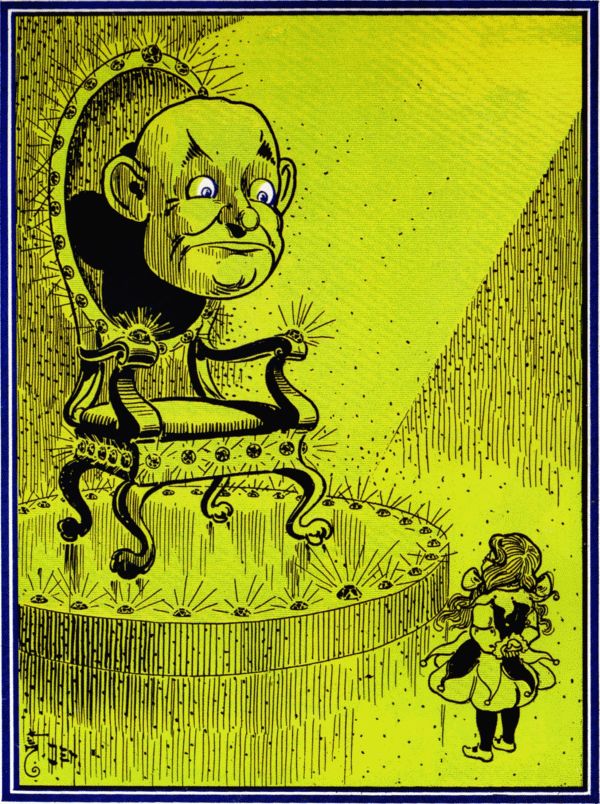
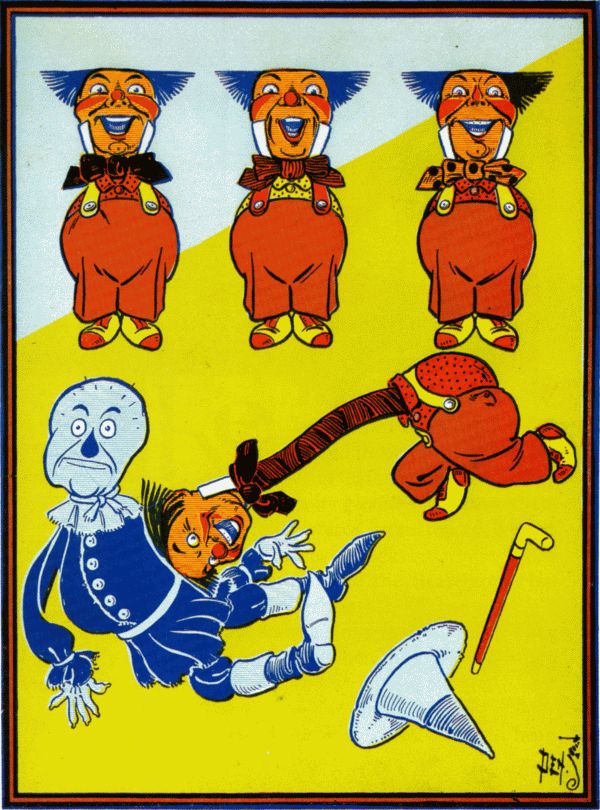
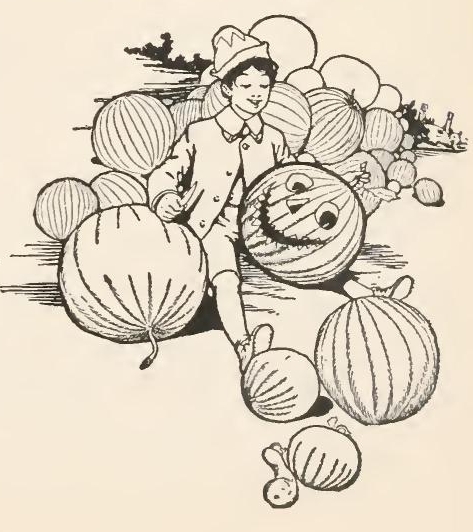

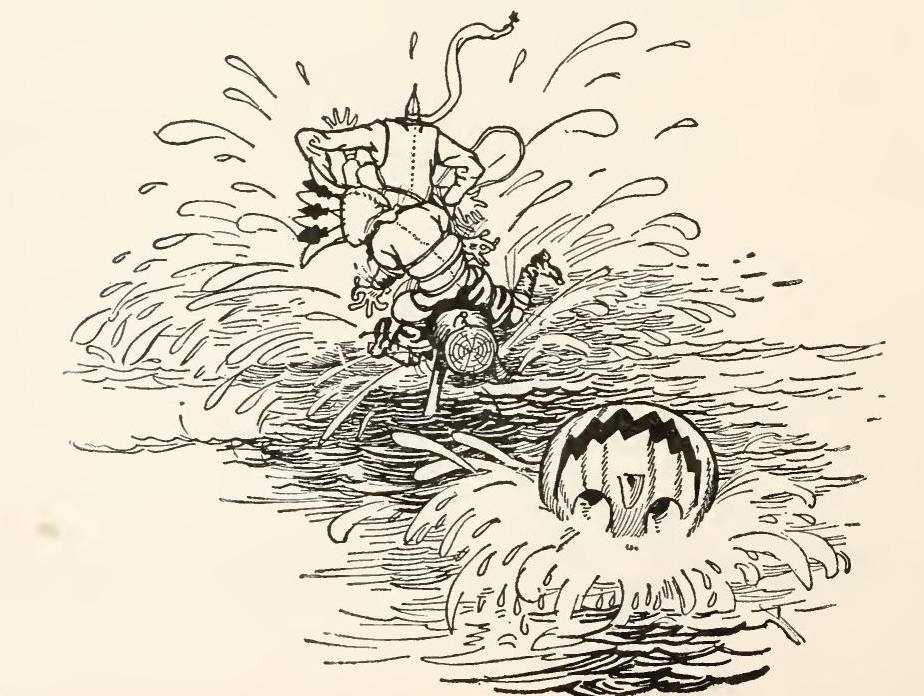
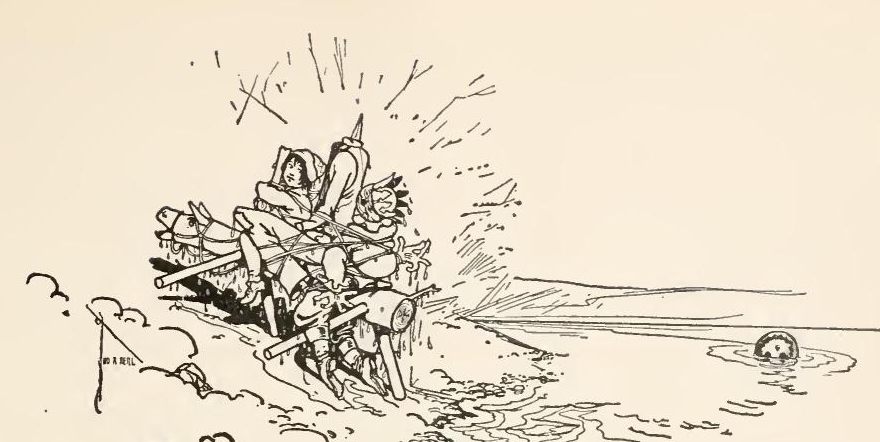
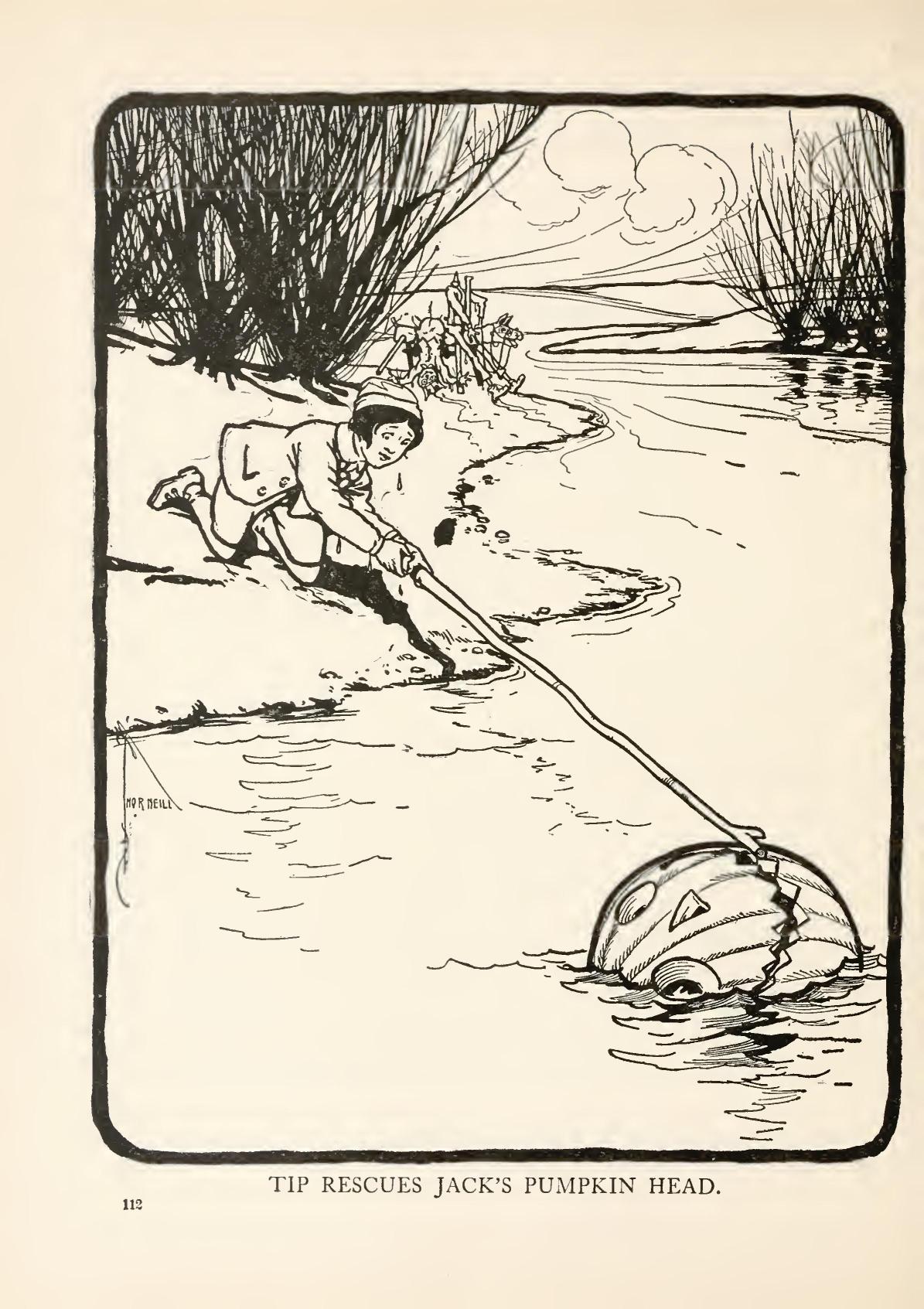
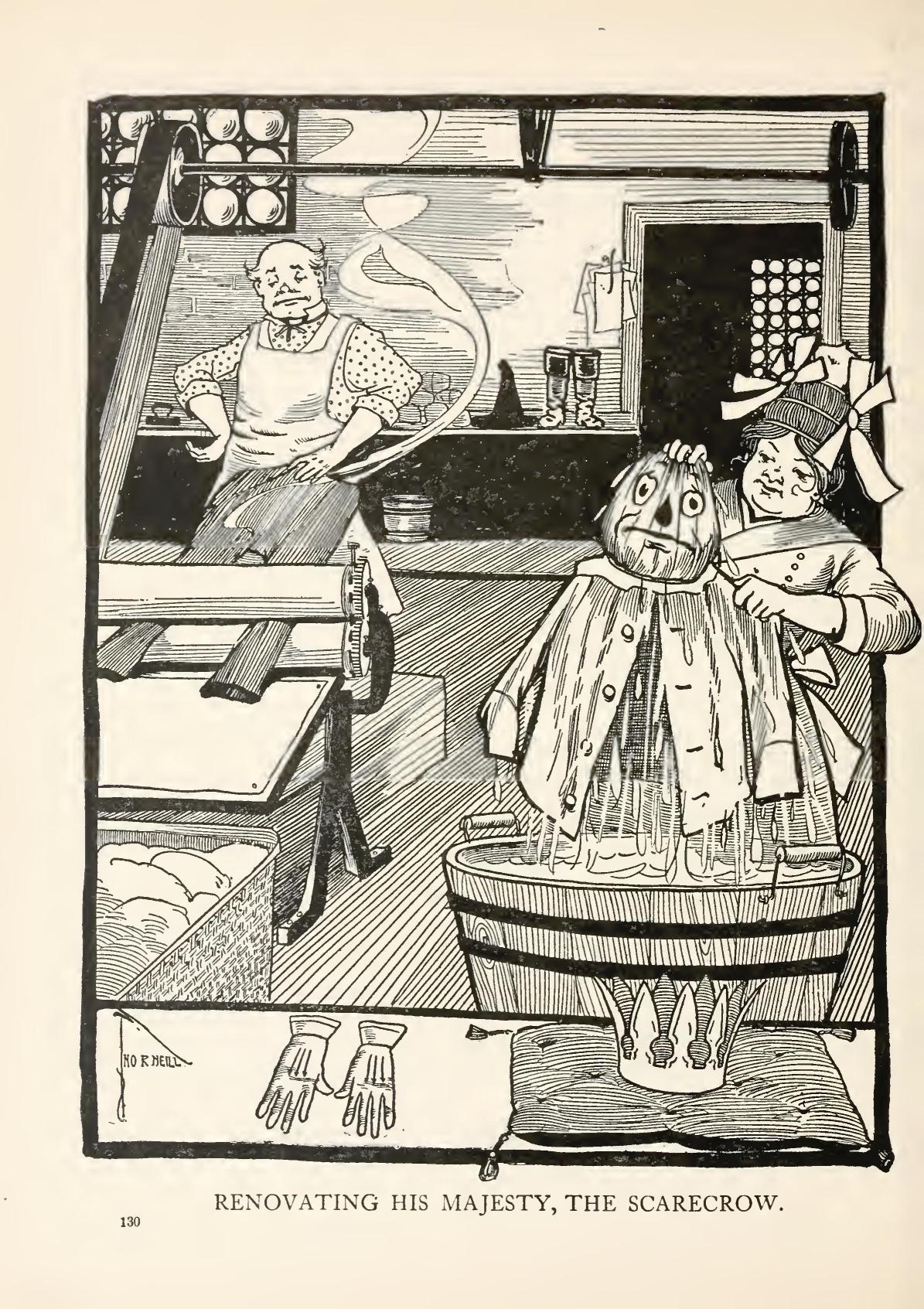
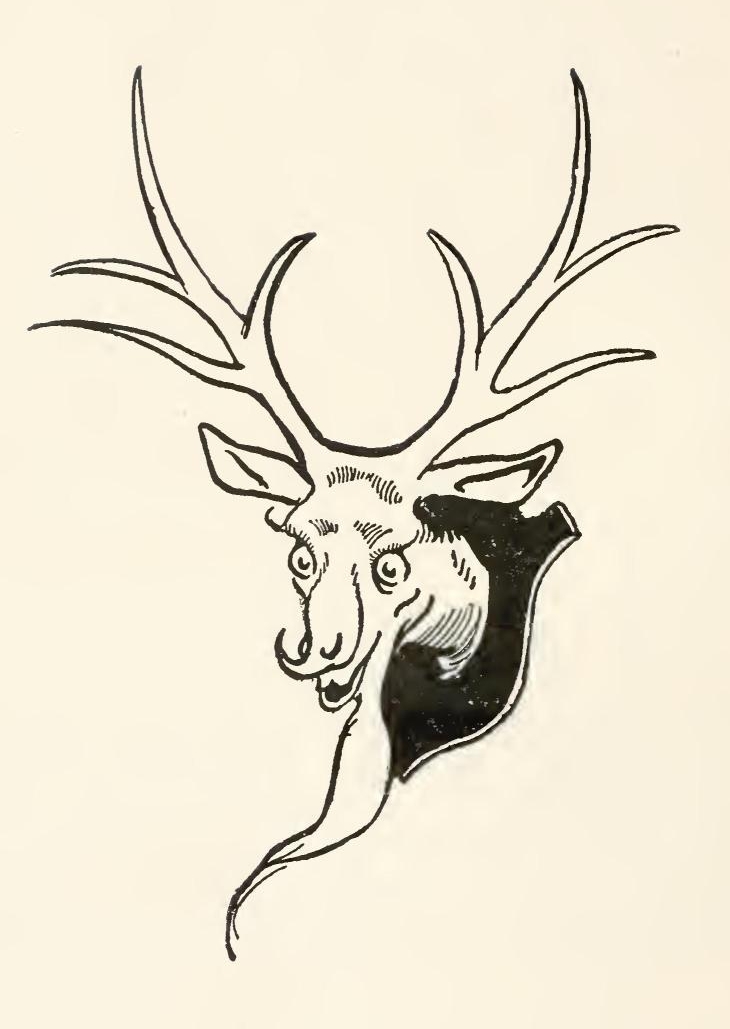
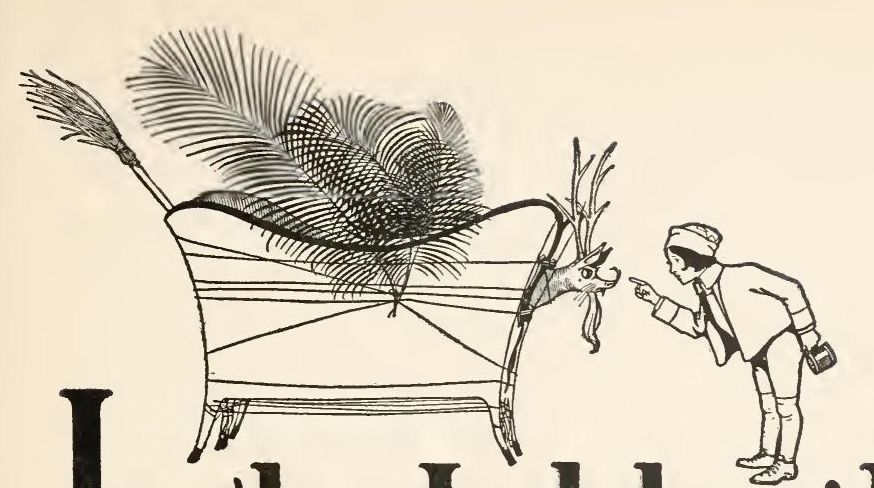
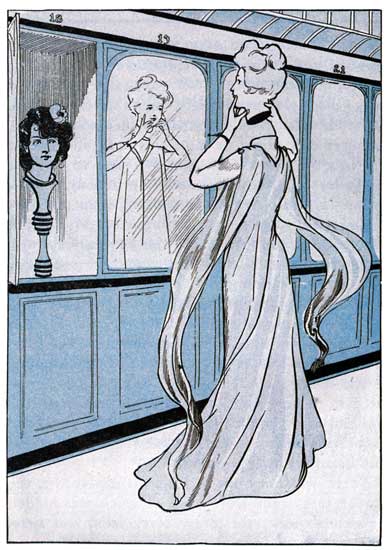
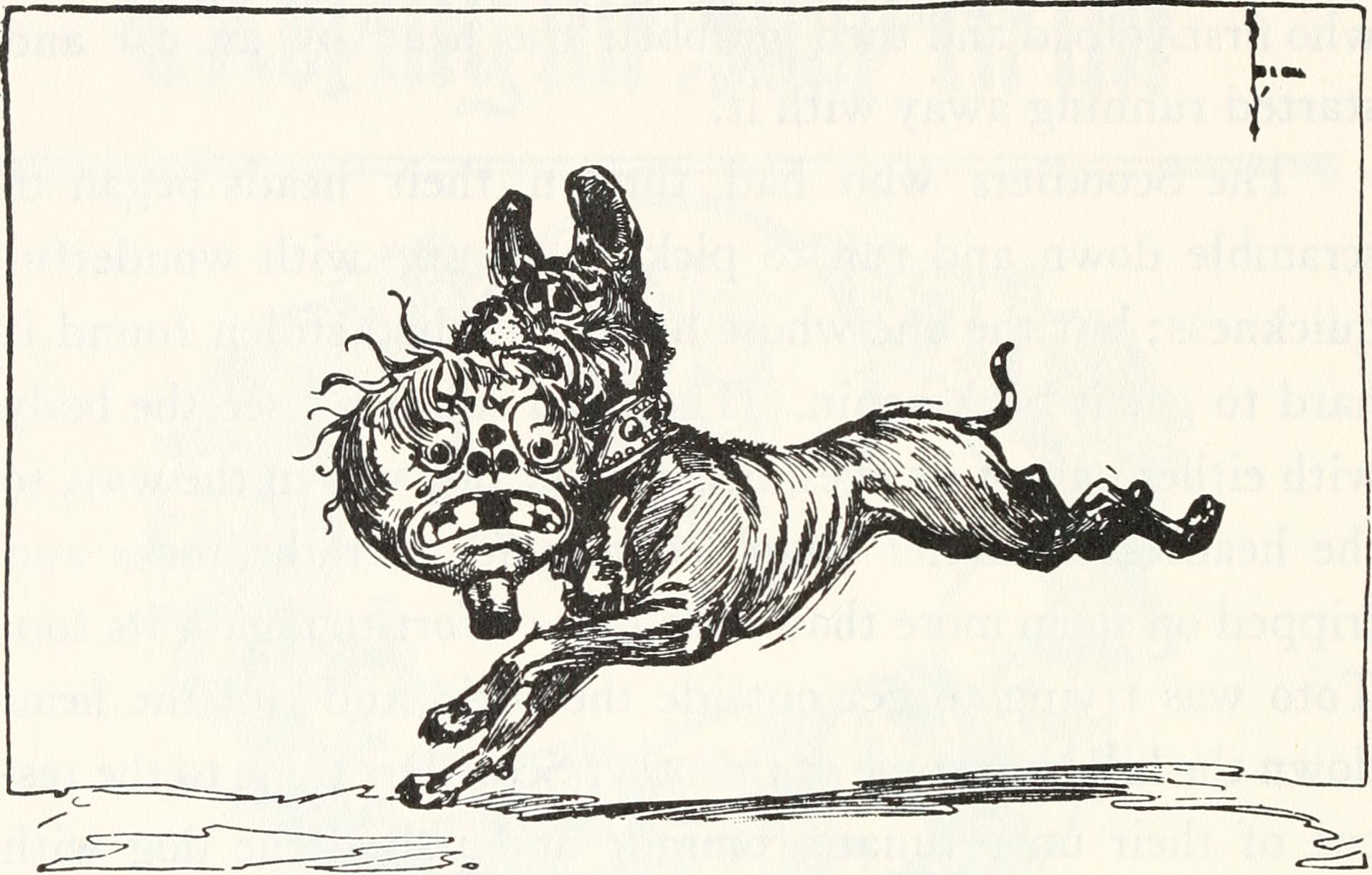
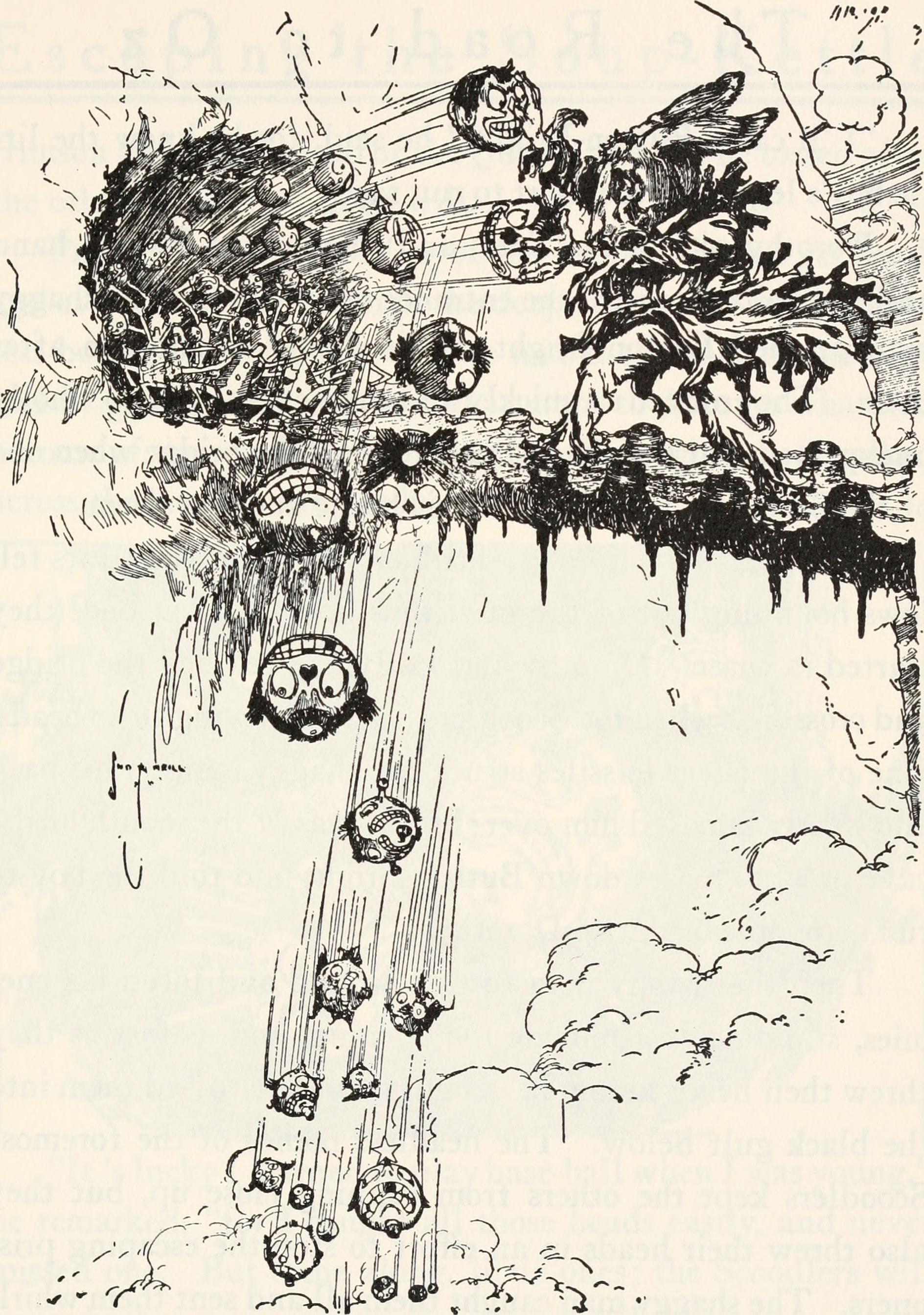
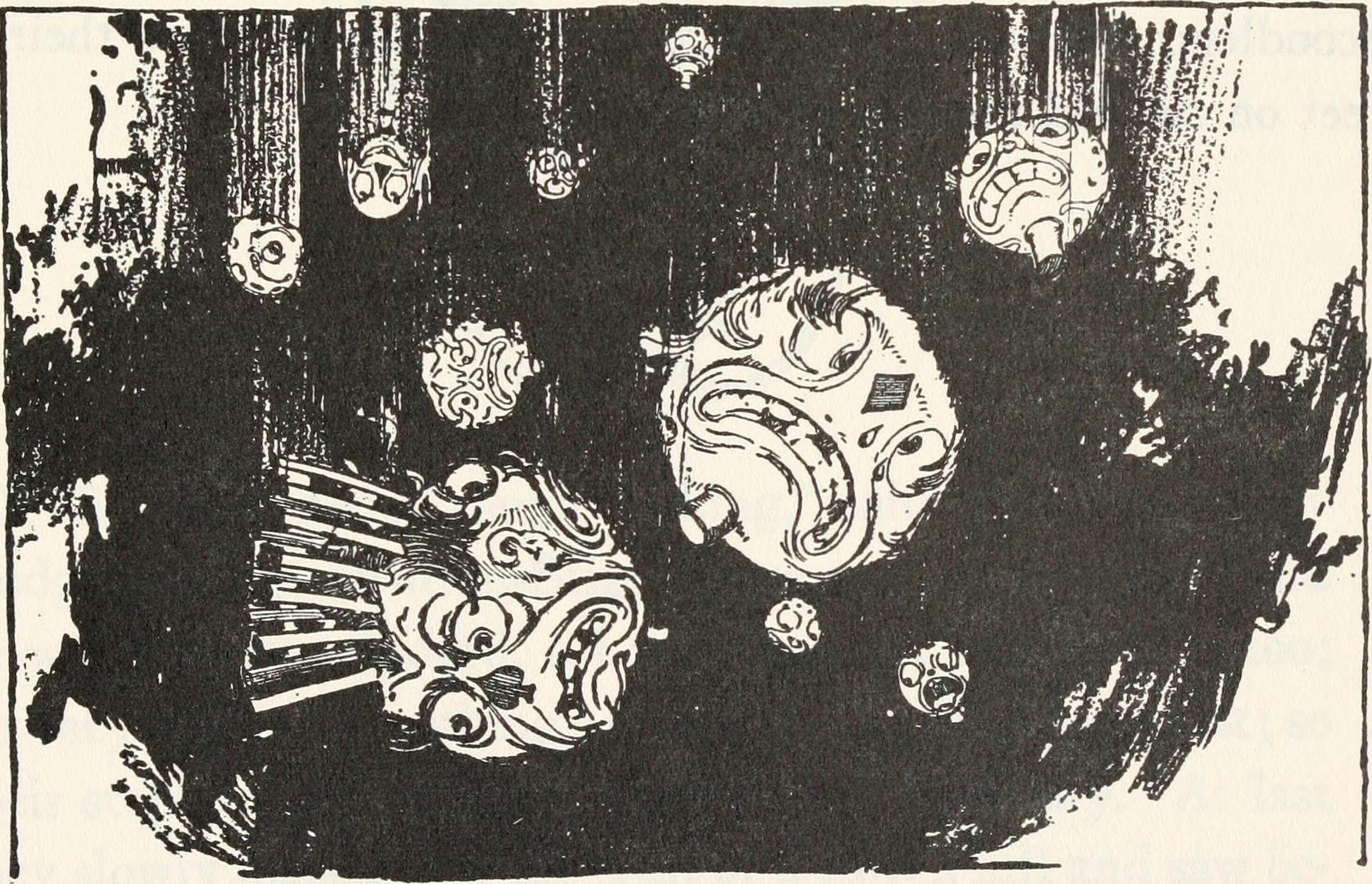
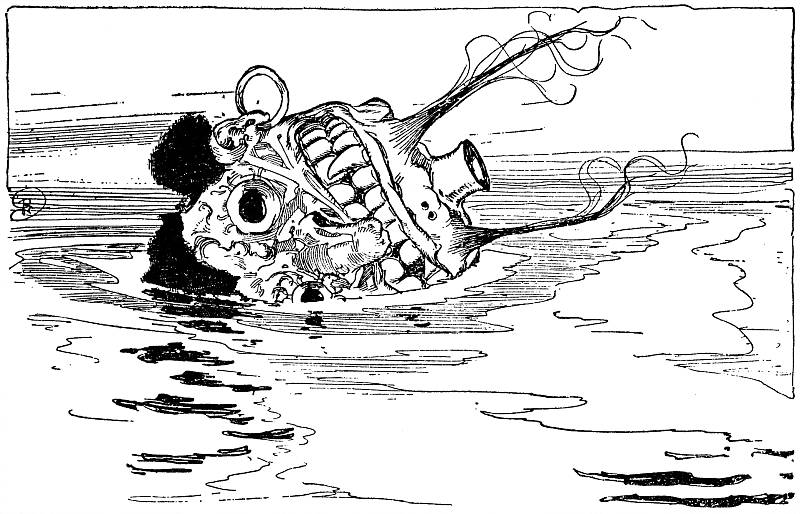
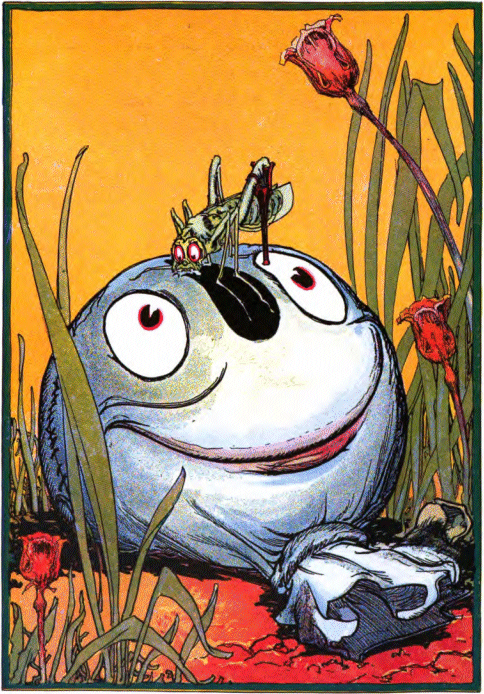
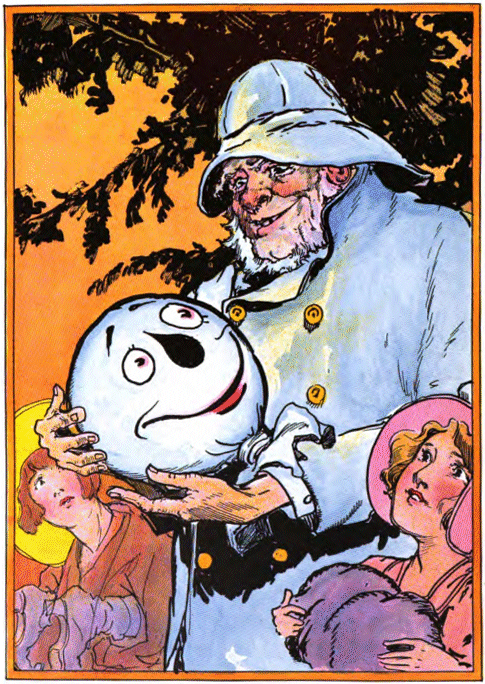
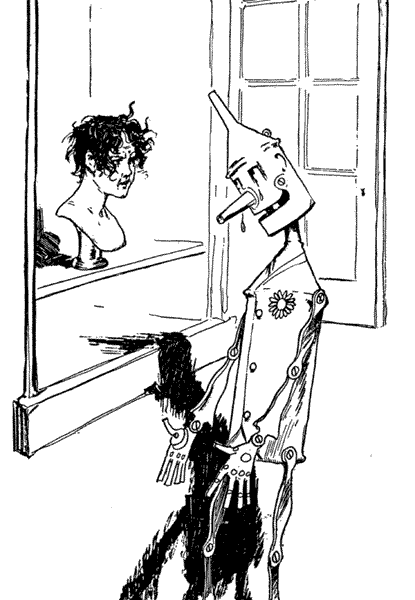

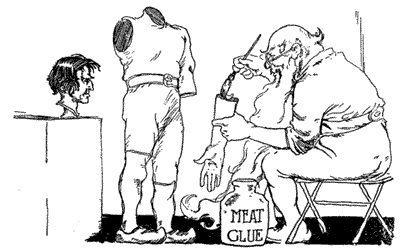
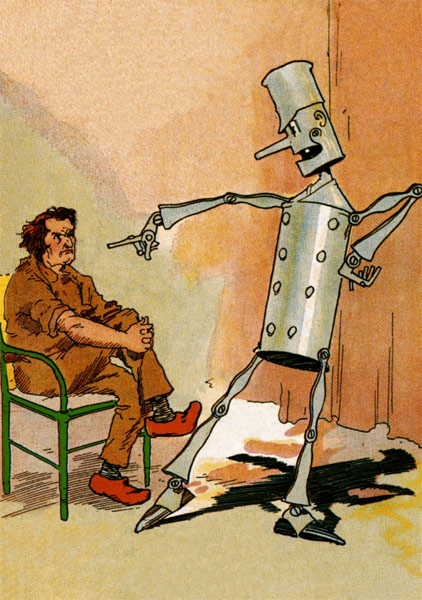
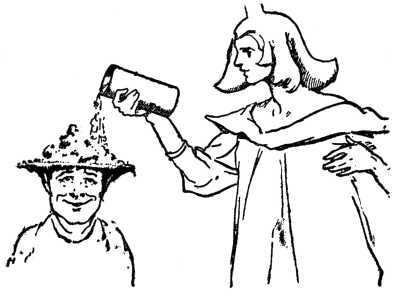
I don't think omitted this section from HOP on purpose; it simply never occurred to me to put one in. Had MK asked me about it, I don't know what I would have said; they didn't ask.
HOP does have at least one unusual typographic convention: when two versions of the same code are shown, the code in the second version that was modified or changed has been set in boldface. I had been wondering for a couple of weeks before OSCON if I had actually explained that; after running into Peter I finally remembed to check. The answer: no, there is no explanation. And I don't think it's a common convention.
But of all the people who have seen it, including a bunch of official technical reviewers, a few hundred casual readers on the mailing list, and now a few thousand customers, nobody suggested than an explanation was needed, and nobody has reported being puzzled. People seem to understand it right away.
I don't know what to conclude from this yet, although I suspect it will be something like:
(a) the typographic conventions in typical computer books are sufficiently well-established, sufficiently obvious, or both, that you don't have to bother explaining them unles they're really bizarre,
or:
(b) readers are smarter and more resilient than a lot of people give them credit for.
Explanation (b) reminds me of a related topic, which is that conference tutorial attendees are smarter and more resilient than a lot of conference tutorial speakers give them credit for. I suppose that is a topic for a future blog entry.
(Consensus on my mailing list, where this was originally posted, was that the ubiquitous explanations of typographic conventions are not useful. Of course, people for whom they would have been useful were unlikely to be subscribers to my mailing list, so I'm not sure we can conclude anything useful from this.)
[Other articles in category /book] permanent link
Mon, 09 Jan 2006[I sent this out to my book discussion mailing list back in November, but it seems like it might be of general interest, so I'm reposting it. - MJD]
People I talk to often don't understand how authors get paid. It's interesting, so I thought I'd send out a note about it.
Basically, the deal is that you get a percentage of the publisher's net revenues. This percentage is called "royalties". So you're getting a percentage of every book sold. Typical royalties seem to be around 15%. O'Reilly's are usually closer to 10%. If there are multiple authors, they split the royalty between them.
Every three or six months your publisher will send you a statement that says how many copies sold and at what price, and what your royalties are. If the publisher owes you money, the statement will be accompanied by a check.
The 15% royalty is a percentage of the net receipts. The publisher never sees a lot of the money you pay for the book in a store. Say you buy a book for $60 in a bookstore. About half of that goes to the store and the book distributor. The publisher gets the other half. So the publisher has sold the book to the distributor for $30, and the distributor sold it to the store for perhaps $45. This is why companies like Amazon can offer such a large discount: there's no store and no distributor.
So let's apply this information to a practical example and snoop into someone else's finances. Perl Cookbook sells for $50. Of that $50, O'Reilly probably sees about $25. Of that $25, about $2.50 is authors' royalties. Assuming that Tom and Nat split the royalties evenly (which perhaps they didn't; Tom was more important than Nat) each of them gets about $1.25 per copy sold. Since O'Reilly claims to have sold 150,000 copies of this book, we can guess that Tom has made around $187,500 from this book. Maybe. It might be more (if Tom got more than 50%) and it might be less (that 150,000 might include foreign sales, for which the royalty might be different, or bulk sales, for which the publisher might discount the cover price; also, a lot of those 150,000 copies were the first edition, and I forget the price of that.) But we can figure that Tom and Nat did pretty well from this book. On the other hand, if $187,500 sounds like a lot, recall that that's the total for 8 years, averaging about $23,500 per year, and also recall that, as Nat says, writing a book involves staring at the blank page until blood starts to ooze from your pores.
Here's a more complicated example. The book Best of The Perl Journal vol. 1 is a collection of articles by many people. The deal these people were offered was that if they contributed less than X amount, they would get a flat $150, and if they contributed more than X amount, they would get royalties in proportion to the number of pages they contributed. (I forget what X was.) I was by far the contributor of the largest number of pages, about 14% of the entire book. The book has a cover price of $40, so O'Reilly's net revenues are about $20 per copy and the royalties are about $2 per copy. Of that $2, I get about 14%, or $0.28 per copy. But for Best of the Perl Journal, vol. 2, I contributed only one article and got the flat $150. Which one was worth more for me? I think it was probably volume 1, but it's closer than you might think. There was a biggish check of a hundred and some dollars when the book was first published, and then a smaller check, and by now the checks are coming in amounts like $20.55 and $12.83.
The author only gets the 15% on the publisher's net receipts. If the books in the stores aren't selling, the bookstore gets to return them to the publisher for a credit. The publisher subtracts these copies from the number of copies sold to arrive at the royalty. If more copies come back than are sold, the author ends up owing the publisher money! Sometimes when the book is a mass-market paperback, the publisher doesn't want the returned copies; in this case the store is supposed to destroy the books, tear off the covers, and send the covers back to the publisher to prove that the copies didn't sell. This saves on postage and trouble. Sometimes you see these coverless books appear for sale anyway.
When you sign the contract to write the book, you usually get an "advance". This is a chunk of money that the publisher pays you in advance to help support you while you're writing. When you hear about authors like Stephen King getting a one-million-dollar advance, this is what they are talking about. But the advance is really a loan; you pay it back out of your royalties, and until the advance is repaid, you don't see any royalty checks. If you write the book and then it doesn't sell, you don't get any royalties, but you still get to keep the advance. But if you don't write the book, you usually have to return the advance, or most of the advance. I've known authors who declined to take an advance, but it seems to me that there is no downside to getting as big an advance as possible. In the worst case, the book doesn't sell, and then you have more money than you would have gotten from the royalties. If the book does sell, you have the same amount of money, but you have it sooner. I got a big advance for HOP. My advance will be paid back after 4,836 copies are sold. Exercise: estimate the size of my advance. (Actually, the 4,836 is not quite correct, because of variations in revenues from overseas sales, discounted copies, and such like. When the publisher sells a copy of the book from their web site, it costs the buyer $51 instead of $60, but the publisher gets the whole $51, and pays royalties on the full amount.)
If the publisher manages to exploit the book in other ways, the author gets various percentages. If Morgan Kaufmann produces a Chinese translation of HOP, I get 5% of the revenues for each copy; if instead they sell to a Chinese publisher the rights to produce and sell a Chinese translation, I get 50% of whatever the Chinese publisher paid them. If Universal pictures were to pay my publisher a million dollars for the rights to make HOP into a movie starring Kevin Bacon, I would get $50,000 of that. (Wouldn't it be cool to live in that universe? I hear that 119 is a prime number over there.)
If you find this kind of thing interesting, O'Reilly has an annotated version of their standard publishing contract online.
[ Addendum 20060109: I was inspired to repost this by the arrival in the mail today of my O'Reilly quarterly royalty statement. I thought I'd share the numbers. Since the last statement, 31 copies of Computer Science & Perl Programming were sold: 16 copies domestically and 15 foreign. The cover price is $39.95, so we would expect that O'Reilly's revenues would be close to $619.22; in fact, they reported revenues of $602.89. My royalty is 1.704 percent. The statement was therefore accompanied by a check for $10.27. Who says writing doesn't pay? ]
[ Addendum 20140428: The original source of Nat's remark about writing is from Gene Fowler, who said “Writing is easy. All you do is stare at a blank sheet of paper until drops of blood form on your forehead.” ]
[Other articles in category /book] permanent link